Smart Home

9 Best Baby Monitors of 2026: Picks That Hold a Charge Past Year 1

Every baby monitor claims long battery life, but many fail within months. These picks actually last — without constant recharging or unexpected beeping at 2 a.m.

Most baby monitors advertise 20–30 hours of battery, but real-world use — especially with the screen on — rarely matches those numbers. What’s worse, many parents discover the parent unit’s battery may stop holding any charge at all after six months, just when they rely on it most.

Signal clarity can be another gamble. Even non‑WiFi monitors, marketed as interference‑free, can lose connection one room over if the 2.4GHz link collides with a microwave or thick plaster walls. That midnight beep of a lost signal is enough to shake any parent’s nerves.

The monitors in this guide separate the marketing claims from day‑to‑day reality, focusing on ones that keep a charge for years and maintain a stable link. Whether you prefer a top‑value model that covers the basics with crowd‑proven reliability or a premium unit with a user‑swappable battery and noise‑filtered audio, we’ve zeroed in on the designs that genuinely reduce late‑night interruptions.

1

GoodBaby SM663

Top Pick
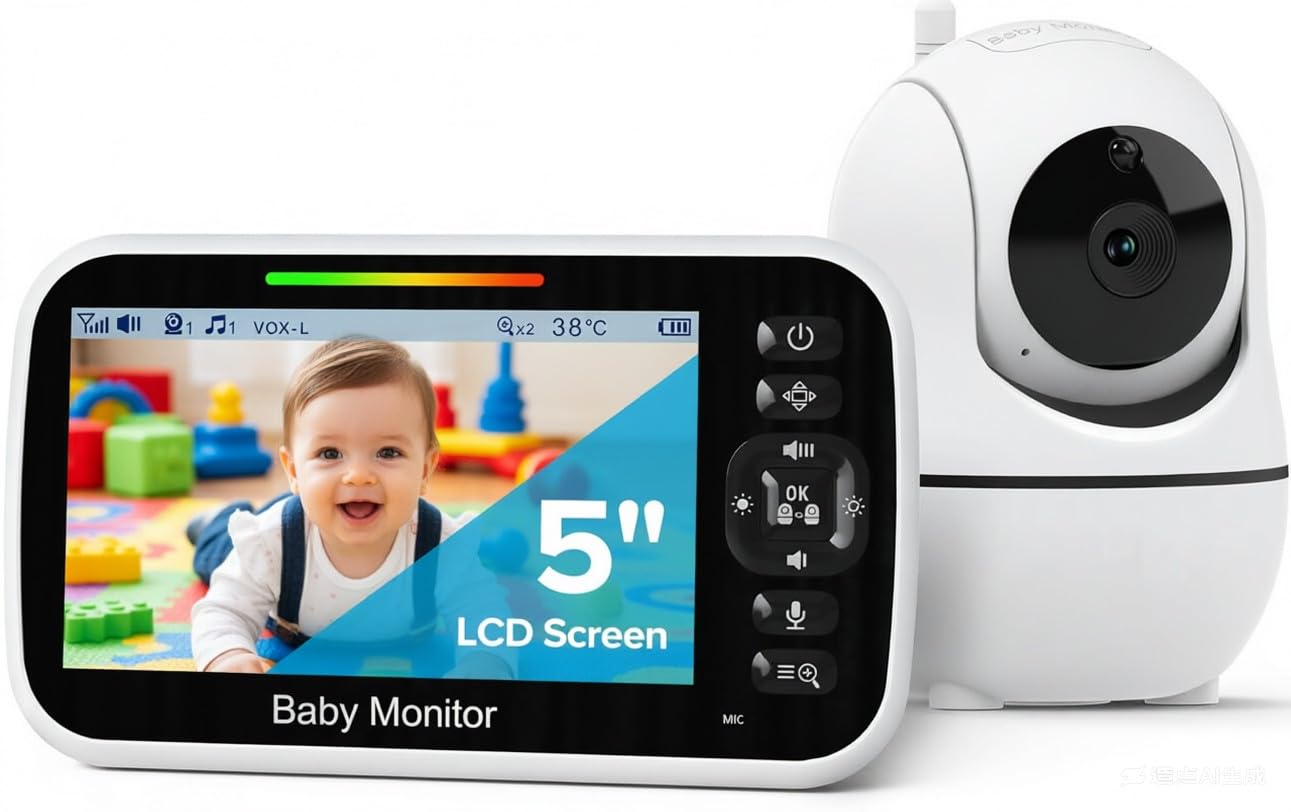
GoodBaby SM663

Budget video

Our Score 9.2/10
Check Price

Worth Noting

  • In cordless overnight use, the internal battery may lose capacity after months, with charging port failure possible on some units.
Connectivity
Non‑WiFi (FHSS)
Battery Endurance
Up to 30 hrs (VOX)
Screen & Resolution
5" LCD, 480p
Sound & Two‑Way Talk
Two‑way talk, feeding timer
Read the full review

The GoodBaby SM663 delivers remarkably crisp video and a setup so simple it’s ready the moment you plug it in — no app, no pairing dance. Compared to the top pick, it shaves off a few inches of screen size but preserves the same core pan-tilt-zoom control that lets you scan the nursery from the parent unit.

Infrared night vision keeps the picture clear in complete darkness, and the sensitive microphone catches even quiet stirrings. The 5-inch screen, while not the largest, shows 480p detail up close, and the range holds steady across most single-family layouts. Temperature readout, feeding timer, and eight lullabies consolidate nursery clutter without adding complexity.

Families who plan to keep the parent unit docked most nights, treat the battery as a daytime convenience, or want a second monitor for travel will find the GoodBaby a sharp value. The trade-off: the internal battery can stop holding a charge after several months. Customer service is responsive, but if cordless overnight use is a daily need, a more robust option may suit better.

Tip: Keep the parent unit docked overnight to preserve battery health; cordless use is best for naps and daytime checks.

Bottom line: For budget-minded buyers who can plug in the parent unit at night and want a full-featured pan-tilt-zoom monitor without Wi-Fi, the GoodBaby is a practical choice that trades battery endurance for an otherwise complete package.

2

Infant Optics DXR-8 PRO

Infant Optics DXR-8 PRO

Noise‑free audio

Our Score 9.2/10
Check Price

Worth Noting

  • Even with the replaceable design, battery runtime can drop noticeably after a year or two, requiring a spare purchase.
  • Signal stability can suffer through multiple thick walls or across floors in larger layouts.
Connectivity
Non‑WiFi (FHSS)
Battery Endurance
Up to 12 hrs, replaceable
Screen & Resolution
5" HD, 720p
Sound & Two‑Way Talk
Two‑way talk, ANR
Read the full review

Where most non‑WiFi monitors send every background hum straight to the parent unit, the DXR‑8 PRO uses patented Active Noise Reduction to isolate baby coos and cries from the drone of a fan, air purifier, or white noise machine. Combined with a user‑replaceable battery that no competitor in this tier offers, it targets families who want a monitor that lasts past its first battery.

The 5‑inch HD screen delivers a crisp picture with strong night vision, and setup is instant — plug the camera in, power the display, and they link without Wi‑Fi or pairing codes. Pan‑tilt‑zoom controls move the camera remotely, and the interchangeable lens adds wide‑angle flexibility. The trade‑off is range: through several thick walls or between floors, the signal can become intermittent. This is not a whole‑house solution in larger homes.

The DXR‑8 PRO fits best in nurseries where white noise generators or air purifiers run around the clock and clear audio matters more than covering a sprawling floor plan. The swappable battery rewards long‑term owners — you can refresh it yourself instead of retiring the unit. If you need flawless connectivity across multiple floors and thick walls, the signal may frustrate you, but within a modest footprint the noise filtering more than justifies the premium price.

Tip: When battery runtime starts to shorten, a new battery snaps in within seconds; keep one spare to avoid downtime.

Bottom line: If background hum from nursery gadgets has made other monitors frustrating, the DXR‑8 PRO's noise filtering is worth the premium — just be sure your home layout stays within its range.

3

VTech DM221

VTech DM221

Screen‑free audio

Our Score 9.2/10
Check Price

Worth Noting

  • Parent unit’s Ni-MH battery drains quickly in cordless mode
Connectivity
DECT 6.0 (non‑WiFi)
Battery Endurance
Ni‑MH, short cordless life
Screen & Resolution
Sound & Two‑Way Talk
Two‑way talk, night light
Read the full review

Where the slim audio-only option in this group offers just a belt clip and volume control, the DM221 steps up with a talk-back intercom, vibrating alert, and a soft night light on the baby unit — all over DECT 6.0 digital audio that eliminates static. That combination turns a simple listening device into a way to soothe your child from two rooms away, without the temptation of a screen.

Sound comes through exceptionally clean, and the parent unit’s five-level sound indicator gives a visual beat of nursery noise without demanding constant attention. The 1,000‑foot range holds steady through walls and floors, and adjustable mic sensitivity helps filter out white-noise machines or street hum so you hear only cries. The talk-back is genuinely useful for calm-downs from afar, not just a checklist feature.

This is ideal for parents who actively want to avoid screen-based monitoring and prefer to stay connected by ear. The two-way talk and built-in night light eliminate the need for a separate gadget, making bedtime reassurances feel more direct. The parent unit’s Ni-MH battery drains quickly when unplugged, though — plan to dock it overnight and reserve cordless use for daytime naps or chores. Skip it if you must have a video feed or need all-night cordless monitoring.

Tip: Keep the parent unit plugged in overnight; battery life is best for short daytime sessions.

Bottom line: For audio-focused households, the DM221’s talk-back and night light add meaningful utility at a low price — just keep it plugged in at night.

4

Nanit Pro

Nanit Pro

Smart sleep insights

Our Score 9.2/10
Check Price

Worth Noting

  • Daily access to full sleep analytics and breathing insights requires a paid subscription after the trial
  • Monitoring is entirely dependent on a stable Wi‑Fi connection; there is no local handheld unit for backup during outages
Connectivity
Wi‑Fi, app‑based
Battery Endurance
Screen & Resolution
1080p HD (phone)
Sound & Two‑Way Talk
Two‑way audio, cry detection
Read the full review

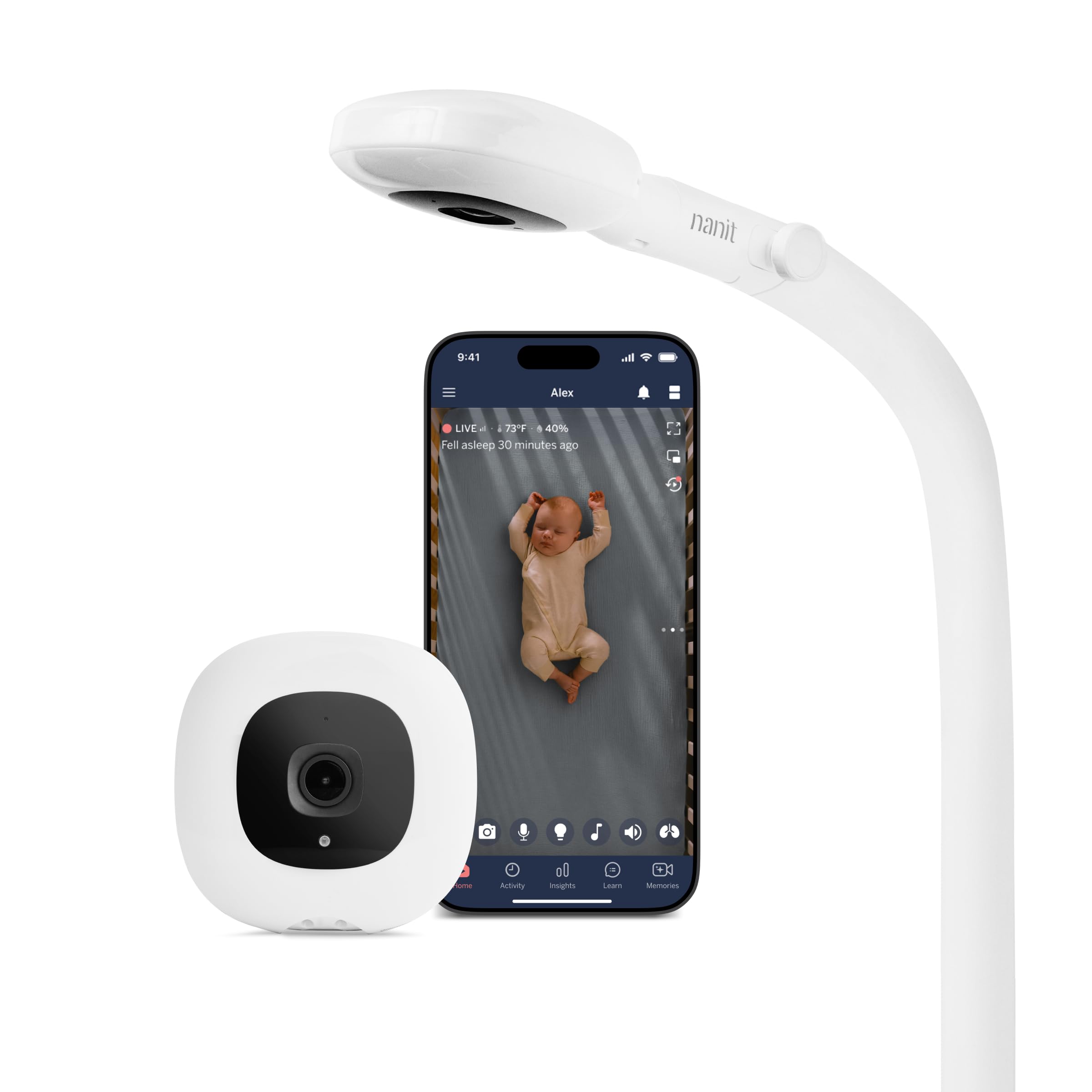
The Nanit Pro delivers exceptionally sharp 1080p video both day and night, and its breathing motion monitoring coupled with sleep analytics can provide anxious parents with detailed data on their baby’s patterns. Setup is straightforward, and the app makes remote check‑ins from outside the home seamless. However, that intelligence comes tied to a subscription—after the trial, full sleep reports require a monthly or annual plan—and the system operates entirely over Wi‑Fi. There is no dedicated handheld monitor, so a power or internet outage ends your feed. For tech‑savvy families who value data over simplicity, it is compelling; those wanting an always‑on, unplugged monitor will find better fits elsewhere.

Tip: Position your Wi‑Fi router centrally and test signal strength in the nursery; a backup mobile hotspot can bridge brief outages if your home internet drops.

Bottom line: For data‑driven parents who prioritize breathing alerts and sleep analytics and already rely on a stable home network, the Nanit Pro’s video quality and insights justify the ongoing cost.

5

HelloBaby HB6550

HelloBaby HB6550

Single‑room video

Our Score 9.0/10
Check Price

Worth Noting

  • Internal battery can lose capacity over many months, requiring a warranty replacement
  • In isolated cases, the parent unit may stop powering on or lose its signal permanently, though customer service typically sends a replacement
Connectivity
Non‑WiFi (FHSS)
Battery Endurance
Up to 30 hrs (VOX)
Screen & Resolution
5" LCD, 720p
Sound & Two‑Way Talk
Two‑way talk, temp sensor
Read the full review

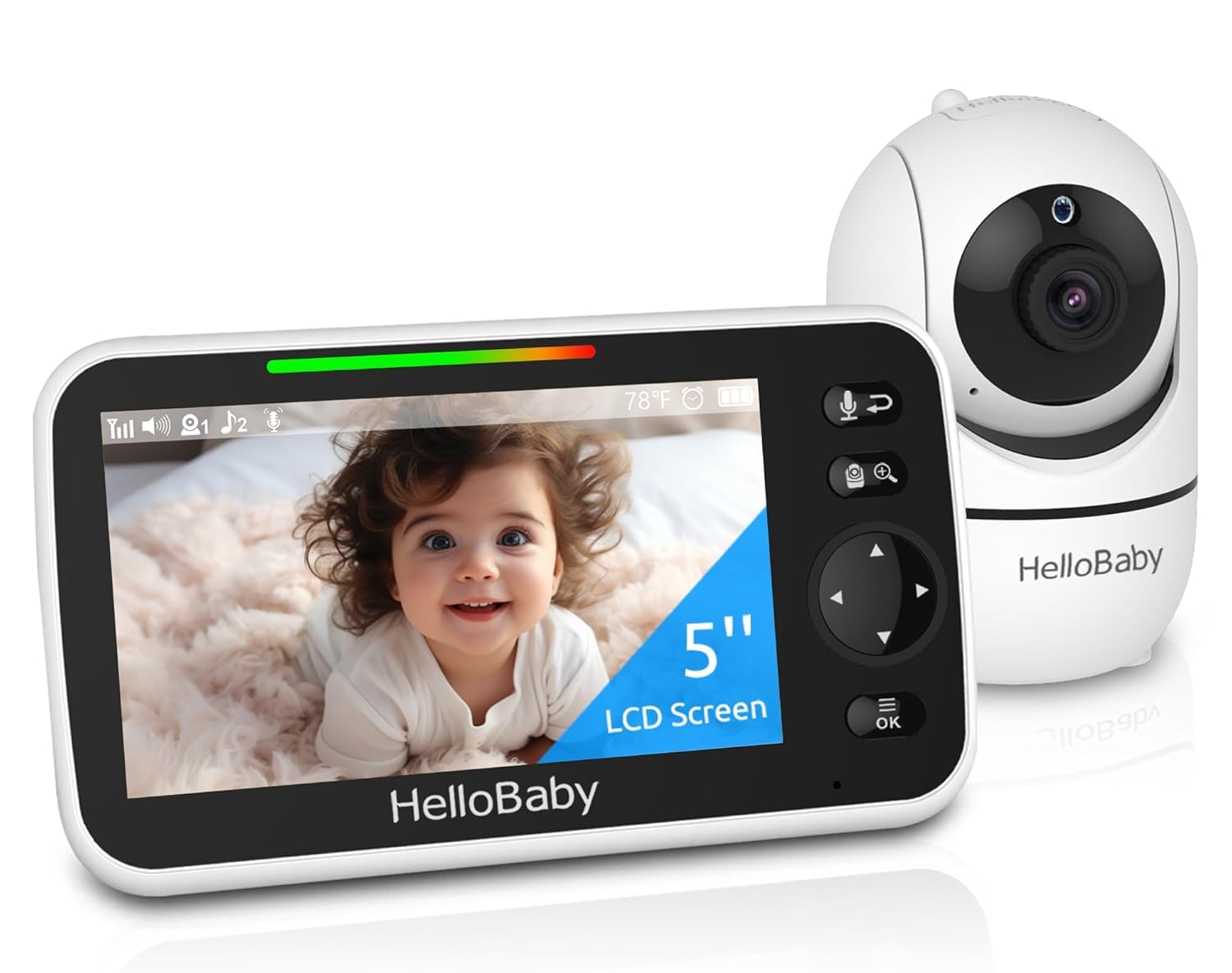
The HelloBaby HB6550’s 5-inch LCD screen delivers a sharp 720p picture, clear in daylight and under invisible infrared night vision, so you can check on a sleeping baby without entering the room. The camera pans 355°, tilts 120°, and zooms 2× remotely, letting you scan every corner of the crib as your child grows more mobile.

Setup is truly plug‑and‑play — no app downloads, no WiFi pairing, no passwords. The monitor uses secure FHSS transmission, which eliminates hacking risks and keeps the signal stable within its 1,000‑foot outdoor range. That simplicity extends to the parent unit’s interface: buttons are clearly labeled, and switching between cameras (up to four) requires only a few taps.

In VOX mode the battery promises up to 30 hours of cordless use, ideal for carrying the parent unit around during daytime naps. Over many months, the internal battery can lose capacity, and some units may develop charging port issues that require a warranty replacement. Keeping the parent unit docked overnight eliminates that concern entirely, and the company’s customer service generally ships a fresh unit if a hardware problem arises.

The HB6550 suits families who want a dedicated, non‑WiFi video monitor with a large screen and remote camera control, and who can leave the parent unit plugged in near the bed. It extends to a four‑camera system for growing families. The trade‑off is a built‑in battery that isn’t user‑replaceable, so if you travel frequently away from outlets or need active noise cancellation for background hum, this model will feel limiting.

Tip: Keep the parent unit plugged in overnight — the battery is best used for daytime naps and short cordless checks.

Bottom line: The HelloBaby HB6550 is the right single‑camera pick for families who value a large, no‑WiFi monitor with remote pan‑tilt‑zoom and are fine keeping the parent unit docked at night. If you need a user‑replaceable battery or built‑in noise filtering, the trade‑offs will steer you elsewhere.

6

HelloBaby HB6560-2

HelloBaby HB6560-2

Dual‑room monitoring

Our Score 9.0/10
Check Price

Worth Noting

  • Daytime image sharpness can appear slightly soft, especially on the large screen
  • The USB‑C charging port may loosen or become intermittent after extended use
Connectivity
Non‑WiFi (FHSS)
Battery Endurance
Up to 30 hrs (VOX)
Screen & Resolution
6" IPS split‑screen
Sound & Two‑Way Talk
Two‑way talk, feeding timer
Read the full review

The 6‑inch IPS split‑screen is the standout feature — no other non‑WiFi monitor in this comparison offers a simultaneous dual‑camera view on a single large display. While the top pick’s 5‑inch screen covers one room well, the HB6560‑2 keeps two feeds visible without toggling, which matters for twins or two toddlers in separate spaces. Each camera pans 355° and tilts 120° remotely, so you can adjust the view without entering the room.

This monitor is purpose‑built for families managing two sleeping zones — twins in separate cribs, or a toddler in one room and a baby in another. The fixed split‑screen means you never have to switch views, cutting down on late‑night confusion. The trade‑off is bulk: the 6‑inch parent unit and two cameras don’t slip into a pocket or travel bag easily. The premium price makes sense almost exclusively for those who genuinely need the dual‑camera layout; a single‑child household will find better value in a simpler, more portable monitor.

Battery life in VOX mode stretches through the night on a single charge, and the FHSS connection stays stable across multiple floors within the 1000‑ft range. Setup involves plugging in the cameras and powering on the display — no app pairing or account creation. The USB‑C charging port has been known to become finicky over months, but HelloBaby’s support typically sends a replacement cable or unit when contacted, which softens the inconvenience.

Tip: Keep the parent unit docked overnight to minimize wear on the USB‑C port; the battery easily covers daytime naps and evening hours.

Bottom line: For parents juggling two children across rooms, the HB6560‑2 removes the hassle of toggling between feeds or managing multiple parent units, delivering a large, uncluttered view that no single‑camera monitor can replicate.

7

ANMEATE DY627

ANMEATE DY627

Large screen budget

Our Score 9.0/10
Check Price

Worth Noting

  • The battery can lose its ability to hold a charge over time, limiting cordless use to short stretches.
  • Lost signal may cause the parent unit to emit a loud beep, which can be startling at night.
Connectivity
Non‑WiFi
Battery Endurance
Up to 48 hrs (VOX)
Screen & Resolution
6" IPS, 720p
Sound & Two‑Way Talk
Two‑way talk, temp sensor
Read the full review

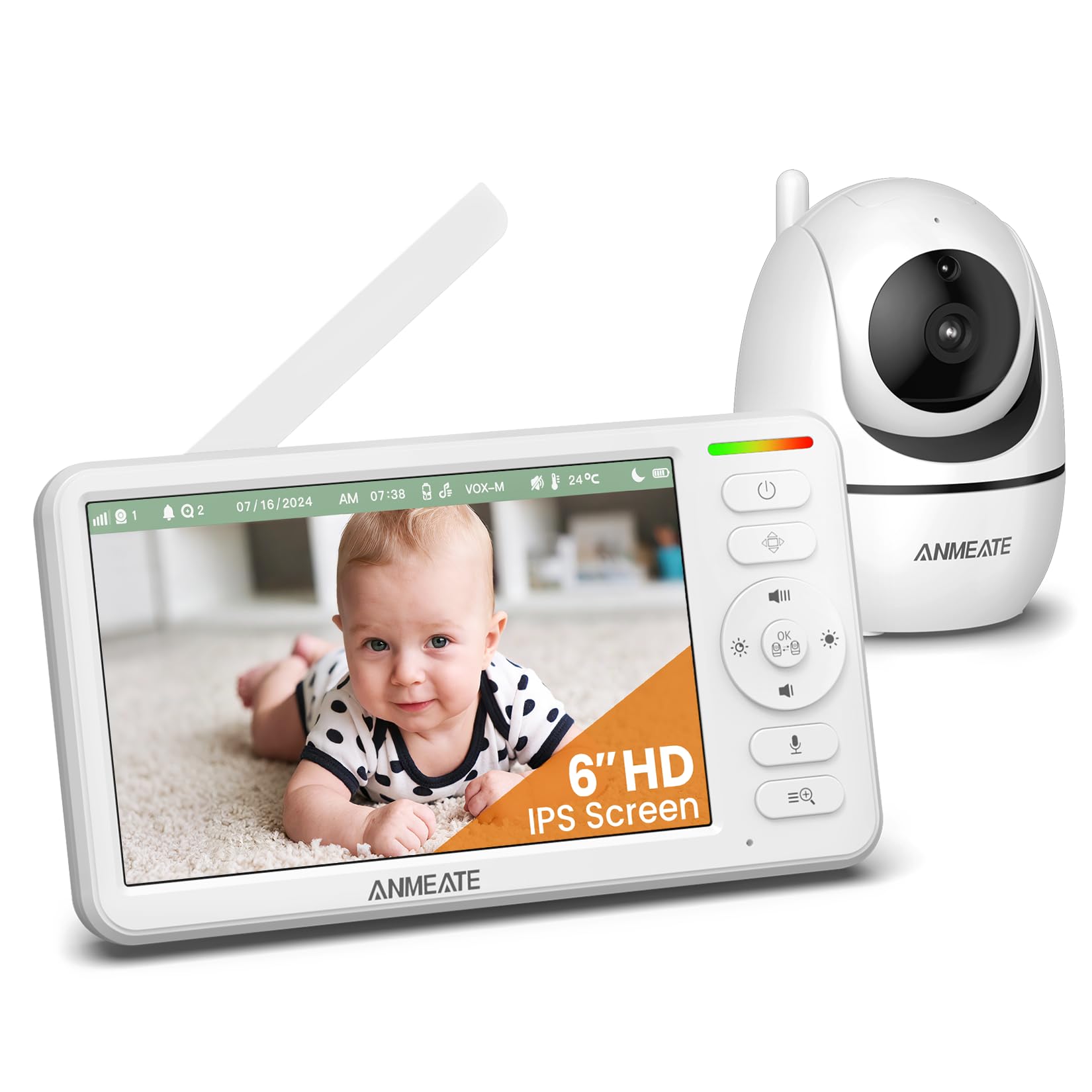
The ANMEATE DY627’s defining feature is its 6‑inch IPS screen — a rarity at this price. For grandparents or anyone with low vision, that extra size over the typical 5‑inch displays makes it far easier to check on baby without squinting. Full pan‑tilt‑zoom, a 4× digital zoom, and a temperature sensor round out the feature set, all operating on a local connection that stays off your WiFi network.

This monitor fits best when you plan to keep the parent unit plugged in on a nightstand or kitchen counter. The 5,000 mAh battery can degrade over months, making all‑night cordless use a gamble, and if the video signal drops — even at close range — the unit emits a loud beep that may wake light sleepers. For stationary use with a clear line of sight to the nursery, these tradeoffs are manageable.

Setup is painless out of the box, and interface controls are intuitive enough that even non‑tech‑savvy caregivers will navigate them easily. Day and night picture clarity is strong for the price, and the built‑in lullabies and white noise trim nursery clutter. What you sacrifice is portability; carrying the bulky parent unit between rooms without plugging in isn’t practical long‑term.

Tip: Plan to keep the parent unit plugged in overnight; the battery is best reserved for daytime naps while you move around.

Bottom line: This is the monitor to get when a large, clear screen matters more than overnight cordless freedom — best for stationary use by caregivers with visual needs.

8

VTech DM111

VTech DM111

Simple audio

Our Score 8.8/10
Check Price

Worth Noting

  • Static or intermittent disconnection can appear in some units over time
  • Cordless battery life is brief—AAA batteries drain quickly, so overnight use requires plugging in
Connectivity
DECT 6.0
Battery Endurance
AAA battery, short life
Screen & Resolution
Sound & Two‑Way Talk
Sound indicator only
Read the full review

The VTech DM111 trims baby monitoring down to its essentials: a DECT 6.0 digital link that delivers static-free audio to a compact, clip-on parent unit. It turns on and links within seconds, and the belt clip frees your hands while you move around the house. Its AAA-powered portability comes with a real constraint—battery life fades quickly, so for overnight duty it needs to stay connected to a charger or wall outlet. It also omits two-way talk and a night light, which keeps the design simple but means you’re listening only. That trade-off suits parents who want a cheap, secondary monitor for travel or daytime naps, or grandparents who prefer a no-screen option.

Bottom line: If you need a secondary audio monitor for travel or quick check-ins and are fine keeping it plugged in overnight, the DM111 delivers clear DECT sound at a minimal price.

9

Babysense MVPRO-2CAM

Babysense MVPRO-2CAM

Integrated nursery

Our Score 8.8/10
Check Price

Worth Noting

  • Battery may lose ability to hold a charge after months, requiring corded use
  • Signal can drop or produce static even at short distances, interrupting monitoring
Connectivity
Non‑WiFi (FHSS)
Battery Endurance
Up to 20 hrs (eco)
Screen & Resolution
5.5" full HD split‑screen
Sound & Two‑Way Talk
Two‑way talk, white noise
Read the full review

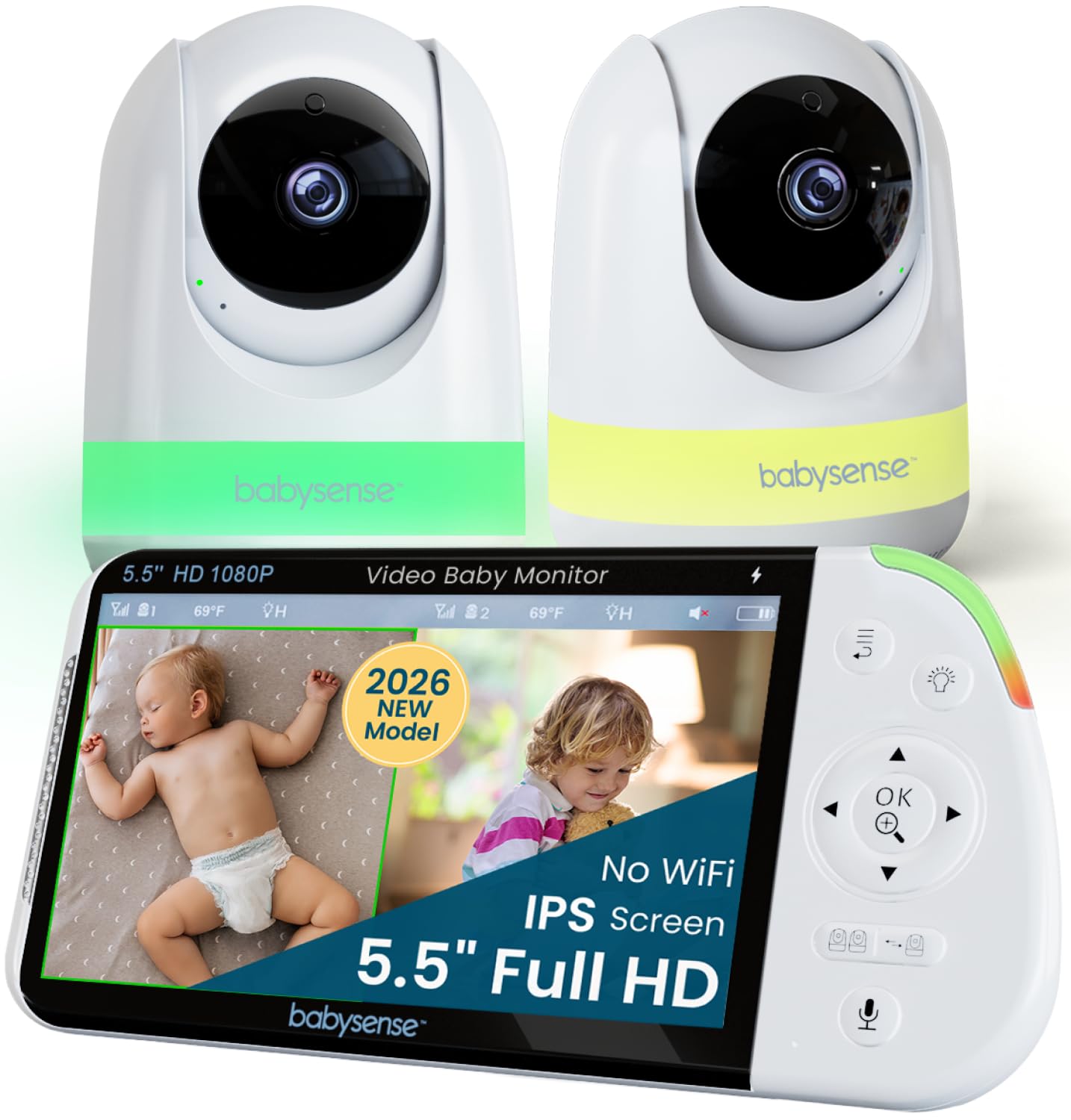
The Babysense MVPRO-2CAM packs dual 1080p cameras, pan-tilt-zoom, and a 6-color night light/white noise machine into a single parent unit, genuinely reducing nursery clutter. The picture quality is sharp day and night, and build quality feels solid. The compromise is in long-term battery performance and signal consistency: the battery may stop holding a charge after several months of cordless use, and connection drops or static have been noted even within close range. These variability points mean it works best for caregivers who prioritize the integrated soothing features and plan to keep the monitor plugged in for overnight sessions, rather than relying on cordless mobility throughout the day.

Bottom line: A strong choice for families who want an all-in-one soothing hub and can keep the parent unit docked overnight, accepting that cordless range can be inconsistent in signal-interference-prone homes.

How to Choose

Connectivity: Non‑WiFi vs. Wi‑Fi

A non‑WiFi monitor uses a dedicated 2.4GHz FHSS link between camera and parent unit. It keeps video off the internet, eliminating hacking risk, but the signal can stumble through multiple walls or near a running microwave. Placing the parent unit within one floor and away from electronics fixes most dropouts.

Wi‑Fi monitors let you check the nursery from your phone anywhere, but they rely on your home network’s stability. A router reboot or weak upstairs signal means you won’t hear a peep. If you travel often or have spotty internet, a non‑WiFi unit is the safer bet.

Screen Size & Resolution

A larger screen—5 inches versus 2.8—lets you see your baby’s position without squinting, but it also drains the parent battery faster. 720p resolution is enough to distinguish a pacifier from a blanket; 1080p on a phone screen adds sharpness but consumes more power. For everyday use, a 5‑inch 720p display strikes the best balance between clarity and battery drain.

Battery Endurance

Advertised 30‑hour runtimes assume voice‑activated mode with the screen off. With the display always on, most units last 6–12 hours. Batteries degrade chemically over charge cycles, and sealed parent‑unit cells often lose capacity within a year. The only true long‑term fix is a user‑replaceable battery—a rare feature that lets you swap a fresh cell instead of replacing the whole monitor.

Pan‑Tilt‑Zoom & Night Vision

Remote pan‑tilt allows you to check the entire crib without entering the room and disturbing sleep. Cheaper fixed‑lens cameras force you to physically adjust the mount. Night vision relies on infrared LEDs; a good set shows a clear monochrome image up to 15 feet. Look for at least 355° pan and 120° tilt with 2× digital zoom—enough to zoom in on breathing, but not a gimmick.

Sound & Two‑Way Talk

Sensitive microphones pick up cries, but they also amplify white‑noise machines and fans. Active noise reduction (ANR) digitally filters background hum, making baby sounds distinct. Two‑way talk lets you soothe without going in, but microphone quality varies; a tinny speaker can startle more than comfort. Test volume levels—some monitors are too loud even on low.

Frequently Asked Questions