Smart Home

8 Best Smart Speakers of 2026: Stylish Sound That Stays Connected

Stylish smart speakers that enhance your home's look, deliver clear voice commands and music, and actually stay connected — no more Wi‑Fi dropouts.

A smart speaker should disappear into your decor and just work. But even premium models often stumble: choppy Wi‑Fi, apps that crash, voice assistants that stop responding. When you're trying to fill a room with music, those interruptions wreck the mood.

This guide focuses on smart speakers that deliver both great sound and a look you'll love, while minimizing the connection headaches that plague the category. Whether you want a statement piece for the living room or a tiny helper for the kitchen, we've found the ones that blend performance and style without constant troubleshooting.

Choosing the right speaker comes down to matching your smart home ecosystem, room size, and aesthetic. From budget-friendly options to designer audiophile gear, the picks ahead prioritize stable connectivity, beautiful design, and room-filling audio — so you can stop swiping at your phone and start enjoying your space.

#1

Best Overall

Google Audio

Google Audio

4.6
  • Design: 3.7 lbs, 70% recycled plastic
  • Multi-Room: Stereo pairing, whole-home
  • Connectivity: Wi‑Fi, Bluetooth, Chromecast
  • Sound Quality: Stereo, 30W, rich bass
Check Price

Pros

  • Room-filling stereo with clear vocals and surprisingly deep bass for a compact speaker.
  • Understated, eco-friendly design that blends into modern interiors rather than calling attention to itself.
  • Hassle-free setup via the Google Home app
  • Excellent value for audio quality and smart features at a mid-range price.
  • Built-in Chromecast for multi-room audio, stereo pairing, and high-quality Wi‑Fi streaming.

Cons

  • Occasional Wi‑Fi or Bluetooth dropouts can interrupt music playback, though they are typically brief and self-resolving.

The Google Audio speaker surprises with its room-filling stereo output, pushing 30 watts through a 3-inch woofer and a 0.7-inch tweeter. Vocals come through crisp and centered, while bass lines have a satisfying thump that avoids muddying the midrange — a notable feat for a speaker that's just under seven inches wide. Visually, the charcoal fabric wrap and soft-touch recycled plastic housing keep the device understated; it blends into kitchen counters, bookshelves, or side tables without drawing the eye. Chromecast built-in streams directly from Wi‑Fi, bypassing the compression and range limits of Bluetooth-only speakers, and supports stereo pairing for a wider soundstage or multi-room grouping through the Google Home app.

Living with the speaker day to day reveals a responsive Google Assistant that executes voice commands for music, smart devices, and questions almost instantly. Multi-room audio and stereo pairing operate smoothly once configured, and the speaker plays well with other Chromecast-enabled devices in the home. The one friction point is connectivity: occasional Wi‑Fi dropouts or Bluetooth disconnects can interrupt playback. These moments tend to surface only when the network is congested, and they clear up without much intervention. When the network is strong, the speaker delivers uninterrupted music for hours.

The ideal owner already uses Google Assistant to manage thermostats, lights, and calendars, and wants a stationary speaker that pulls double duty as a voice hub and music player. The corded design and lack of battery mean it's not for patios or picnics; it lives where you set it. Shoppers loyal to Alexa or Siri will find no workaround here — voice control is Google-only. The occasional Wi‑Fi wobble is a manageable tradeoff, especially given the sound quality and sustainable design at this price. It's an easy recommendation for the kitchen counter or family room shelf where music and smart home routines converge.

Beyond the audio, Google's use of 70% post-consumer recycled plastic and a design that's easier to open and repair signals a longer usable life, reducing the e-waste cycle common in the category. Chromecast multi-room audio capabilities let you expand the system gradually without locking into a proprietary ecosystem, keeping the upfront investment mid-range. This speaker quietly anchors a smart audio setup that punches above its price bracket.

💡 Tip: If you encounter sporadic dropouts, place the speaker within strong Wi‑Fi range and assign it a static IP in your router's DHCP settings to stabilize the connection.

Bottom Line: The Google Audio brings together rich stereo sound, sustainable materials, and seamless Google Assistant integration in a fixed-location design that fits kitchens and living rooms effortlessly — a balanced centerpiece for any Google-equipped home.
#2

Best Budget Smart Speaker

Echo Dot (newest)

Echo Dot (newest)

4.7
  • Design: 3.9 in sphere, fabric
  • Multi-Room: Alexa multi-room
  • Connectivity: Wi‑Fi, Bluetooth
  • Sound Quality: Front-firing, clear sound
Check Price

Pros

  • Surprisingly clear and crisp sound from a front-firing speaker that fills a small room.
  • Functions dependably as an alarm clock, kitchen timer, and smart home voice hub for lights and plugs.
  • Setup takes minutes, and the low price makes it a painless way to start a smart home.

Cons

  • In some units, random shutdowns or early failure can occur, disrupting alarms and timers.

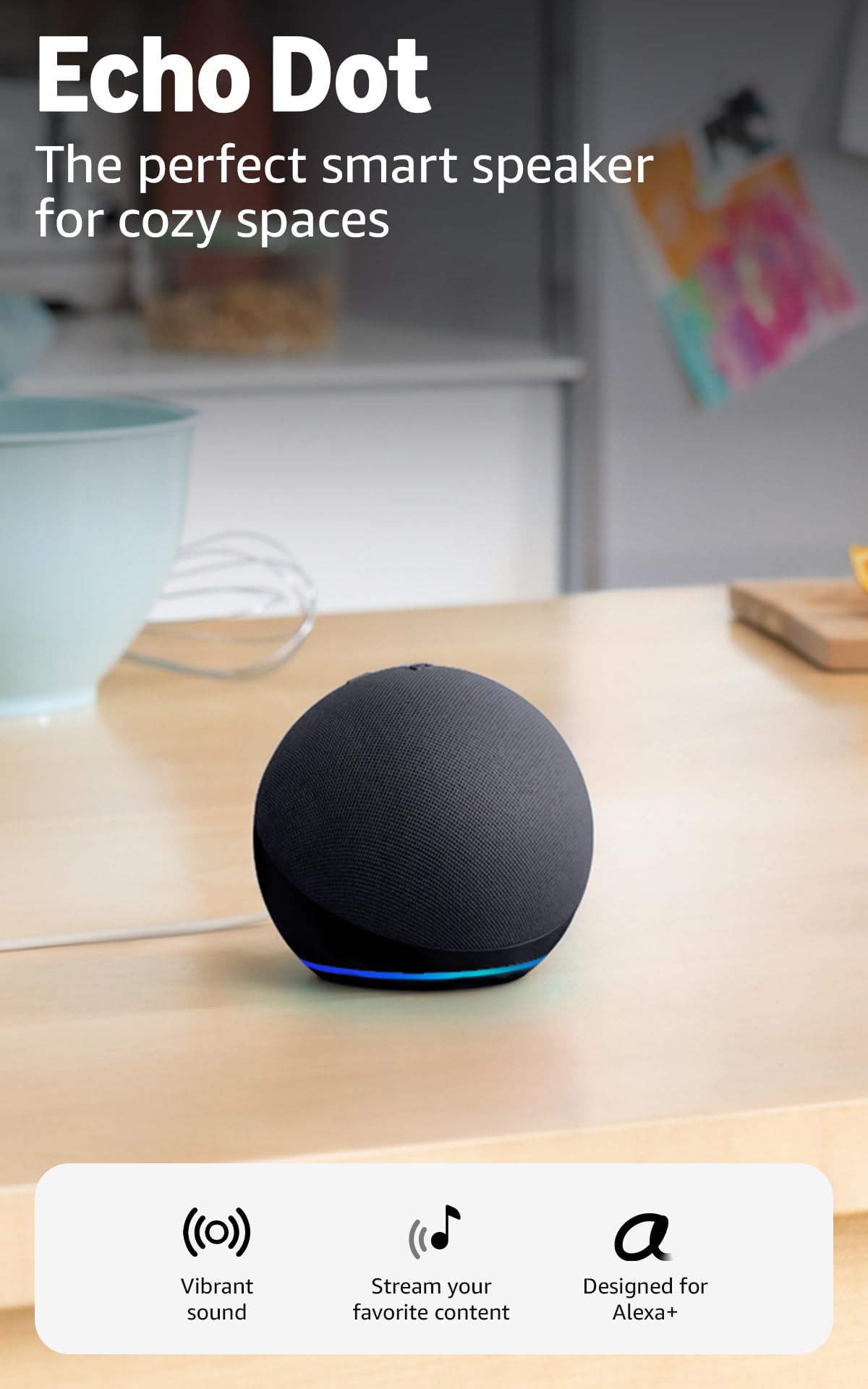
Impressive clear sound for its tiny size and built-in temperature and motion sensors make this the budget-friendly Alexa entry point for automating small spaces. The front-firing speaker produces crisp voice responses and music that’s good enough for background listening in a kitchen, bedroom, or office. Alexa responds instantly to voice commands for weather, news, and smart home control, and the built‑in motion sensor can automatically turn on lights when you enter a room. Unlike bulkier smart speakers, the Dot hides easily on a shelf and doubles as an eero mesh Wi‑Fi extender, strengthening your network while it plays.

This speaker is built for budget-conscious smart home beginners who want an always-on Alexa helper in a compact footprint. It’s right at home in bedrooms as an alarm clock, in kitchens as a timer, and in small offices where desk space is scarce. The trade-off: a segment of these units can exhibit premature shutdowns or failure, so long-term dependability is a gamble. If your morning routine depends on it, consider that risk before pressing buy.

Bottom Line: The Echo Dot is the smart speaker to get when you need Alexa in a small room and want the bonus of temperature and motion triggers for routines. Accept the possibility that it might not last years — at its price, many will still consider the gamble worth it.
#3

Best Design Statement

JBL Authentics 200

JBL Authentics 200

4.5
  • Design: Retro design, leather-like grille
  • Multi-Room: —
  • Connectivity: Wi‑Fi, Bluetooth, Ethernet, AirPlay
  • Sound Quality: Stereo, 5" woofer, dual tweeters
Check Price

Pros

  • Full, balanced stereo sound with impressive bass presence
  • Head-turning retro design that doubles as a decorative showpiece
  • Multiple streaming paths including Wi‑Fi, AirPlay, Chromecast, and Aux-in

Cons

  • Bluetooth may drop connections unexpectedly during playback
  • Voice assistant performance can be finicky, missing commands or lagging responses

Where the top pick Google Audio smart speaker leans into seamless voice control and compact neutrality, the JBL Authentics 200 draws attention with its retro styling and substantially larger audio presentation. The aluminum frame, leather-like enclosure, and Quadrex grille evoke 1970s hi-fi equipment, making it an immediate focal point that complements mid-century modern or vintage-inspired rooms. This is a speaker chosen for how it looks on a shelf, not just how it sounds.

Audio output fills a living space with warm, balanced stereo separation. The 5-inch woofer pushes robust bass without muddying vocals, and dual 1-inch tweeters keep highs crisp. Automatic self-tuning calibrates the sound to the room, reducing boomy reflections and sharp edges. Connectivity covers most streaming needs via Wi‑Fi, Bluetooth, AirPlay, Chromecast, and a physical Aux input, so playing from a phone, laptop, or turntable is straightforward.

The Authentics 200 fits homes where music enjoyment and visual presence matter more than calling out smart home commands all day. Voice assistants are built in, but responsiveness can be inconsistent — Alexa and Google Assistant may not always hear a request on the first try, and Bluetooth connections can occasionally drop. For triggering lights or setting timers, a dedicated voice hub or the Google Audio top pick will feel more dependable. Buyers who prioritize design and substantial audio over flawless smart integration will find this speaker deeply satisfying.

💡 Tip: Connect via Wi‑Fi or Ethernet for streaming when possible, and keep the speaker away from sources of signal interference to reduce the chance of Bluetooth dropouts.

Bottom Line: When a speaker's role is to anchor a room with music and retro style, the JBL Authentics 200 delivers admirably — just don't expect it to be the unshakeable voice assistant hub your smart home may need.
#4

Best Sonos Ecosystem Starter

Sonos Era 100

Sonos Era 100

4.4
  • Design: 7 x 5.1 x 7.2 in, 4.45 lbs
  • Multi-Room: Sonos multi‑room
  • Connectivity: Wi‑Fi, Bluetooth, line‑in
  • Sound Quality: Stereo, Trueplay tuning
Check Price

Pros

  • Rich stereo sound with deep, controlled bass that fills a room.
  • Quick and intuitive setup via the Sonos app for most users.
  • Sleek, modern design that blends into any home decor.
  • Hands-free Alexa and Sonos Voice Control for smart home commands and music.

Cons

  • Some units may freeze or refuse to play music, requiring a manual reboot.
  • For listening on a patio or in different rooms, the corded design tethers the speaker to one spot.

True stereo separation and deep bass with TruePlay room tuning set the Era 100 apart from portable speakers that sacrifice soundstage for battery life. This fixed-position speaker creates a wide, immersive stereo image that fills a living space, and its automatic room calibration tailors output to your specific layout. Unlike grab-and-go Bluetooth companions, it integrates into a Sonos multi-room system, so you can group it with other zones seamlessly.

Setup through the Sonos app is straightforward for most users, and the TruePlay feature uses built-in microphones to analyze your room and adjust frequencies — a genuine acoustic advantage. The result is bass that extends lower than expected from a compact enclosure, with clear vocals and crisp highs that avoid strain even at higher volumes. The matte black finish and wraparound grille melt into modern decor, and capacitive touch controls on top provide quick play/pause and volume changes without needing your phone.

The Era 100 suits households already committed to the Sonos ecosystem who want a permanent stereo speaker for dedicated music sessions. Prospective buyers should know that Wi-Fi and Bluetooth connections can drop sporadically, and the Sonos app often feels unintuitive — a reality that makes voice control via Alexa a near-essential fallback. Anyone who prioritizes simple one-tap Bluetooth streaming over room-filling sound will find a more straightforward option in the top pick. Hands-free Alexa and Sonos Voice Control handle smart home commands and music requests reliably when the network cooperates.

💡 Tip: Rely on Alexa voice commands to play music when the Sonos app feels sluggish, and place the speaker within strong Wi-Fi range to minimize dropouts.

Bottom Line: The Sonos Era 100 rewards patient listeners with rich, room-filling stereo sound and a voice assistant for smart home control, but its dependency on a stable network and tolerance for the Sonos app make the top pick a smoother all-around choice.
#5

Best for Apple Homes

HomePod (2nd Gen)

HomePod (2nd Gen)

4.5
  • Design: Seamless mesh fabric sphere
  • Multi-Room: AirPlay 2 multi‑room
  • Connectivity: Wi‑Fi, AirPlay
  • Sound Quality: Spatial audio, 5‑tweeter array
Check Price

Pros

  • Room-sensing spatial audio adapts to any space, delivering deep bass and precise highs.
  • Seamlessly blends into any decor with premium fabric mesh and a compact footprint.
  • Built-in temperature and humidity sensor automates HomeKit climate routines without extra hardware.
  • Matter and Thread support keeps the smart home hub future-ready.

Cons

  • Siri's smart home capabilities and third-party service integration are narrower than Alexa or Google Assistant.
  • No Bluetooth or direct Spotify Connect; music streaming requires AirPlay or Apple Music.

Where the top pick balances Google Assistant convenience with stereo audio, the HomePod leans entirely into spatial audio precision and deep HomeKit cohesion. A 4-inch woofer and five beamforming tweeters map the room, then adjust output for deep bass and crisp highs regardless of placement. The result is a single speaker that fills a large space with a wide, layered soundstage that seems much larger than its compact cylinder suggests.

For dedicated Apple households, the HomePod weaves room-sensing audio and a built-in temperature and humidity sensor into an effortless HomeKit brain. The tradeoff is exclusivity: there is no Bluetooth, no Spotify Connect, and Siri remains narrower in third-party services and complex routines than Alexa or Google Assistant. If your home already lives in Apple Music and iCloud, AirPlay bridges the music gap, and Siri handles HomeKit commands, intercom, and personal requests reliably within that walled garden.

The midnight mesh fabric and seamless backlit touch surface feel substantial and look understated on a shelf. The compact cylindrical profile takes up less counter space than many smart speakers, while the material choices resist smudges and blend into soft furnishings. A removable braided power cord and clean, single-cable design keep the setup tidy.

💡 Tip: AirPlay from any Apple device streams nearly any audio source — Android and Spotify Connect are not supported.

Bottom Line: If your home runs on Apple Music and HomeKit, and you want a single speaker that fills the room with adaptive spatial audio while doubling as a smart home brain, the HomePod delivers. If you need Bluetooth or Spotify Connect, this is not your speaker.
#6

Best Compact 360‑Degree Sound

Bose Home Speaker 300

Bose Home Speaker 300

4.4
  • Design: 2.1 lbs, 6‑mic array
  • Multi-Room: —
  • Connectivity: Wi‑Fi, Bluetooth, AirPlay
  • Sound Quality: 360° sound, deep bass
Check Price

Pros

  • Room-filling 360° sound from a compact, 2-pound body
  • Alexa and Google Assistant built in with a 6-microphone array that picks up voice from across the room
  • AirPlay 2 support alongside Wi‑Fi and Bluetooth for flexible streaming
  • Size-conscious design that fits on a crowded nightstand or shelf

Cons

  • Initial Wi‑Fi and Bluetooth setup can demand patience and may need multiple attempts
  • Alexa skill may occasionally drop and need re-enabling, making voice control less seamless
  • Unit may stop powering on after months of use with no clear recovery path

Immersive 360-degree sound from a compact, 2-pound sphere sets the Bose Home Speaker 300 apart from bulkier smart speakers. Unlike the top pick's stereo-focused design, this single speaker throws even audio in every direction — ideal for small rooms where you can't place a pair. The 6-mic array picks up voice commands clearly, and AirPlay 2 adds Apple streaming flexibility.

Setup doesn't always go smoothly. Wi‑Fi registration via the Bose Music app can stall, and Bluetooth pairing may take a few tries. Alexa integration can feel half-baked — the skill may need occasional re-enabling to respond. More concerning, some owners encounter a unit that stops powering on entirely after months, leaving the speaker bricked. That fragility makes it more a music-only endpoint than a robust smart assistant hub.

The Home Speaker 300 is for Bose fans who prize signature 360° audio and are willing to accept a likely fiddly first setup. It shines on nightstands, kitchen counters, and dorm desks where a single speaker must fill the room without clutter. It isn't for those who expect a seamless Alexa out-of-box experience or need a speaker with proven multi-year reliability.

💡 Tip: Position the speaker near your router during initial setup and keep the Bose Music app updated; if Alexa stops responding, re-enabling the skill in the app can restore voice commands without a full reset.

Bottom Line: If you need a small, single-speaker solution that delivers big Bose 360° sound and can accept that setup might not be plug-and-play and that long-term durability isn't guaranteed, the Home Speaker 300 fills a niche that larger, more stable alternatives may not.
#7

Portable outdoor use

Sonos Roam 2

Sonos Roam 2

4.3
  • Design: IP67 waterproof, 0.93 lbs
  • Multi-Room: Sonos multi‑room
  • Connectivity: Wi‑Fi, Bluetooth, AirPlay
  • Sound Quality: Mono, clear sound
Check Price

Pros

  • Good clear sound with punchy bass for its tiny frame
  • Ultra-portable design, easy to move from room to room or take outdoors
  • Quick to set up and pair with other Sonos gear

Cons

  • Battery life can fall well below 10 hours; drain when powered off has been noted
  • Wi-Fi and Bluetooth connections can be intermittent, with occasional pairing hiccups

The Sonos Roam 2 combines IP67 dust and water protection with crisp, room-filling Sonos sound in a 0.93-pound frame. Alexa voice control works over Wi-Fi for music and smart-home commands, and it integrates quickly with other Sonos speakers. Battery life, however, can land closer to 4-6 hours at spirited volumes, and Wi-Fi/Bluetooth connections may occasionally hiccup. This makes it less suited as a primary always-on smart speaker, but it shines as a grab-and-go satellite for short outings.

💡 Tip: Switch the speaker fully off when not in use; standby drain can catch you off guard.

Bottom Line: For Sonos households wanting a waterproof, voice-controlled satellite for short outings, the Roam 2 fills the role well — just keep a charger handy and expect Wi-Fi hiccups in fringe areas.
#8

Compact Google helper

Google Nest Mini

Google Nest Mini

4.3
  • Design: 4 x 4 x 2 in, fabric top
  • Multi-Room: Google multi‑room
  • Connectivity: Bluetooth, Wi‑Fi
  • Sound Quality: Single speaker, improved bass
Check Price

Pros

  • Google Assistant responds quickly and accurately, and the speaker feels solidly built.
  • Surprisingly clear and loud enough for a hallway or bathroom, with better bass than the 1st‑gen.
  • Discreet wall-mountable design blends into any room and is simple to operate.

Cons

  • Wi‑Fi and Google Home app pairing can occasionally drop, requiring a reboot to restore voice commands or music.

The Nest Mini is a tiny, wall-mountable way to put Google Assistant into a hallway, bathroom, or any small space without a screen. Its single speaker serves clear voice responses and enough volume for background music, and the microphones pick up commands reliably even from across the room. This international listing ships defaulting to Japanese and includes a non‑US power plug. A quick reset to English and a plug adapter (or a spare USB‑C cable) clears the hurdle, so anyone expecting a literal out‑of‑box ready experience will need to budget a few extra minutes. For Google‑centric homes that can handle that one‑time language swap, it adds voice control at a budget‑friendly price.

Bottom Line: This tiny speaker is right for adding Google Assistant voice control to secondary rooms where sound quality is not the priority and a one‑time setup step is a minor detour rather than a dealbreaker.

How to Choose

Sound Quality

Driver size and cabinet design directly determine bass extension and clarity. A single 2-inch driver struggles to reproduce frequencies below 80Hz, so vocals will sound clear but music will lack warmth. For critical listening, look for a dedicated woofer — ideally 3 inches or larger — and stereo drivers for separation.

Room acoustics matter too. A speaker placed in a corner amplifies bass, while an open shelf can muddy the sound. If you want deep, even coverage, consider a model with automatic room tuning, like Sonos Trueplay or Apple's room sensing, which adjusts output to the space.

Voice Assistant Accuracy

Alexa and Google Assistant behave differently on native versus third-party hardware. Amazon Echo and Google Nest devices are tuned from the ground up for always-on listening, so wake-word detection and command execution are more fluid. Third-party speakers often add processing lag and can lose their connection to the cloud, causing delayed responses or 'Sorry, I didn't catch that' moments.

If you rely on voice control for lights, locks, or routines, a first-party device is the safer choice. The subtle gap in microphone sensitivity and system integration outweighs the step up in audio quality you might get from a design-focused brand.

Connectivity Reliability

Smart speakers rely on a stable Wi‑Fi signal, and their internal antennas are often smaller than a smartphone's. Placing a speaker behind a thick wall or near a microwave can cause regular dropouts. Dual-band routers with both 2.4 GHz and 5 GHz help, but a mesh Wi‑Fi system is the surest solution for multi-room setups.

Bluetooth is handy as a fallback, but range is limited to about 30 feet and audio quality compresses. When a speaker advertises Wi‑Fi and Bluetooth, expect Bluetooth to be the secondary option, not a replacement for a solid network.

Design & Footprint

Fabric-wrapped spheres and minimal cylinders blend into modern decor, but dust and moisture cling to fabric over time. Matte metal or sealed plastic bodies resist smudges and clean easily, though they can show scratches. Size also dictates where a speaker can live: a 7-inch-tall model demands a dedicated side table, while a 4-inch puck tucks onto a bookshelf.

Heat dissipation influences longevity. A speaker that runs warm in a tight space may degrade its electronics faster. Larger cabinets generally allow better airflow, so resist the urge to hide a premium speaker in a closed cabinet.

Multi-Room & Stereo Pairing

True multi-room audio requires all speakers to live on the same platform — Sonos with Sonos, Google with Google, AirPlay with AirPlay. Mixing brands breaks synchronized playback, so commit to one ecosystem early. Stereo pairing two identical speakers creates a soundstage a single unit can't match, making it the most impactful upgrade for music lovers.

The hidden cost of multi-room is network traffic. Each additional speaker demands bandwidth and low latency. A router that handles two speakers smoothly may stutter with four, especially if other devices are streaming video simultaneously.

Frequently Asked Questions