Storage

12 Best Toy Storage of 2026: Storage That Won't Sag or Tip

Which toy storage bins keep their shape and racks stay anchored—so your playroom stays tidy and safe, without ruining your home's decor.

Toy storage baskets and bins often look charming in online photos, but after a few months of daily use, you might find sagging fabric, wobbly racks, and lids that won't stay put. The gap between a styled product image and the reality of toddler-level tugging is wider than most parents expect.

The right storage shouldn't just hide the mess—it should survive that tugging, keep its shape, and blend into your living space without looking like a nursery afterthought. That means prioritizing rigid frames, locking bin rails, and materials that hold up under frequent loading and unloading.

Whether you need a massive bin rack for a playroom, a soft chest for the living room, or a creative solution for a stuffed animal avalanche, the picks here put durability and design first—so the storage works as hard as your family does.

#1

Best Overall

Pros

  • Effortless assembly: frame goes together in about 20 minutes with no power tools. — 1,607 mentions, 90% positive
  • Impressive storage capacity: 16 bins in two sizes hold a large volume of toys without towering over kids. — 888 mentions, 95% positive
  • Excellent visibility: open-front bins let kids see and grab toys, encouraging cleanup independence. — 844 mentions, 99% positive

Cons

  • Bins can crack or arrive with shipping damage, though replacements are available. — 716 mentions, 76% negative

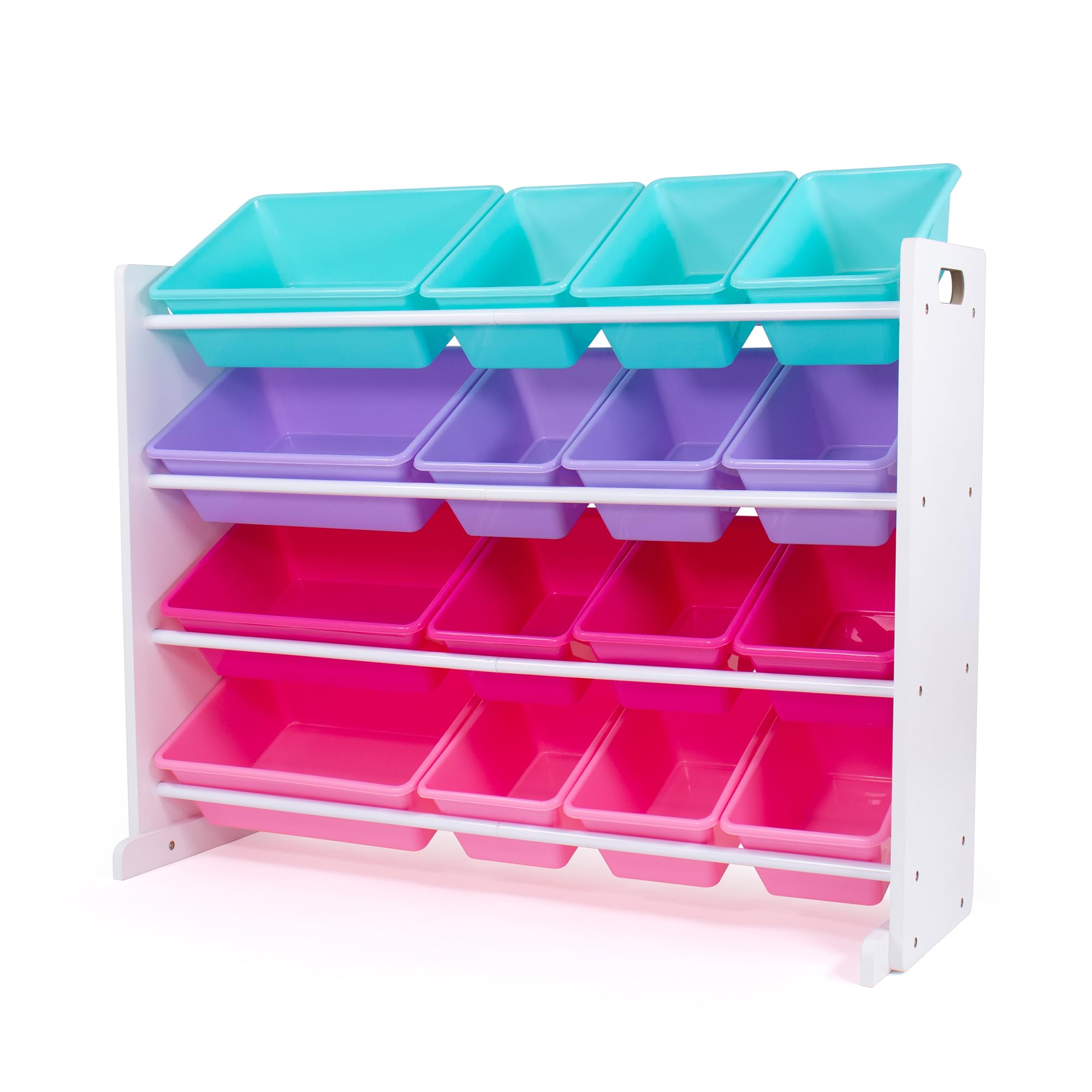
Assembling the steel-reinforced frame takes about 20 minutes with no power tools, and the 16 BPA-free bins—12 standard, 4 large—slide securely into place. Rounded corners and the included wall-anchor kit add a layer of safety for younger kids. The open-front design keeps every toy visible, so children can spot and grab what they want without dumping entire containers, which naturally encourages independent cleanup.

This organizer suits families juggling a large mix of small-to-medium toys across multiple kids. The low, wide layout works as a central sorting hub that doesn’t overwhelm a playroom. Plastic bins can crack during shipping or with rough handling, but Humble Crew replaces them upon request. It is not built for heavy books or oversized ride-ons that exceed the 20-pound per tier limit—those belong in sturdier storage.

💡 💡 Tip: If a bin arrives cracked, Humble Crew will send a free replacement upon request.

Bottom Line: For families needing a high-capacity, child-height system that makes toy sorting visible and doable for kids, this organizer delivers—just keep the manufacturer’s contact handy for the occasional cracked bin.
#2

Best Stuffed Animal Storage Bean Bag

Pros

  • Gobbles up an overwhelming stuffed animal collection—frees shelves and floor space. — 806 mentions, 99% positive
  • Thick cotton canvas and a YKK zipper stand up to daily kid use without tearing. — 415 mentions, 99% positive
  • Kids treat it as a permanent reading nook, not just storage. — 285 mentions, 93% positive

Cons

  • Hard toys stuffed inside make the seat lumpy and uncomfortable — strictly a plush-only storage solution. — 20 negative comfort mentions; hard toys or objects create an uneven, uncomfortable seat.

This bean bag cover converts a stuffed animal problem into a 38-inch seat, unlike multi-bin organizers that consume shelf real estate. It holds enough plush to empty several overstuffed baskets, then becomes a reading or lounging spot kids use daily. The thick canvas and YKK zipper withstand months of kid handling. Any hard toys mixed in will create lumps, so it works best filled only with soft plush — not blocks or toy cars.

💡 💡 Tip: Fill only with soft stuffed animals to maintain a smooth, comfortable seat.

Bottom Line: For homes drowning in plush, this cover turns a mess into a functional lounger, as long as you keep the hard toys separate.
#3

Best Character-Themed Organizer

Pros

  • Official Bluey graphics and reusable stickers motivate toddlers to clean up — 650 mentions, 98% positive on appearance
  • Assembly takes under 10 minutes with clear instructions — 767 mentions, 97% positive on ease of assembly
  • Six bins hold a useful amount of light toys and books — 302 mentions, 94% positive on storage capacity

Cons

  • Fabric bins may sag over time and the frame can feel wobbly — 567 sturdiness mentions, 45% note bins lose shape

Bluey-obsessed toddlers have a new reason to clean up. Unlike neutral fabric organizers, this unit uses licensed character graphics and vinyl cling stickers to make tidying feel like play. Assembly takes most parents under 10 minutes, and the six fabric bins hold a decent amount of small toys, books, and art supplies.

It's best for light storage needs where the goal is a fun, inviting routine. The fabric bins can lose their shape over time, and the unit is smaller than listing photos suggest—not a heavy-duty replacement for a primary toy system. Check dimensions before ordering; it works better in a corner or bedside nook than a packed playroom.

💡 💡 Tip: Place heavier items in the lower bins to reduce sag and keep the unit stable.

Bottom Line: Right for parents who want to make cleanup exciting for Bluey fans, provided they don't expect it to handle heavy toy loads.
#4

Best Space-Saving Hanging Storage

Pros

  • Holds dozens of stuffed animals vertically without floor space — 540 mentions, 95% positive
  • Frees up shelf and floor space instantly — 155 mentions, 99% positive
  • Simple no-drill installation in minutes — 281 mentions, 98% positive

Cons

  • Fabric can tear or support rods may poke through with rough daily handling — 347 mentions, 46% negative

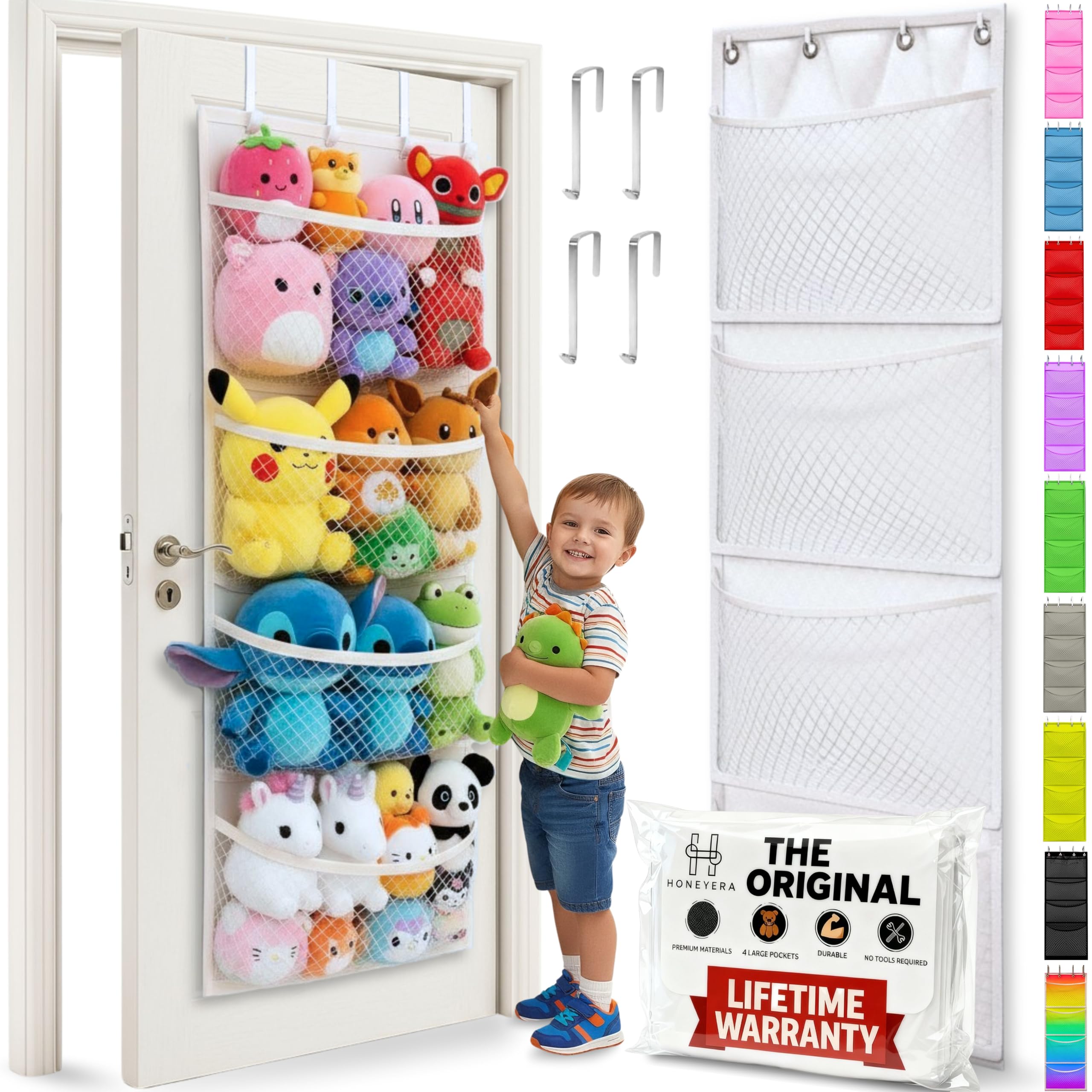
The Honeyera Over Door Organizer clears stuffed animal clutter by using vertical door space—four deep mesh pockets hold dozens of plush toys without consuming an inch of floor area. Four metal hooks slip over a standard door in under five minutes, making it a quick solution for renters and anyone avoiding drills. Intended for gentle, occasional access, it works well in nurseries or guest rooms where kids aren’t tugging on it daily. For high-traffic playrooms where stuffed animals get yanked repeatedly, the fabric and rods may not hold up over time.

Bottom Line: For quick, temporary stuffed animal overflow in calm spaces, this budget organizer tidies instantly—just keep it out of reach of daily tugging.
#5

Best Budget Fabric Chest

Pros

  • Spacious interior for the price, easily holding a mix of toys and plush. — 120 mentions, 99% positive on capacity; fits a lot of toys for the price.
  • Linen-look fabric and neutral color blend into living room decor without standing out as toy storage. — 136 mentions, 98% positive on appearance; blends nicely in living rooms.
  • Instantly unfolds and assembles without tools, adding convenience for busy parents. — 81 mentions, 98% positive; pops open in moments.

Cons

  • Sides and lid Velcro can soften over months, so it’s not suited for heavy or sharp-edged toys. — 219 durability mentions, 43% negative — sides may bow and lid Velcro can weaken.

The Gowee Fabric Chest stands apart from many collapsible options by dressing practical storage in a linen look that fits right into a living room. With 83 liters of capacity and a removable divider, it swallows a surprising amount of stuffed animals, blocks, or dress-up clothes. The flip-top lid has no pinch points, and the whole chest pops open in moments—no tools required.

It’s the choice for parents who want soft, accessible toy containment that doesn’t demand a dedicated playroom. Expect the cardboard-framed sides to soften over months, particularly with heavy or awkward items; this is a light-use solution, and heavy daily play may mean replacing it after a year or two.

💡 💡 Tip: Use the removable divider to separate lighter plush from denser toys—this helps the sides hold their shape longer.

Bottom Line: The best low-cost fabric chest for light use; expect to replace after a year or two of heavy play.
#6

Best Wooden Stuffed Animal Cage

Pros

  • Adorable zoo design turns stuffed animal storage into room decor.
  • Holds 40+ plushies in a compact 15.7-inch square footprint.
  • Elastic-string assembly requires no tools or hardware.

Cons

  • Pine wood feels lighter and less substantial than furniture-grade pieces.
  • Screw holes may strip during assembly, affecting joint strength. — Occasional reports of stripped screw holes and a lighter feel than expected.

Unlike bulky multi-bin storage racks, the Woodure Stuffy Zoo turns stuffed animal clutter into a playful vertical display. It holds 40+ plushies in a 15.7-inch square footprint, assembling without tools and including a personalizable nameplate. This suits children who want their collection on show in a bedroom corner — not hidden away. Just treat it as a lightweight display piece, not furniture: the pine wood can feel light, and occasional stripped screw holes mean it won't withstand climbing or heavy pulling.

Bottom Line: This is the right storage when you want a whimsical zoo display that saves floor space, not a piece of furniture built for climbing or heavy use.
#7

Pastel color sorting

Pros

  • Fast, tool-free assembly with no confusion. — 799 mentions, 98% positive; goes together quickly with no drama.
  • Compact 12-bin layout brings clear order to tight spaces. — 508 mentions, 99% positive; everything has a designated spot, great for small spaces.

Cons

  • Can tip if left freestanding, so wall anchoring is required. — 517 sturdiness mentions, 19% negative — some units wobble or tip without anchoring.

The pastel 12-bin rack assembles in minutes and packs solid organization into a slim 13-inch-wide footprint. Its color-coded bins help kids sort by category, and the BPA-free plastic handles daily knocks well. The included wall-anchor hardware is essential—this organizer is designed to be secured, so it’s best for homes where drilling into a wall is feasible. It’s very similar to the top pick but has fewer bins and costs a bit more; choose it if the pastel palette and compact frame matter more than raw capacity.

Bottom Line: A practical pick for playrooms where wall anchoring is an option and the pastel color-coding aids cleanup; just know you’re trading some bin count and price for that aesthetic and compactness.
#8

Small toy cubbies

Pros

  • Beautiful, soft cotton rope that blends with nursery decor and won't scratch floors — 236 mentions, 98% positive on appearance
  • Surprisingly sturdy for soft baskets; holds shape well when filled — 165 mentions, 90% positive on durability

Cons

  • Smaller than some expect: 18L capacity may not hold as much as listing photos suggest — 34 negative size mentions

These three cotton rope baskets bring a soft, washable look to nursery shelves. They hold shape better than typical fabric bins, keeping diapers and small toys tidy. At 18 liters each, they’re not meant for large toy storage; photos can make them seem bigger. They suit light, small-item organization where style and safety matter more than bulk capacity.

Bottom Line: For organizing diapers, socks, and small toys on nursery shelves, these soft baskets offer style without sharp edges—just don't expect them to replace larger floor bins.
#9

Blanket/plush dumping

Pros

  • Swallows multiple oversized blankets or a dozen stuffed animals with room to spare. — 82 mentions, 100% positive on capacity
  • Gradient brown cotton rope weave looks warm and intentional, elevating any room corner. — 101 mentions, 97% positive on appearance

Cons

  • Heavy loads may distort the cotton rope sides over time, leaving a saggy silhouette. — 13 durability mentions of sagging

The OIAHOMY 108L basket swallows oversized plush and blankets in a soft cotton rope body with double-reinforced handles, adding decor-friendly texture to a corner. But for sorting small toys like action figures or puzzle pieces, the deep open interior only loses them. It's a blanket-and-plush catch-all, not a toy organizer.

Bottom Line: For living rooms needing a stylish bin to corral large plush and throw blankets, this basket is an affordable alternative to furniture — just keep it away from small toy clutter.
#10

Budget light storage

Pros

  • Assembles quickly without tools, even for one person. — 845 mentions, 97% positive
  • Nine bins in three sizes hold a large volume of small toys. — 471 mentions, 95% positive on storage capacity

Cons

  • Fabric bins may sag and the frame can wobble under heavier items. — 628 mentions

Tool-free assembly takes minutes and the neutral grey/blue finish blends into most rooms. The nine soft bins offer ample space for small, lightweight toys. Fabric bins can lose their shape over time, and the wood frame may wobble under heavier loads — making this best for nurseries, guest rooms, or gentle daily use.

Bottom Line: For parents needing an affordable, attractive storage solution for light toys in a low-traffic area, this organizer works well — expect to handle bins gently.
#11

Temporary storage

Pros

  • Pops open in seconds with no complex assembly. — 69 mentions, 100% positive; pops up in seconds.
  • Fits a lot of regular toys with its generous 82L volume. — 93 mentions, 97% positive on capacity.

Cons

  • Fabric sides can bulge or collapse if packed with heavy toys. — 120 sturdiness mentions, 39% negative — sides may bulge or collapse if overloaded.

The YOLOXO box assembles instantly and holds a generous amount of dress-up clothes or lightweight toys, making it ideal for moving day or a quick closet tidy. The fabric sides can buckle if overloaded, so it lacks the long-term sturdiness of the Gowee fabric chest, which holds the budget slot. For occasional, light storage, it’s a handy spare.

Bottom Line: For lightweight temporary storage like dress-up clothes during a move, it’s a handy, instant solution — not for standing up to daily heavy use.
#12

Small toy sorting

Pros

  • Makes small-toy organization effortless for Legos, puzzles, and game pieces. — 145 mentions, 99% positive on organization
  • Clear panels let kids find pieces without dumping everything out. — Transparent design praised for quick identification

Cons

  • Zippers can be fragile, requiring gentle handling to avoid breakage. — 80 mentions, 56% negative on zipper fragility

Transparent walls make every piece visible at a glance, and the write-on labels keep kid chaos organized. The bags handle granular toy parts like building sets and action figures with ease, but they only solve small-item sorting — not a full room’s storage. The zippers demand a gentle touch; overstuffing leads to snags.

Bottom Line: Ideal for families who need to subdivide toy sets into portable, visible pouches — just keep these as a supplement to a larger bin system.

How to Choose

Type

Open bin racks with forward-tilting bins let kids see and grab toys, fostering independence, but only if the bins lock securely onto rails. Racks without locking lips or deep grooves allow bins to slide out every time a child reaches in.

Chests and lidded boxes hide visual clutter and work well in living rooms, but lids that are heavy, detachable, or lack soft-close mechanisms become safety hazards or daily annoyances. Hanging and vertical solutions save floor space yet typically trade long-term durability for that convenience.

Material

Plastic bins hold their shape and are easy to wipe clean, but some resins can crack under impact or if a toddler stands on them. Engineered wood frames with steel reinforcement resist wobble better than pure wood, but solid wood chests often split at screw points during assembly.

Fabric bins and cotton rope baskets look soft and decor-friendly, but without rigid inserts or thick structured walls, they inevitably sag and bulge after a few months of being stuffed and tugged. The most durable fabric organizers use heavyweight canvas with reinforced edges.

Safety

Tall bin racks concentrate weight at the front of each shelf, creating a tipping hazard that trips the Center of Gravity if a child pulls on an extended bin. A wall anchor kit—properly screwed into a stud—transforms a wobbly rack into a stable piece of furniture.

For chests, a lid that stays open in any position prevents finger pinching, but low-quality safety hinges can loosen over time, rendering the lid unstable. BPA-free plastic should be verified for units that toddlers may mouth.

Assembly

Tool-free snap-together designs speed up setup, but the trade-off is often less rigidity because joints rely on pegs and light tension rather than mechanical fasteners. Units that require a screwdriver or Allen key generally form tighter, longer-lasting connections.

Wooden chests and some larger organizers frequently arrive with pre-drilled holes that are slightly misaligned, causing wood to split if forced. If a product advertises tool-free assembly, check reviews for mentions of stripped threads or wobbly final frames.

Capacity

Bin count and dimensions mean little without understanding what you will load. Deep, wide bins swallow bulky playsets but bury small pieces at the bottom; shallower bins suit action figures and puzzles but overflow with large trucks. Always match bin proportions to your dominant toy size.

Weight ratings per tier or overall are equally critical—overloading top shelves accelerates tipping risk, while a fabric chest stretched beyond its rated liters will collapse inward. The smartest setups combine a few large catch-all bins with several small sorting bins.

Frequently Asked Questions