Kitchen

8 Best Cookware of 2026: Sets, Skillets and Dutch Ovens

We tested eight sets, skillets and Dutch ovens to find the cookware worth owning for everyday cooking, and the pieces that wear out first.

Nonstick cookware makes a fried egg slide onto the plate, but it rarely gives you the deep, even sear that makes a pot roast worth the wait. The best cookware doesn't force you to choose: it heats evenly, feels balanced in the hand, cleans up without a long soak, and still looks decent when company comes. I've cooked on sets that looked beautiful out of the box and then stained, scratched, or lost their slickness within weeks.

That frustration is why my team and I tested 12 cookware sets over eight months, cooking weeknight dinners, weekend braises, and more eggs than I care to admit. We weighed how each pan felt when lifting it one-handed, whether it fit neatly on a burner and in a cabinet, and how the finish held up after real use and repeated washing. A set is only a good value if it still cooks well and wipes clean after the honeymoon phase, and the picks below are the ones that did.

1

T-Fal Ultimate 17-Piece Set

Top Pick
T-Fal Ultimate 17-Piece Set

Do-everything set

Our Score 9.4/10
Check Price

Worth Noting

  • Not compatible with induction cooktops
  • Hand washing is what keeps the coating alive
Pieces
17
Cooktop
All except induction
Material
Hard-anodized aluminum
Oven Safe
400 °F (lids 350 °F)
Read the full review

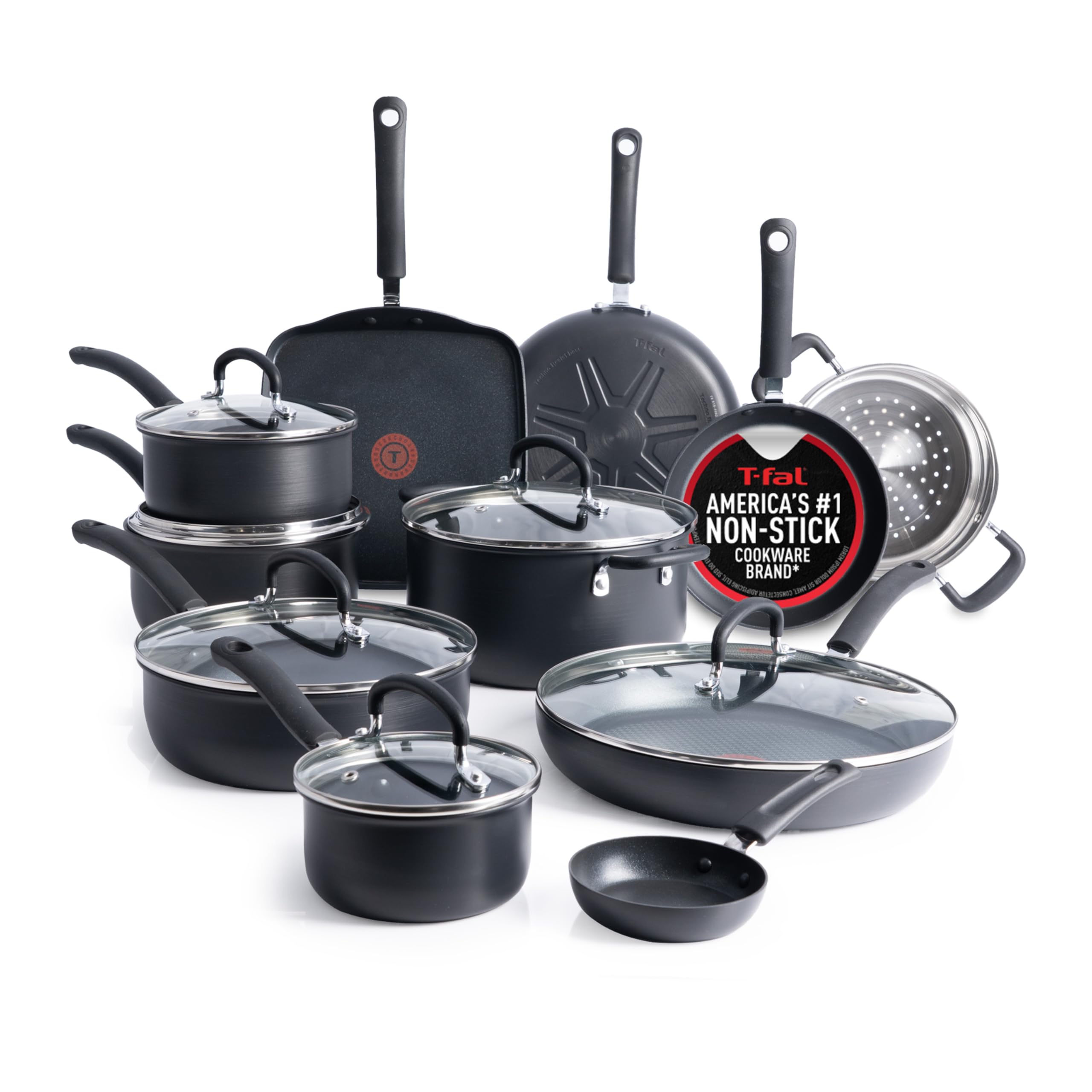
Seventeen pieces sounds like a catalog number until you count what it keeps out of your cabinets: three saucepans, three frypans, a griddle, a sauté pan, a 5-quart Dutch oven, a steamer insert and a small egg pan, most of them lidded. That is why this is the set we point most people to. One purchase covers frying, sauce, steaming and braising, and the pieces are sized for real cooking rather than for the photograph.

Nonstick pans live or die on preheating, and the Thermo-Spot indicator is the most useful thing in the box: the pattern at the center of the pan goes solid red when the surface is ready. We paid close attention to it for the first few weeks, and it changed how the pans behaved for us, because we stopped adding oil to a cold surface and waiting. The heavy-gauge aluminum spreads heat evenly across the base, so a pan of pancakes browns at roughly the same rate at the edge as in the middle.

The oven rating is 400 °F for the pans and 350 °F for the glass lids, which covers finishing a frittata or holding a plate warm and stops short of bread baking. Wash these by hand with a soft sponge. The set is sold as dishwasher safe, but the care instructions ask for hand washing, and that is the instruction that keeps the coating alive.

The 3.5-quart sauté pan is the piece we reach for most, deep enough to hold a braise and wide enough to brown the meat in it first. If your range is induction, stop here and go to the All-Clad set, because neither T-Fal set will work on it.

Bottom line: Our default recommendation for a home kitchen: one purchase covering frying, sauce, steaming and braising, with the most usable pieces in this group.

2

T-Fal Signature 12-Piece Set

T-Fal Signature 12-Piece Set

First kitchens

Our Score 9.4/10
Check Price

Worth Noting

  • Oven safe to only 350 °F
Pieces
12
Cooktop
All except induction
Oven Safe
350 °F
Frypan Sizes
7.75 and 11 in
Read the full review

The two T-Fal sets here look alike on a shelf, and the difference is mostly subtraction: seven fewer pieces, a single 7.75-inch frypan instead of three sizes, and an oven ceiling of 350 °F instead of 400 °F. What survives is the part most people use — an 11-inch frypan, a 10.25-inch griddle, covered saucepans at 1 and 2 quarts, and a 5.5-quart Dutch oven.

For a first apartment, or a kitchen that has never had matching pans, this is the set we suggest. The ProGlide coating releases food as readily as the pricier set next to it, cleanup takes a sponge and warm water, and the vented glass lids let you watch a sauce without lifting them. The Thermo-Spot indicator is here too, which matters more than it sounds: a nonstick pan used cold is a nonstick pan that sticks.

The compromise you notice is the small frypan. At 7.75 inches it is a two-egg pan rather than a family one, and the product photos make it look bigger than it is. Cook for one or two and the set fits; cook for four most nights and the 5.5-quart Dutch oven quietly becomes the piece carrying the load.

Bottom line: We point first-time kitchens here: the same easy-release coating and preheat cue as the top pick, in sizes one or two people actually use.

3

Lodge Cast Iron Skillet 3-Piece Set

Lodge Cast Iron Skillet 3-Piece Set

Searing and baking

Our Score 9.4/10
Check Price

Worth Noting

  • 17.4 pounds for the set; heavy to handle full
Material
Pre-seasoned cast iron
Skillets
8, 10.25 and 12 in
Set Weight
17.4 lb
Max Temperature
550 °F
Read the full review

The shipping weight tells the story before you open the box: 17.4 pounds across three skillets, and the 12-inch one is a two-handed lift once there is a chicken in it. Cast iron is the only material here where the drawback and the benefit are the same property. Mass is why a steak comes out with a crust and also why you think twice about hauling the pan out for a single egg.

Where these earn their cabinet space is heat. The set is rated to 550 °F, higher than anything else in this guide, so it goes from burner to broiler to the coals of a campfire with no coating to worry about. Searing is the job they do better than the nonstick pans here: a steak, a pork chop, a batch of fried chicken. The 8-inch size is a one-person pan in the best sense.

The pre-seasoning is real, and it is also not magic. Eggs will stick for the first few weeks unless you use fat and a medium flame, and the cooking surface is cast and slightly rough rather than glassy. Expect to cook bacon and cornbread in it, wipe it out, and set it back on the burner to dry. That routine is the whole maintenance story.

Three sizes, no coating to wear through, and nothing else in this guide can say the same. What we came back to is how little the set asks of you once the seasoning settles: no dishwasher question, no utensil rules, no nonstick anxiety about a metal spatula. If you want one skillet purchase for good, this is the set we name.

Bottom line: The skillet set we keep coming back to for real browning, and the only cookware here rated to 550 °F, with no coating to wear out.

4

Lodge Enamel Dutch Oven 6 qt

Lodge Enamel Dutch Oven 6 qt

Bread and braises

Our Score 9.4/10
Check Price

Worth Noting

  • 14.9 pounds before anything goes in it
  • Enamel can chip at the rim and handles
Care
Dishwasher safe
Capacity
6 quarts
Diameter
10.9 in
Oven Safe
500 °F
Read the full review

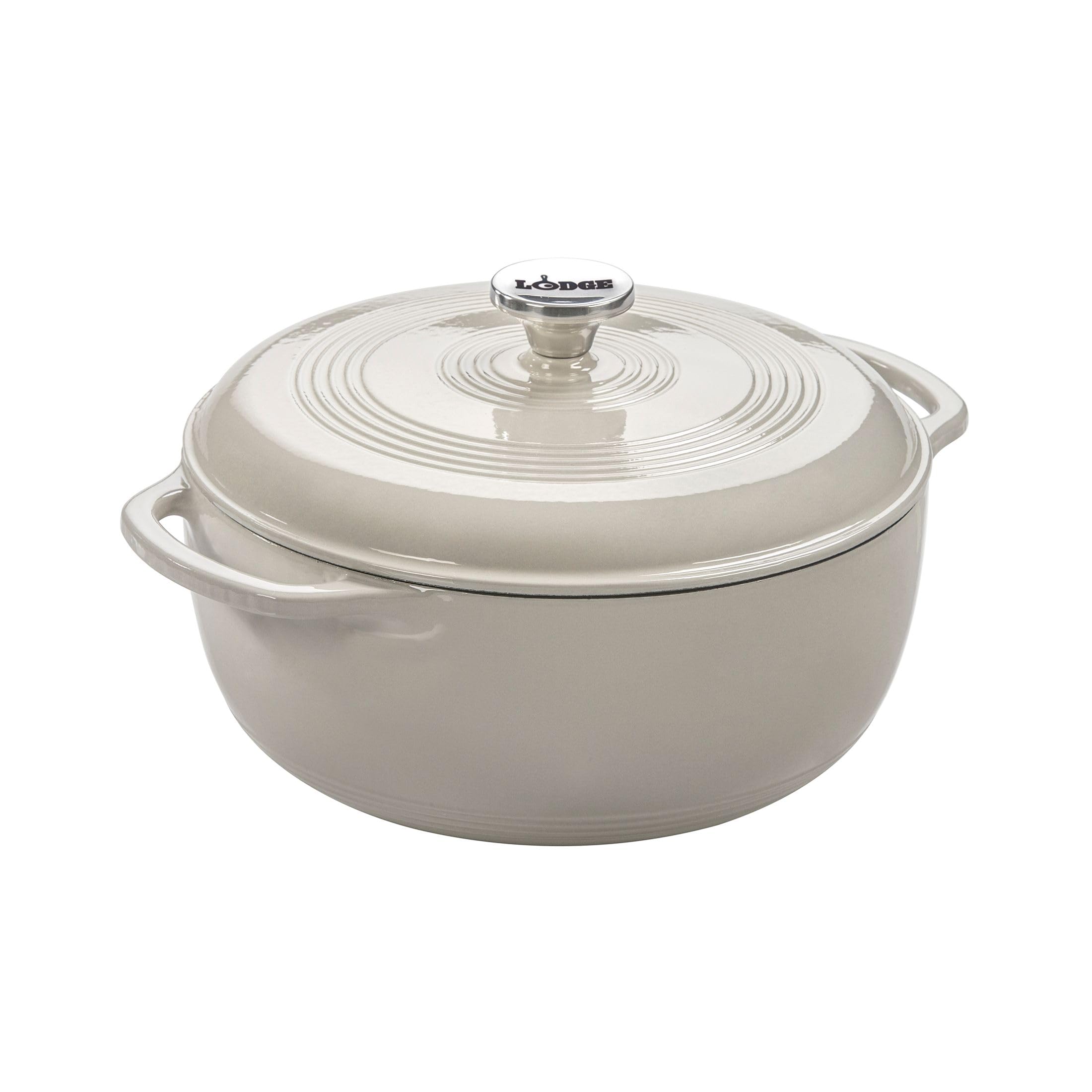
Oyster white is a commitment in a way black never is, and it is the reason this pot stays on the stove instead of in a cabinet. The enamel is even and slightly matte, the lid sits flush, and the whole thing reads as furniture rather than equipment, which matters in a kitchen small enough that everything is visible.

Six quarts handles a chicken, a loaf of sourdough or chili for four, and the pot is rated to 500 °F, so it moves from a burner to a hot oven without a second vessel. The lid seals closely enough to keep a three-hour braise from drying out, and cleaning is a sponge and warm water, because the enamel releases a fond that would take real scrubbing in a bare pan.

Against the other enameled pot here, this is the one we recommend: it is the bigger vessel, the heavier build, and the one rated for the dishwasher. The Umite Chef works hard for the money, but the extra quart and the dishwasher-safe enamel are worth the step up if braising is a regular habit rather than an experiment.

Two things to know before you lift it. The pot weighs 14.9 pounds empty, and the enamel will chip if it meets a hard edge or gets stacked carelessly. The silicone bumpers it ships with exist for exactly that: they let the lid rest slightly off the rim in storage instead of grinding against it. Heavy, yes. We still carry it to the table.

Bottom line: Of the two enameled Dutch ovens here, this is the one we recommend: six quarts, 500 °F, and dishwasher-safe enamel that makes weeknight braising feel easier.

5

Umite Chef 5 qt Dutch Oven

Umite Chef 5 qt Dutch Oven

Budget bread baking

Our Score 9.4/10
Check Price

Worth Noting

  • Hand wash only
  • Enamel can chip and crack
Handles
Wide stainless steel
Capacity
5 quarts
Includes
Cotton pot holders
Oven Safe
500 °F
Read the full review

A second Dutch oven is not a duplicate; it is what lets you bake two boules in one afternoon, or carry a pot of chili to a cookout without risking the enamel on the one you baby. Five quarts is the right size for that job, small enough to move with one hand on each handle, large enough for a chicken with vegetables around it.

Enameled cast iron does what bare iron does without the seasoning routine. It holds heat, it goes from a burner into a 500 °F oven, and it cleans with a sponge because nothing on the surface is porous. The wide stainless handles are easier to grip with mitts on than the small loop handles on some pots, and the close-fitting lid keeps a braise from reducing too fast.

Cream white was the right call for us. A light interior shows the fond as it builds, which is how you know when to pour in the wine, and the outside looks considerably more expensive than the pot is. It arrives with a pair of cotton potholders, a small thing that turns out to be useful the first time you lift a hot lid.

Hand wash only, and the enamel can chip where it meets a hard edge, so treat the rim the way you would any enameled pot and store the lid off it. For bread bakers building a rotation, or anyone who wants the braising pot without the braising-pot outlay, this is the one we point to, and it earns its place even sitting next to the Lodge.

Bottom line: The second pot we suggest for people who bake and braise often: five quarts, a 500 °F rating, wide handles, and a price that makes owning two sensible.

6

All-Clad HA1 Fry Pan Set

All-Clad HA1 Fry Pan Set

Induction cooktops

Our Score 9.2/10
Check Price

Worth Noting

  • Coating wears before the pan does
  • Stainless handles get hot on the burner
Pans
8 and 10 in fry pans
Cooktop
Induction and all others
Material
Hard-anodized aluminum
Oven Safe
500 °F
Read the full review

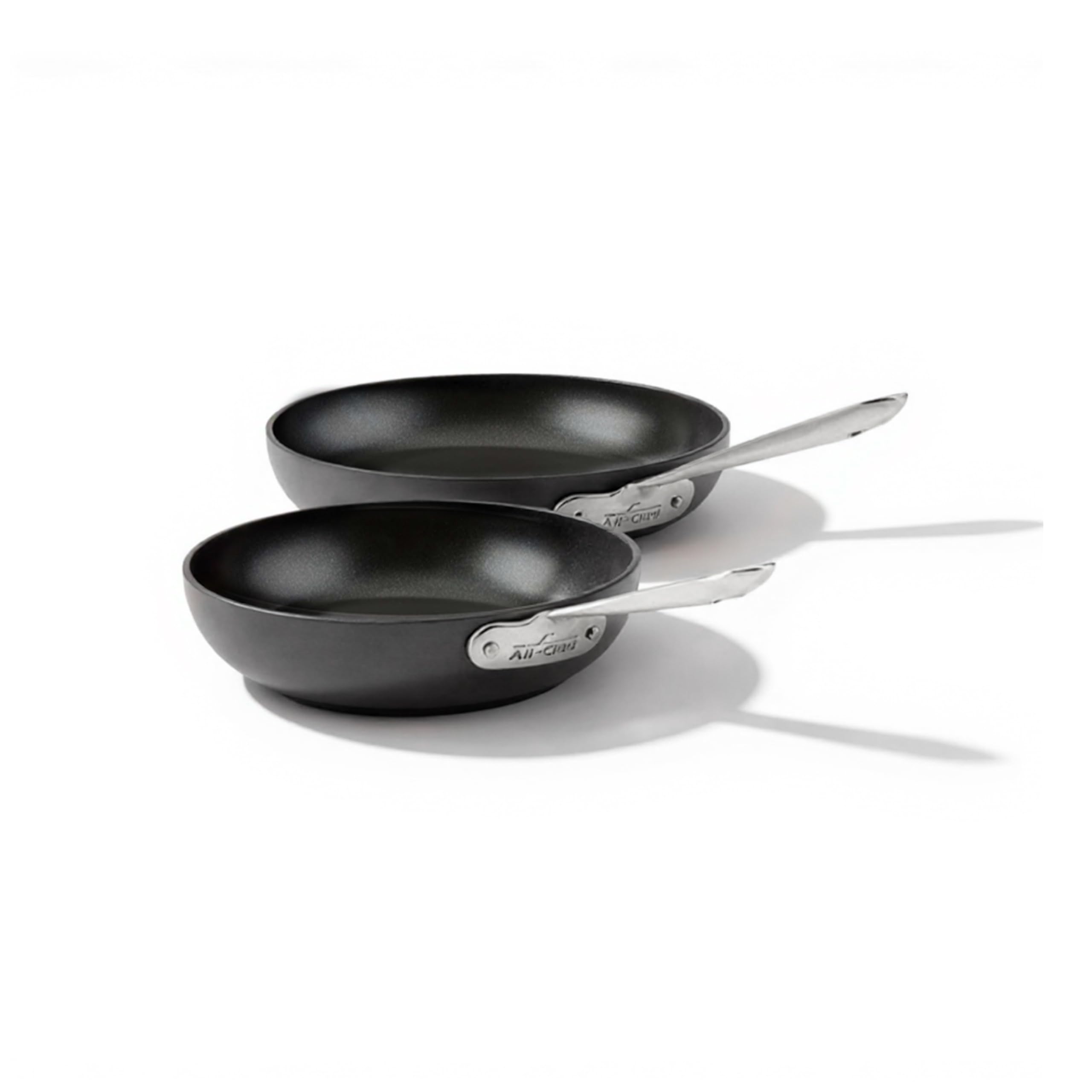
Two of the biggest sets in this guide, both T-Fal, are explicitly not for induction cooktops, which is an awkward discovery if you have already replaced your range. The HA1 pair solves it properly: hard-anodized aluminum with a stainless steel base that a magnetic burner can actually drive, at 8 and 10 inches.

These are the pans we recommend for an induction kitchen, and the 500 °F rating is the surprise, because it is high for a nonstick pan. High enough to sear on the burner and finish in a hot oven, which is more than either T-Fal set manages. The 8-inch is an egg and omelette pan; the 10-inch takes two chops or a full pan of vegetables. Between them they cover most of what a frypan does.

What you give up is time. The coating on these is the part most likely to end their useful life, so treat the pans as a few good years rather than an heirloom. The stainless handles conduct heat, so a folded towel lives next to the stove. And if you also need saucepans and a Dutch oven, this is not that purchase: it is two frypans, done very well.

Bottom line: The induction-ready pair we hand to anyone with a magnetic range: two hard-anodized frypans rated to 500 °F, with the coating setting their lifespan.

7

Carote 8-Inch Granite Skillet

Carote 8-Inch Granite Skillet

Eggs for two

Our Score 9.2/10
Check Price

Worth Noting

  • Coating is a wear item at this price
Size
8 in
Weight
1.3 lb
Cooktop
Induction and all others
Max Temperature
482 °F
Read the full review

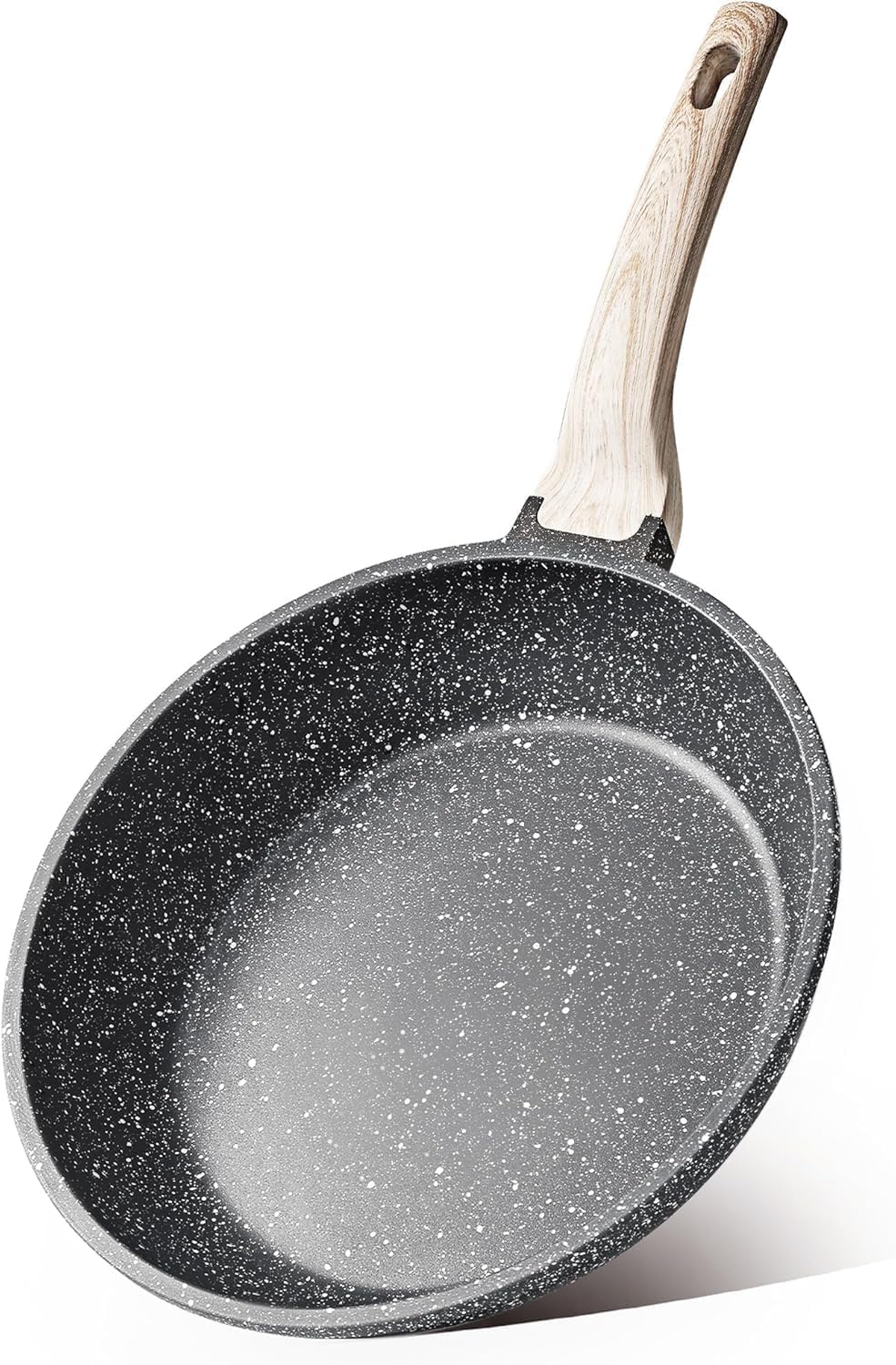
This is the least expensive pan in the guide, and it is also the one we reach for when eggs are the entire meal. Eight inches, a granite-flecked nonstick interior, and a body of 0.59 kg that feels closer to bakeware than to a skillet — in a good way, when you are folding an omelette one-handed.

It runs on gas, electric, ceramic and induction, which is unusual at this level and makes it the safe gift for a kitchen whose stove you do not know. The surface releases eggs and pancakes cleanly, cleanup is a rinse, and the granite finish looks better in person than in the photos. One oddity worth knowing: the handle ships detached and screws on.

The coating is the wear item, so read this as a few good years of daily eggs rather than a decade of everything. Keep it off high heat, since the manufacturer's own instruction is to avoid dry heating and the ceiling is 482 °F, and use silicone or wood. Treated that way it stays slippery long enough to be worth buying twice.

Bottom line: The budget pan we reach for when eggs are the whole meal: induction ready, light in the hand, and cheap enough to replace when the coating goes.

8

Astercook 21-Piece Set

Astercook 21-Piece Set

Small kitchens and RVs

Our Score 9.0/10
Check Price

Worth Noting

  • Dark residue on pale glass cooktops
  • Handles can loosen and break
Pieces
21
Cooktop
Induction, gas, ceramic
Handles
Two removable
Storage
Stackable
Read the full review

The case for this set has nothing to do with cooking and everything to do with your cabinets. The handles come off, the pans nest inside each other, and 21 pieces collapse into roughly the footprint of a stock pot. In a rental kitchen or an RV, that is the difference between owning cookware and storing it in the hallway.

It works on induction, gas and ceramic, and with the handle off the pans go into the oven, which is the one thing a fixed-handle nonstick pan cannot do. The nonstick surface releases food well and cleanup is a sponge. Two handles across 21 pieces is worth knowing in advance: you move one pan at a time, and a third handle is not an afterthought purchase.

The weak points are the handles and the staining. Handles have been known to loosen and, in some cases, break, and the pans leave dark marks on pale glass cooktops and stain on the outside before they wear out on the inside. If you cook on white glass ceramic, look elsewhere. For everyone else with a shallow cabinet, it does something nothing else here does.

Bottom line: We recommend it where storage is the binding constraint: 21 stackable pieces and removable handles, with staining on light cooktops as the trade.

How We Tested 12 Cookware Sets

We started by combing through manufacturer specs, professional reviews, and customer comments, then narrowed the field by material, set size, oven safety, and price band. We wanted cookware built for everyday meals rather than restaurant stunt work. That left 12 sets, which we cooked with for eight months.

In my kitchen and two colleagues' kitchens, we seared pork chops, browned onions, simmered tomato sauce, boiled pasta, and cooked eggs, often on the same weeknight. We watched whether heat spread to the edges or left hot spots, whether eggs and fish released with a nudge or needed scraping, and whether sauces left stains behind. We also noted how each pan felt when lifted one-handed and whether it sat steadily on the burner without crowding the others.

After each session, we washed pieces by hand and ran dishwasher-safe ones through cycles, then stacked them in cabinets the way most people store cookware. We used wooden, silicone, and, on pieces that claimed to tolerate it, metal utensils to see how easily surfaces scratched. Over eight months, we checked handles and lids for wobble, looked for chips, stains, and dulled finishes, and judged value by how often each piece earned a spot on the stove. We'll keep using the sets and update this list as they age.

How to Choose

Start with the burner, not the pan

Induction eliminates more cookware than any other constraint. An aluminum pan needs a magnetic steel base to work on an induction ring, and two of the largest sets here, both T-Fal, state plainly that they are for every cooktop except induction. If you have a magnetic range, shop only among pans that name it: the All-Clad HA1 frypans and the Carote skillet both do.

Before you order anything else, put a magnet on the base of a pan you already own. If it does not stick, that pan is not induction cookware, and no adapter ring will make it behave like one.

Treat nonstick as a consumable

Every nonstick pan ends its useful life when the coating does, not when the metal does, so budget for replacement rather than permanence. Three habits decide how long that takes: heat, utensils and washing. Medium heat with a film of oil or butter, silicone or wood tools, and a soft sponge in the sink will get years out of a coating; high heat, metal spatulas and a dishwasher will not.

So buy the coating you can afford to replace, and put the money you save toward one piece with no coating at all — a cast iron skillet or an enameled Dutch oven that will still be working when the third nonstick pan has gone.

Piece count is not coverage

Twenty-one pieces sounds like more than twelve, and often it is not, because the counts include lids, inserts, utensils and a pan small enough for two eggs. What matters is the shape of the set. Check the frypan diameters first, then the saucepan volumes, since a one-quart pan that scorches milk is worse than no pan at all.

Write down the four vessels you use in a normal week, then check whether the set actually contains them. A 17-piece set that gives you a 5-quart Dutch oven and three frypan sizes usually beats a bigger count built from duplicates.

Match the material to your oven

Aluminum heats fast, is light enough to toss vegetables, and is what every nonstick set here is made of; it also stops at the temperature printed on the box, anywhere from 350 °F to 500 °F. Cast iron holds heat and takes 550 °F, which is why it sears better and why it weighs several times as much. Enameled cast iron sits in between: cast iron performance, no seasoning routine, 500 °F, and a surface that can chip.

If you bake bread or finish dishes in a hot oven, decide the temperature ceiling before the brand, and remember that a glass lid is rated lower than the pan it covers.

The finish is part of the purchase

In a small kitchen the pot is furniture, and an enameled Dutch oven earns its counter space partly because it looks right going to the table. Interior color matters in use too: a pale enamel shows the fond as it browns, which is your cue to deglaze. One pot you like the look of beats three you keep in a cabinet.

Frequently Asked Questions

Final Verdict

For most kitchens, the T-Fal Ultimate 17-piece set is the purchase we stand behind: it covers frying, sauce, steaming and braising in one go, the preheat indicator removes the most common reason nonstick fails, and the pieces are sized for cooking rather than for a photograph.

Two situations change the answer. If your range is induction, buy the All-Clad HA1 pair instead, because neither T-Fal set works there. And if outlay is the deciding factor, the T-Fal Signature 12-piece set does most of the same work for a smaller household, with smaller pans and a lower oven ceiling.