Appliances

3 Best vacuums of 2026: For Real Pet Hair and Floor Variety

Which vacuums truly conquer embedded pet hair, mixed flooring, and the hidden reliability issues that marketing often glosses over.

A vacuum’s suction power and brushroll promises can look impressive on paper, yet in a real home, that same suction often makes the machine a battle to push across plush carpet. “Self-cleaning” brushrolls still let pet hair work its way under belts, requiring manual clearing to prevent burned-out belts. Even premium models can suffer from premature motor failures that turn a high-priced purchase into a paperweight.

The right vacuum decision hinges on matching a machine’s physical behavior to your specific mix of hard floors, low-to-high pile carpet, and pet shedding level. The goal isn’t just high suction—it’s cleaning that happens without exhausting you or chewing through belts every month.

The vacuums ahead are organized by what they actually deliver for homes with mixed flooring and pet hair, focusing on usable power, weight, and dependability rather than box promises. You’ll find uprights for deep cleaning, sticks for daily pickups, and a canister for allergen control—each tied to the scenarios where it truly excels.

#4

Best Canister for Allergies and Hard Floors

Miele Classic C1 Turbo Team Bagged Canister Vacuum

Miele Classic C1 Turbo Team Bagged Canister Vacuum

4.4
  • Type: Canister Bagged, Corded
  • Filtration: AirClean HEPA 3-tier
  • Dust Capacity: 4.5 qt bag
  • Pet Hair Handling: Turbo brush
Check Price

Pros

  • Sealed AirClean HEPA system traps 99.95% of allergens, tangibly improving air quality while you vacuum. — 389 mentions, 87.9% positive
  • Powerful suction adjustable across 6 levels, excelling on hardwood, tile, and low-pile carpet. — 311 mentions, 91% positive
  • Canister pulls surprisingly light and glides under furniture, despite the 17 lb total weight. — 264 mentions, 93.6% positive
  • Dedicated parquet floorhead with soft bristles protects delicate sealed wood from scratches.

Cons

  • Bagged design demands ongoing purchases of genuine Miele bags, adding a recurring ownership cost. — Mentioned as a tradeoff by some value-conscience buyers
  • Air-driven turbo brush cannot generate enough agitation for medium- or high-pile carpet; thick rugs need a motorized powerhead. — Snippets note inefficiency on plush rugs — a limitation of this non-motorized floorhead

The Classic C1 Turbo Team stands apart through its AirClean sealed HEPA system and near-silent 60 dB output — a stark departure from the roar and dust blowback of many uprights. While the top pick devours pet fur on carpet, the Miele is engineered for allergen containment and gentle hard-floor care, arriving with a dedicated parquet floorhead that treats delicate wood surfaces with soft bristles rather than a spinning brushroll.

Six suction settings let you dial from barely-there airflow for fine dust around baseboards to full power for picking up debris on tile. The canister’s pulling weight feels lighter than its 17 lbs on paper because the body glides on casters and follows effortlessly under chairs and beds. The parquet floorhead leaves no swirl marks on sealed wood, and the AirClean bags trap 99.95% of particles, meaning you empty them without releasing a cloud of dust.

Allergy-prone homes with predominantly hardwood, stone, or low-pile rugs are the target. The air-driven turbo brush handles doormats and thin area rugs just fine, but on medium- or high-pile carpet it lacks the agitation a motorized powerhead delivers. Thicker wall-to-wall carpet throughout the house makes this model a mismatch. The bagged design keeps allergens sealed, yet carries ongoing bag costs — genuine Miele bags are required to maintain the HEPA seal, and that’s a long-term expense bagless uprights avoid.

💡 💡 Tip: Genuine Miele bags typically last several months of regular use; purchasing a multipack reduces per-bag cost and avoids generic replacements that can compromise the AirClean seal.

Bottom Line: A long-term canister investment for hard-floor households that value sealed filtration and ultra-quiet operation over whole-home deep-carpet capability — and don’t mind buying bags to keep it that way.
#5

Best Budget Upright for Whole-Home Cleaning

Eureka NEU280 PowerSpeed

Eureka NEU280 PowerSpeed

4.4
  • Type: Upright Bagless, Corded
  • Filtration: Cyclonic foam
  • Dust Capacity: 1.9 L
  • Pet Hair Handling: —
Check Price

Pros

  • Impressive suction power for a budget-priced vacuum — 723 mentions, 77.5% positive
  • Great value and performance for the price — 666 mentions, 88% positive
  • Lightweight and easy to move between rooms — 734 mentions, 82.2% positive

Cons

  • Operation at 88 dB is noticeably loud, so it’s not ideal for noise-sensitive spaces.
  • Strong suction can make forward pushing on low-pile carpet more effortful.

Where the top pick focuses on pet hair and scatter-free hard floors, this Eureka emphasizes raw suction and capacity for whole-home cleaning at a lower price. Its 1.9L dust cup holds more debris before emptying, and the five height settings let you transition between bare floors and thicker carpets without switching machines.

At 11.5 lbs, it’s lighter than many uprights, and the quick-release wand lets you reach ceiling corners and under furniture without breaking stride. Onboard tools for crevices and upholstery stay within reach, so you’re not running back to the closet mid-clean.

Budget-conscious families with a mix of flooring who want full-size upright power will find this a capable daily cleaner. The tradeoffs: at 88 dB, it’s as loud as a busy city street, so apartments with shared walls are a poor fit. And that impressive suction creates noticeable drag on low-pile carpet, making it less suited for anyone who prefers an ultra-light push feel.

💡 💡 Tip: On low-pile carpet, raising the height setting reduces pushing resistance without sacrificing pickup.

Bottom Line: If a quiet vacuum isn’t a priority and you’re willing to swap effortless glide for raw suction and capacity, this Eureka delivers outstanding value.
#7

Cordless Tech

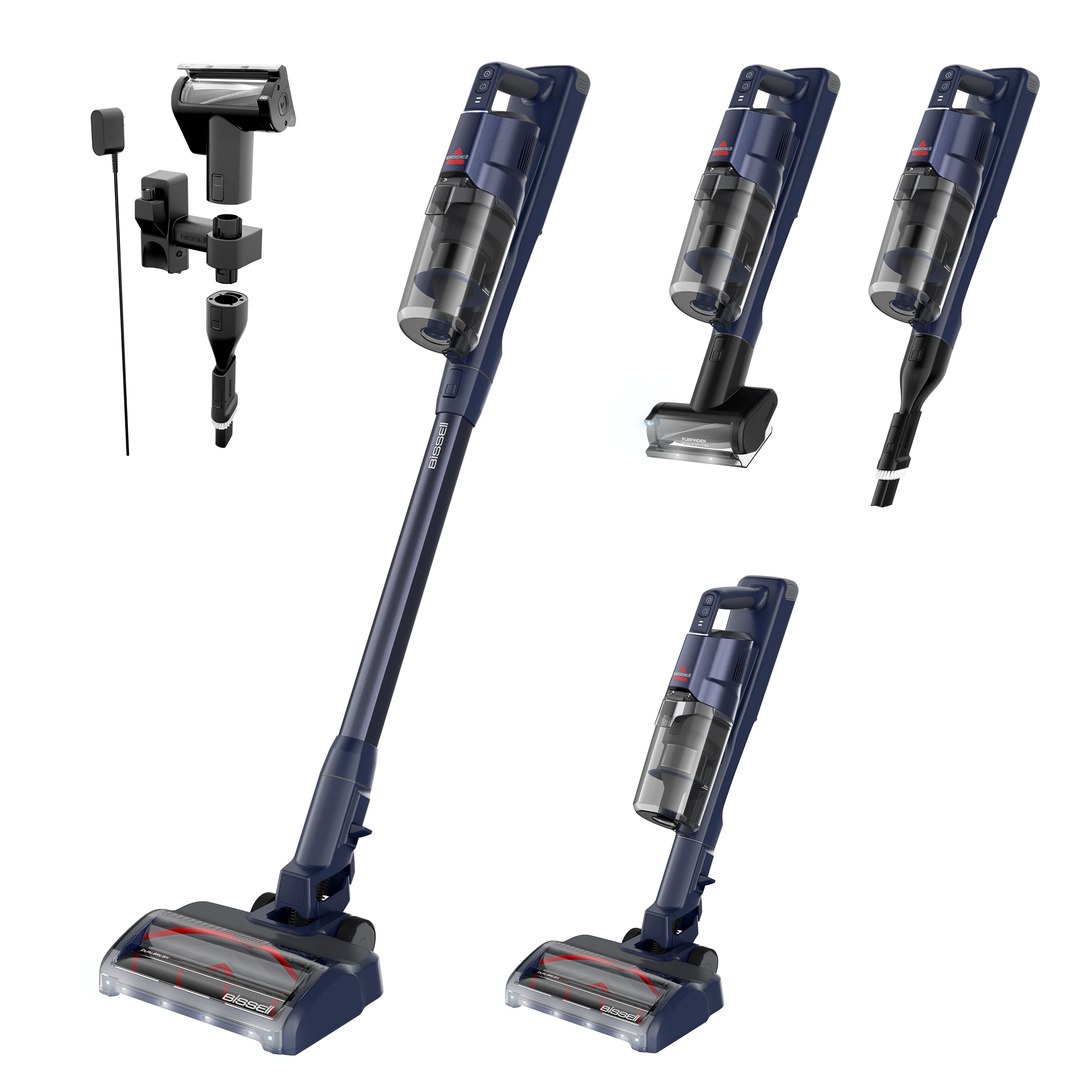
Bissell 4196K DualBrush

Bissell 4196K DualBrush

4.8
  • Type: Cordless Stick
  • Filtration: HEPA Filter
  • Dust Capacity: 1 L
  • Pet Hair Handling: DualBrush, Self-Cleaning, Tangle-Free
Check Price

Pros

  • Auto-boost suction increases power when dirt is detected, preserving battery during light cleanups. — 26 positive suction mentions, zero negative
  • LED headlights reveal pet hair and dust that would otherwise go unnoticed on floors. — 25 mentions, 100% positive
  • DualBrush roll with self-cleaning design prevents hair wrap, maintaining pickup effectiveness. — 34 effectiveness mentions, 100% positive

Cons

  • Max-power runtime can fall short in larger homes, needing a recharge before the job is done.

The Bissell 4196K delivers strong pet hair pickup thanks to AutoAdapt suction that ramps up power only when encountering dirt, while bright LED headlights expose hidden dust and fur. The self-cleaning dual brushroll resists hair wrap on hard floors and low-pile carpet. Long-term reliability and real-world battery endurance remain unverified — this is a cordless stick for early adopters who prioritize smart features over a years-long track record. Battery life on max power may require a mid-session recharge in larger homes.

Bottom Line: A smart cordless option for pet owners in apartments or small homes who want auto-sensing convenience and tangle-free cleaning now, and are comfortable with unproven long-term durability.

How to Choose

Form Factor and Corded vs. Cordless

Uprights deliver deep carpet cleaning and larger dust capacity; sticks offer light, agile daily pickups; canisters separate the motor from the cleaning wand for quieter, more maneuverable floorhead control. Corded models provide uninterrupted power, while cordless frees you from outlets but ties runtime to battery charge.

A cordless stick’s 60-minute marketing claim often applies only to the lowest power mode without a motorized brush. With a motorized head on medium or high suction, real-world runtime typically lands between 15 and 30 minutes—enough for quick tasks but not whole-house deep cleaning.

Pet Hair Handling

Tangle-free brushrolls and self-cleaning designs significantly reduce hair wrap on the brush itself, but they rarely stop fine hair from working its way under the belt and around the drive spindle. Over weeks this builds heat and friction that can burn out belts or seize the brushroll.

Look for a vacuum that gives you easy access to the brushroll compartment and a removable belt cover. A minute of manual clearing after a big shed session can add years to the belt’s life—even on models with “anti-tangle” in their name.

Filtration and Allergen Control

A sealed HEPA system traps ultra-fine particles and is a must for allergy or asthma sufferers. Bagged designs keep dust fully contained during disposal, while bagless bins can release a cloud when emptied. The trade-off: bagged vacuums add recurring bag costs, and bagless filters require more frequent washing.

Weight and Maneuverability

A heavy upright with strong suction can become nearly impossible to push on thick, plush carpet because the floorhead seals tightly and creates a plunger effect. Swivel steering and adjustable height settings help, but the real fix is matching the vacuum to your dominant flooring. On hard floors, a lightweight stick or canister with a gentle floorhead protects surfaces and your back.

Dust Cup Capacity and Ease of Emptying

Small dust cups force frequent emptying, which can break your cleaning rhythm during whole-home sessions. An extra-large bin sounds appealing, but a full 2-liter cup adds noticeable weight and can encourage delaying emptying to the point of clogs. A one-touch, bottom-release empty mechanism that keeps hands clean is worth more than an extra half-liter of capacity.

Frequently Asked Questions