Appliances

7 Best Cooling Fans of 2026: Quiet Airflow Without the Hype

The best cooling fans for any room — tower, pedestal, and desk picks that run whisper-quiet without sacrificing the airflow you need to stay cool.

A fan that hums all night or barely moves the air is a fast track to frustration. Many shoppers fixate on sleek towers and low-decibel boasts, only to discover the airflow is too weak to cool anything beyond a small corner — or the noise ramps up the moment you turn it past the lowest setting.

This guide zeroes in on what actually makes a fan work: high CFM, a DC motor that stays quiet at higher speeds, and oscillation that covers the whole room. Whether you need a near-silent tower for a bedroom or a pedestal that can turn over the air in a living room, the right pick can keep you comfortable without dominating the decor or your electric bill.

#1

Best Overall

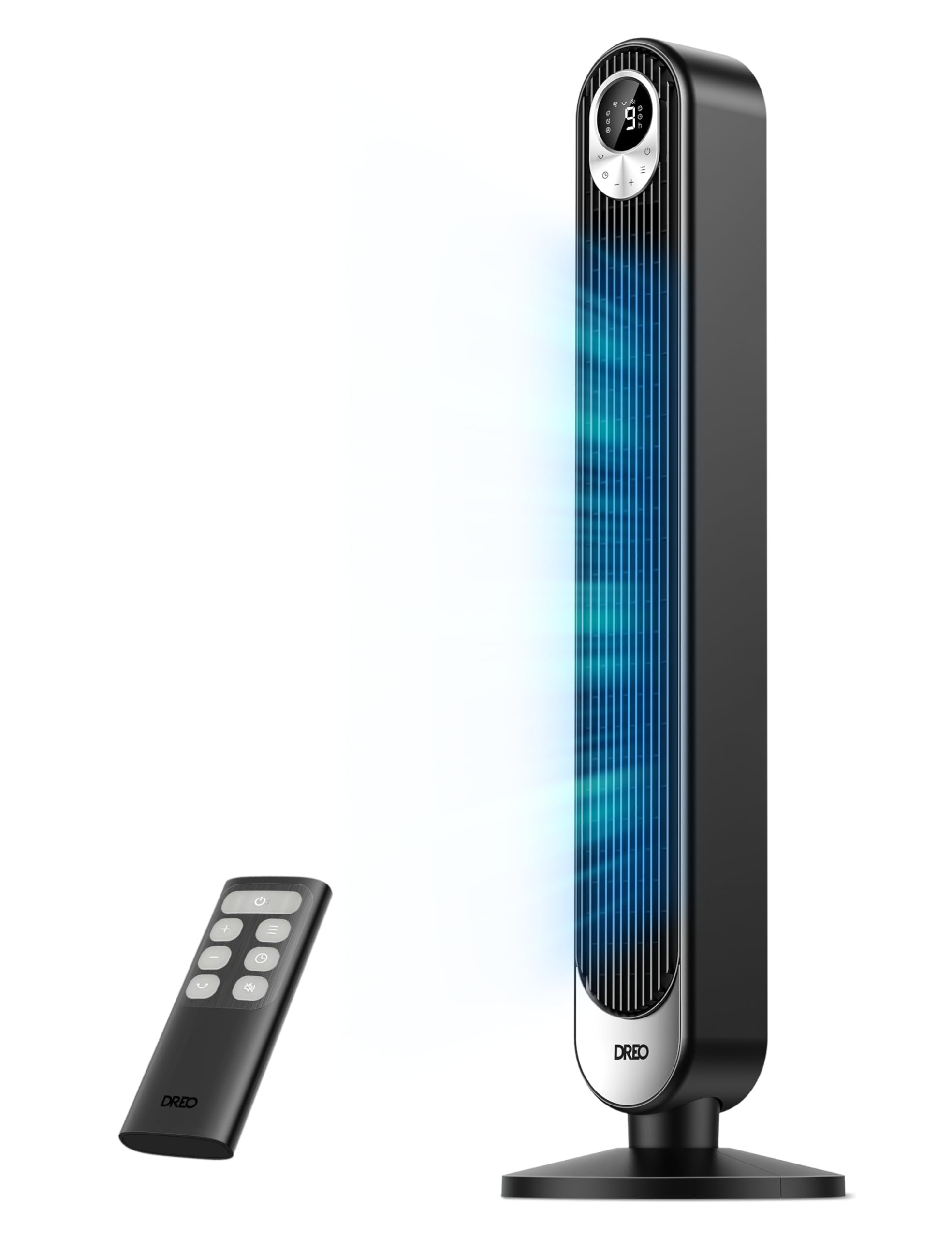
DREO 42" Tower Fan

DREO 42" Tower Fan

4.6
  • Form Factor: Tower
  • Noise Level: 20 dB
  • Airflow (CFM): 1473 CFM
Check Price

Pros

  • High 1473 CFM airflow cools large bedrooms and open living spaces quickly and evenly. — 1,815 mentions (airflow) 92.3% positive, 1,573 mentions (cooling) 95.7% positive
  • Whisper-quiet operation at 20 dB, even on moderate speeds, won't disturb sleep or conversation. — 4,040 mentions, 88.7% positive
  • Tool-free assembly gets the fan up and running in minutes — no screws or complex steps. — 965 mentions, 94.1% positive

Cons

  • Lowest speed may still feel too strong for very light sleepers, making an indirect placement or a different fan preferable. — Mentioned in select top reviews — airflow could be overbearing on minimum

The DREO 42-inch Tower Fan moves 1473 CFM of air while holding noise to just 20 dB — a combination that outpaces nearly every other tower fan on the market. Its DC motor drives airflow without the harsh whine common in AC models, and the 9 speed settings give you granular control from a gentle breeze to rapid room-wide circulation. Four modes, including a natural wind pattern, add adjustment options beyond simple fan speed.

A 90° oscillation arc spreads air evenly across large bedrooms, open-plan offices, and living areas. The 12-hour timer and slim 42-inch footprint let it integrate into a room without dominating the space, and the LED display dims automatically after a few seconds, keeping the bedroom dark. Assembly is tool-free and takes only a couple of minutes.

This fan suits anyone prioritizing powerful, near-silent cooling in a spacious room and willing to pay a premium for a DC motor and refined speed control. Light sleepers who prefer an almost imperceptible breeze may find the lowest speed still too forceful — in that case, a pedestal fan with an even gentler low end or an air circulator aimed indirectly could be a better match.

💡 💡 Tip: If the lowest speed feels too strong, place the fan farther from your seating area or bed, or use oscillation to soften the direct airstream.

Bottom Line: For a premium tower fan that delivers exceptional cooling power without intrusive noise, the DREO 42-inch is the clear top pick — provided your comfort level with its lowest speed fits the gentle breeze you prefer.
#2

Best Pedestal Air Circulator

DREO Pedestal 512

DREO Pedestal 512

4.7
  • Form Factor: Pedestal
  • Noise Level: 20 dB
  • Airflow (CFM): 1150 CFM
Check Price

Pros

  • Operates with minimal noise while pushing strong airflow across large rooms. — 89.8% positive noise feedback out of 1,064 mentions
  • 120° oscillation covers a full room, minimizing hot spots. — Standout feature in multiple top reviews
  • Sturdy build and clean design, with straightforward assembly. — 96.5% positive appearance mentions, 98.4% positive assembly mentions

Cons

  • Vertical tilt must be set by hand, with no motorized control. — Requires physical adjustment — minor usability compromise

The DREO Pedestal 512 uses a wide 120° horizontal arc and 1150 CFM of airflow to circulate air across entire rooms more effectively than most tower fans. While the top pick excels at near-silent, columnar output, this model spreads air in a sweep that reaches corners and avoids dead zones, aided by a DC motor that stays quiet even at high speed.

It fits large living spaces and bedrooms where adjustable height (37–42 inches) and strong whole-room coverage matter more than having motorized vertical tilt. You adjust the angle by hand before switching it on, a minor compromise that keeps the design simple and price below fully automated competitors. The 9 speeds and 4 modes let you dial in comfort without unnecessary noise, and the timer runs up to 9 hours for overnight use.

💡 💡 Tip: Angle the head upward before powering on to help push air across the entire room; the wide oscillation will carry it without needing further adjustment.

Bottom Line: If your priority is broad horizontal coverage and pedestal flexibility rather than the slimmest tower profile, this fan delivers powerful, quiet circulation. The manual tilt is a conscious trade-off, not a hidden flaw.
#3

Best Budget Personal Fan

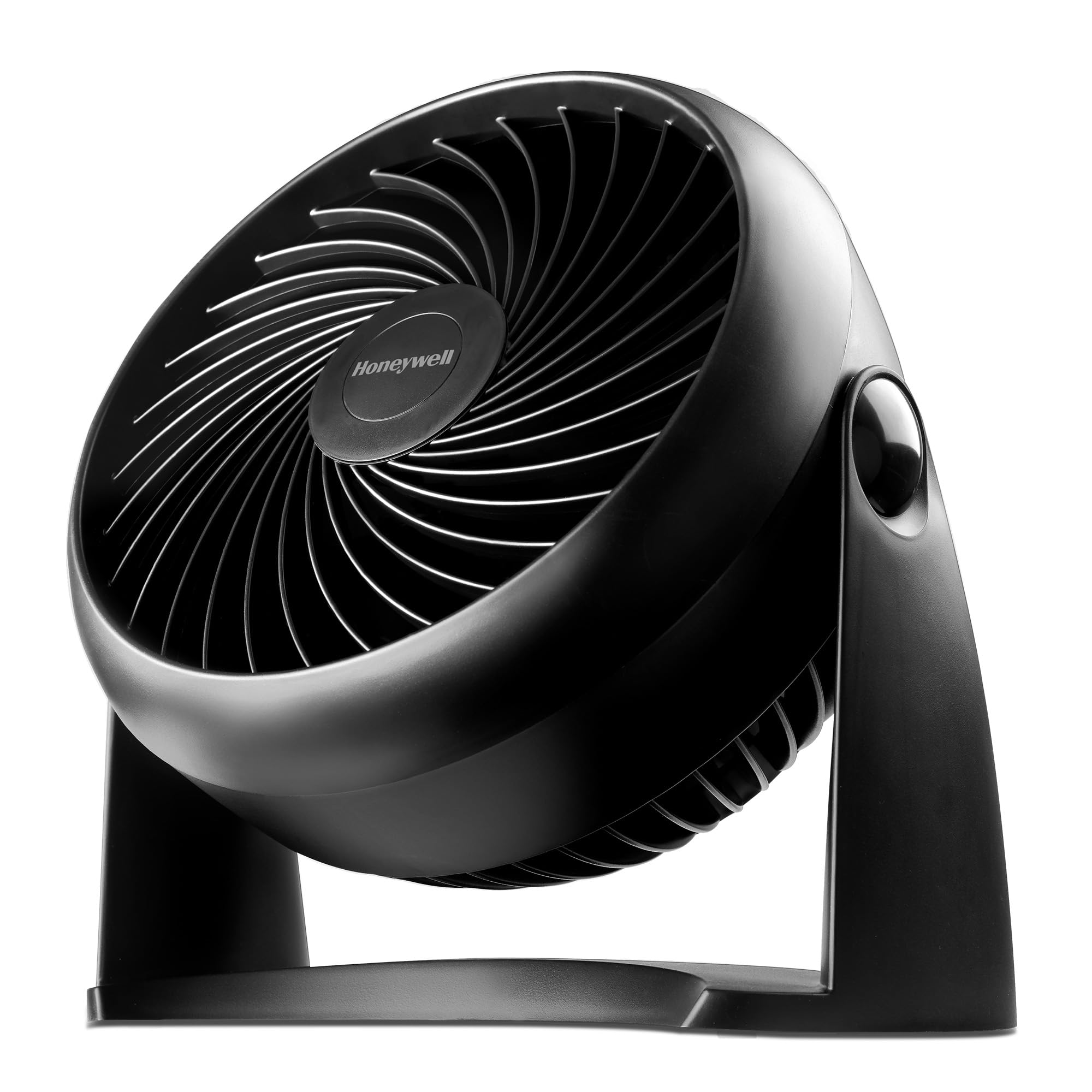
Honeywell HT900 Table Fan

Honeywell HT900 Table Fan

4.6
  • Form Factor: Desktop
  • Noise Level: —
  • Airflow (CFM): 185 CFM
Check Price

Pros

  • Surprisingly strong airflow for its compact size, reaching across a small room — 6,345 mentions, 84% positive
  • Excellent value within a budget-friendly price range — 4,644 mentions, 92.4% positive
  • Effective personal cooling felt clearly even at several feet away — 2,128 mentions, 94.5% positive

Cons

  • Longevity is inconsistent — some units may stop working after months of use — 2,232 mentions, 69.6% negative

Moves 185 CFM from a compact desktop footprint, making it a surprisingly effective personal cooler for its size. The 90-degree pivoting head lets you aim the column of air precisely where you want it, while the three speeds let you dial in comfort. This is a focused personal breeze that rivals larger desk fans without taking up much space.

This fan fits best on a nightstand, desk, or small counter where you want a concentrated breeze just for yourself. It’s not meant for whole-room cooling, nor for running around the clock — some units can stop working after months of use. For light, affordable personal cooling, the HT900 does its job without drama.

Bottom Line: A budget-friendly personal fan that moves meaningful air, but a gamble on durability — right for dorm desks or occasional nightstand cooling, not for all-day workstation duty.
#4

Best Whole-Room Circulator

Vornado 660 Circulator

Vornado 660 Circulator

4.7
  • Form Factor: Floor Circulator
  • Noise Level: 54 dB
  • Airflow (CFM): 584 CFM
Check Price

Pros

  • Moves a huge volume of air across large spaces — 1,266 mentions (airflow) 90.9% positive, 579 mentions (effectiveness) 87% positive
  • Excellent whole-room circulation without oscillation — 983 mentions (air circulation) 91.1% positive
  • Durable and backed by 5-year warranty — Multiple top reviews mention long life

Cons

  • Fixed-direction airflow demands strategic placement to circulate the whole room — Mentioned frequently — requires strategic placement
  • High-speed operation generates noticeable fan noise that may disrupt quiet bedrooms — 1,342 mentions, 26.5% negative — notably loud on highest settings

The Vornado 660 pushes air up to 100 feet across a room with a focused vortex of 584 CFM — far beyond what any oscillating tower fan can manage. Its fixed-position design, deep-pitch blade, and spiral grill create continuous whole-room circulation rather than a direct breeze. Where a slimmer circulator fits on a shelf, this large unit anchors open-concept living areas, workshops, or spaces where you pair it with AC to push conditioned air into every corner.

That power comes with an honest tradeoff: on its highest speed, fan noise becomes a noticeable hum — acceptable in a garage or busy kitchen, but intrusive in a quiet bedroom. And without oscillation, you’ll need to place it strategically to avoid dead spots. The 90-degree tilt helps, but this is not a set-and-forget personal cooler. For buyers who need air mixing across a big volume and can tolerate some fan sound in exchange for the strongest air throw available, it’s an easy recommendation.

💡 💡 Tip: Point the fan at a corner or ceiling at an angle to bounce air around the room, mimicking oscillation without the extra mechanism.

Bottom Line: For workshops, garages, or pairing with AC to push air across open rooms, the Vornado 660’s air throw and durability easily justify its premium price — as long as quiet operation isn’t the priority.
#5

Affordable Smart Tower

LEVOIT 36" Tower Fan

LEVOIT 36" Tower Fan

4.6
  • Form Factor: Tower
  • Noise Level: 28 dB
  • Airflow (CFM): 1044 CFM
Check Price

Pros

  • Quiet 28 dB minimum and strong 1044 CFM airflow cool a medium room effectively — 1,258 mentions (noise) 86% positive, 765 mentions (airflow) 86.1% positive
  • Auto mode with temperature sensor adjusts speed automatically, well-reviewed by owners — Multiple reviews praise smart auto adjustment
  • Includes remote and 12-hour timer, offering strong value for a mid-range tower fan — 384 mentions (value) 84.1% positive

Cons

  • AC motor can emit a faint hum at higher speeds, noticeable in very quiet bedrooms — 176 noise complaints — subtle motor noise present

Its auto mode uses a built-in sensor to ramp airflow up or down as the room warms, skipping the need for constant adjustments. The 28 dB minimum and 1044 CFM push enough air to cool a medium bedroom without thrumming through the night. A remote and a 12-hour timer are in the box, rounding out a feature set that feels generous at this price point.

Budget-conscious buyers who want modern conveniences in a white, unobtrusive tower will find its match here. The 90° oscillation spreads air evenly, and the narrow footprint tucks against a wall. The AC motor introduces a subtle hum at higher speeds — light sleepers may notice it during heatwaves. For near-silent operation across the full range, the premium DC tower in this set is worth the step up.

💡 💡 Tip: Stick to the lower two speeds overnight — the fan stays nearly silent while keeping the room pleasantly cool.

Bottom Line: The LEVOIT 36-inch Tower Fan brings a thoughtful auto mode and solid cooling power to a price that leaves room for a remote and timer. Medium spaces and budget-aware homes will appreciate the features without overshooting their needs.
#6

Mid-Size Circulator

Vornado 630 Mid-Size Air Circulator

Vornado 630 Mid-Size Air Circulator

4.6
  • Form Factor: Floor Circulator
  • Noise Level: 52 dB
  • Airflow (CFM): 1120 CFM
Check Price

Pros

  • Moves 1120 CFM to circulate air throughout a medium room, reducing hot spots. — 983 mentions (circulation) 91.1% positive
  • Fits on a desk or shelf with a 9-inch diameter, freeing up floor space. — 293 mentions (size) 75.1% positive
  • Adjustable tilt head directs airflow up or down to customize circulation patterns.

Cons

  • Cannot oscillate to sweep air across a person; best used for whole-room mixing rather than targeted cooling. — Common tradeoff for circulator design
  • At its highest speed, fan noise reaches 52 dB, which may be intrusive in quiet spaces like bedrooms. — 1,057 mentions, 37.6% negative

The Vornado 630 delivers 1120 CFM of whole-room circulation from a compact 9-inch footprint. At 50 watts, it pushes air up to 70 feet—enough for a living room or office—while sitting on a desk or shelf. This distinguishes it from bulkier floor fans and even the larger Vornado 660, which requires more floorspace but offers greater air throw.

It is best suited for medium-sized rooms where you want uniform ambient temperature rather than a direct breeze on your skin. The 3-speed motor generates a noticeable hum at high settings, enough to be distracting in a quiet bedroom—offices and dens with background noise absorb this better. And unlike many pedestal or tower fans, it doesn't oscillate; instead it pushes air across the room to circulate it evenly. If you need pinpoint oscillation for personal cooling, a conventional fan will serve you better.

💡 💡 Tip: For whole-room air movement without a direct draft, aim the fan upward toward the ceiling to encourage a circular airflow pattern.

Bottom Line: The Vornado 630 suits spaces where you want room-wide air mixing from a shelf-sized fan, and you can tolerate some hum in exchange for compact power.
#7

Temporary Use

Amazon Basics 16" Pedestal Fan

Amazon Basics 16" Pedestal Fan

4.4
  • Form Factor: Pedestal
  • Noise Level: —
  • Airflow (CFM): —
Check Price

Pros

  • Strong airflow that stays quiet enough for background use on lower settings. — 1,999 mentions (airflow) 86.1% positive, 3,432 mentions (noise) 86.7% positive
  • Remote and oscillation included at a budget price. — 1,719 mentions (value) 85.6% positive

Cons

Airflow covers a bedroom or living room sufficiently, and the remote control is a convenience seldom found at this price. Noise stays low enough for background comfort on lower speeds. The motor may give out after months of daily use, so this is best for a dorm, a summer rental, or any spot where a fan needs to last a season rather than multiple years.

Bottom Line: If you need a pedestal fan to get through a single summer in a dorm or temporary apartment, this one delivers reliable-enough cooling for the season.

How to Choose

Noise Level (dB)

dB ratings on packaging usually measure the lowest fan speed in an ideal lab. At the speeds you need to feel cool — especially on hot days — a fan can produce 10–15 dB more noise. For a bedroom, target a fan that stays under 30 dB on low to medium, but verify user reviews for high-speed sound because a ‘20 dB’ claim may jump to 50 dB.

DC motors are inherently quieter and can maintain lower noise at higher RPMs, while AC motors often hum at any speed above the minimum.

Airflow (CFM)

CFM (cubic feet per minute) tells you how much air the fan moves, and it’s a far better measure of cooling than wind speed (ft/s). A fan claiming 28 ft/s might have a tiny blade area and low CFM, leaving you hot. For a medium bedroom, look for at least 800–1000 CFM; a large living room needs 1200+ CFM.

A high-CFM fan can cool you from across the room without needing to point directly at your face, which is where oscillation and air circulation matter.

Motor Type

AC motors are common and cheap but tend to hum and draw more power. DC (direct current) motors use circuitry that converts AC to DC, resulting in higher efficiency, longer life, and the ability to maintain low decibels at high RPM. The price of a DC fan is higher upfront, but it uses half the electricity and lasts years longer, making it the better value for daily use.

Oscillation Angle

Oscillation sweeps the airflow side to side, cooling more area. Standard fans oscillate 75–90°, but wider angles like 120° reduce the ‘hot spot’ effect where the other side of the room stays warm. If you don’t plan to have the fan blowing directly on you, wide oscillation paired with high CFM is the quietest path to whole-room comfort — the fan can stay on a lower speed yet still reaches every corner.

Form Factor and Footprint

Tower fans are slim and blend into decor, ideal for bedrooms and living rooms where floor space is limited. Pedestal fans offer adjustable height and can be directed more precisely; they’re great for air circulation when paired with a powerful motor. Desktop fans are purely personal — expect low CFM but high proximity cooling. A floor circulator is a compact box fan alternative that pushes air in a single direction, often used to partner with an AC unit.

Frequently Asked Questions