Appliances

8 Best Air Purifiers of 2026: Real Room Coverage Without Hype

Find an air purifier that truly matches your room size and needs — without falling for inflated coverage claims.

The biggest number on the box — “covers up to 2,200 sq ft” — sounds impressive. But that figure often means one lazy air change per hour, not the four to five exchanges needed for allergy relief or odor control. The real effective room size is typically four to five times smaller.

That gap between marketing and real-world performance is why so many buyers end up with a purifier that barely dents their dust levels. This guide cuts through the coverage claims and focuses on the specs that actually predict how well a unit will clean your space: CADR, AHAM certification, and the recommended room size at 4.8 air changes per hour.

Whether you need silence for a bedroom, pet-hair handling for a living room, or a budget pick with a live air quality display, the right choice starts with ignoring the headline square footage and looking at the fine print.

1

also_consider

Top Pick
also_consider
Our Score 9.8/10
Check Price

Worth Noting

  • Claimed 2400 sq ft coverage lacks AHAM verification
  • Long-term durability under continuous use remains uncertain
Read the full review

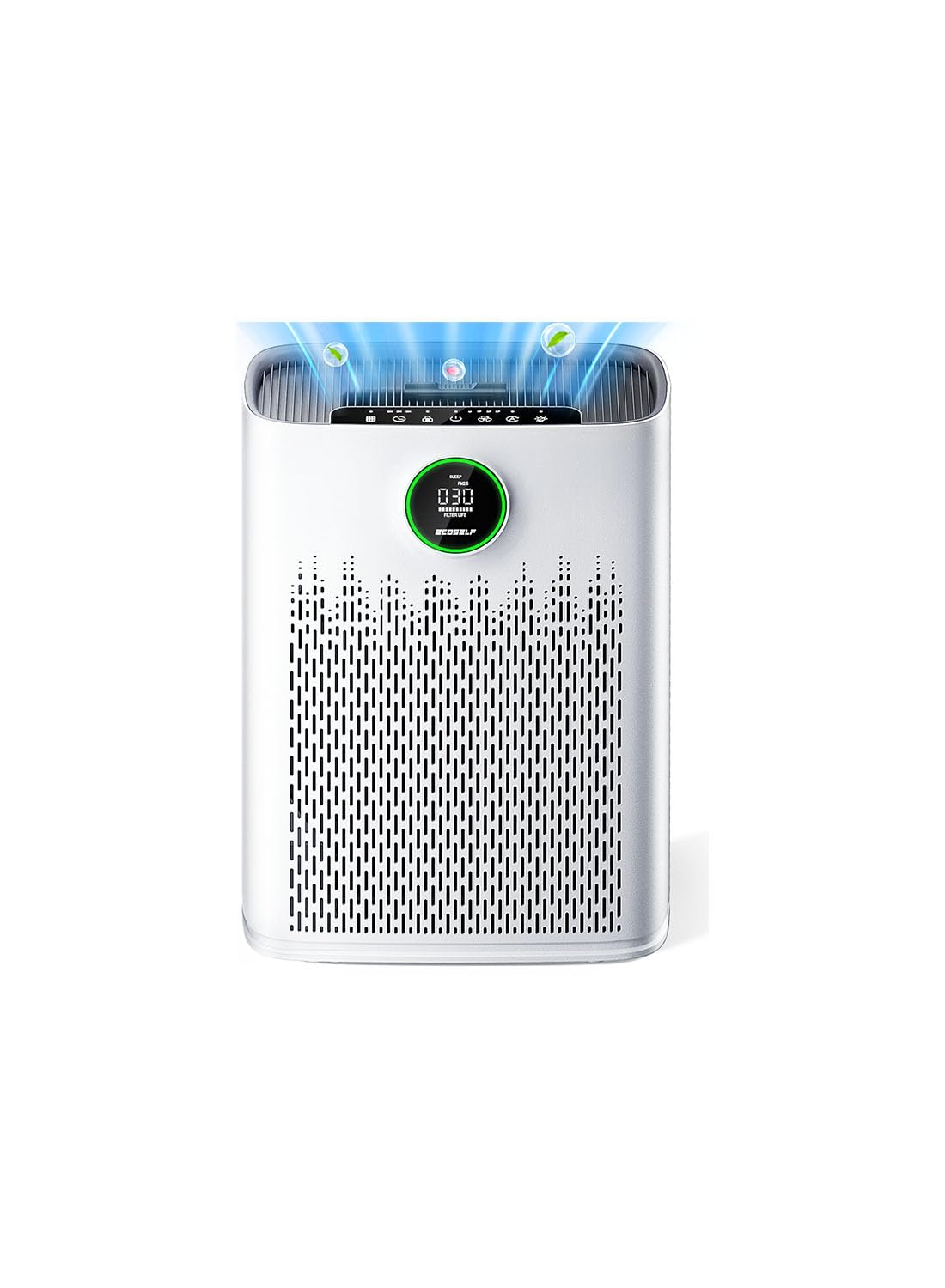
The ECOSELF HAP603 packs a PM2.5 display and aromatherapy function into a low-cost package. Early feedback points to effective dust and allergy reduction in small rooms, with quiet sleep operation. However, the 2400 sq ft coverage claim is not AHAM-verified, making real-world performance uncertain for large spaces. Long-term durability under continuous use remains undocumented, which places this unit firmly in the 'experiment' category for budget buyers in small bedrooms or offices.

Bottom line: Best suited for budget-conscious buyers in small rooms (under 300 sq ft) who value the aromatherapy feature and are comfortable with an unproven brand.
2

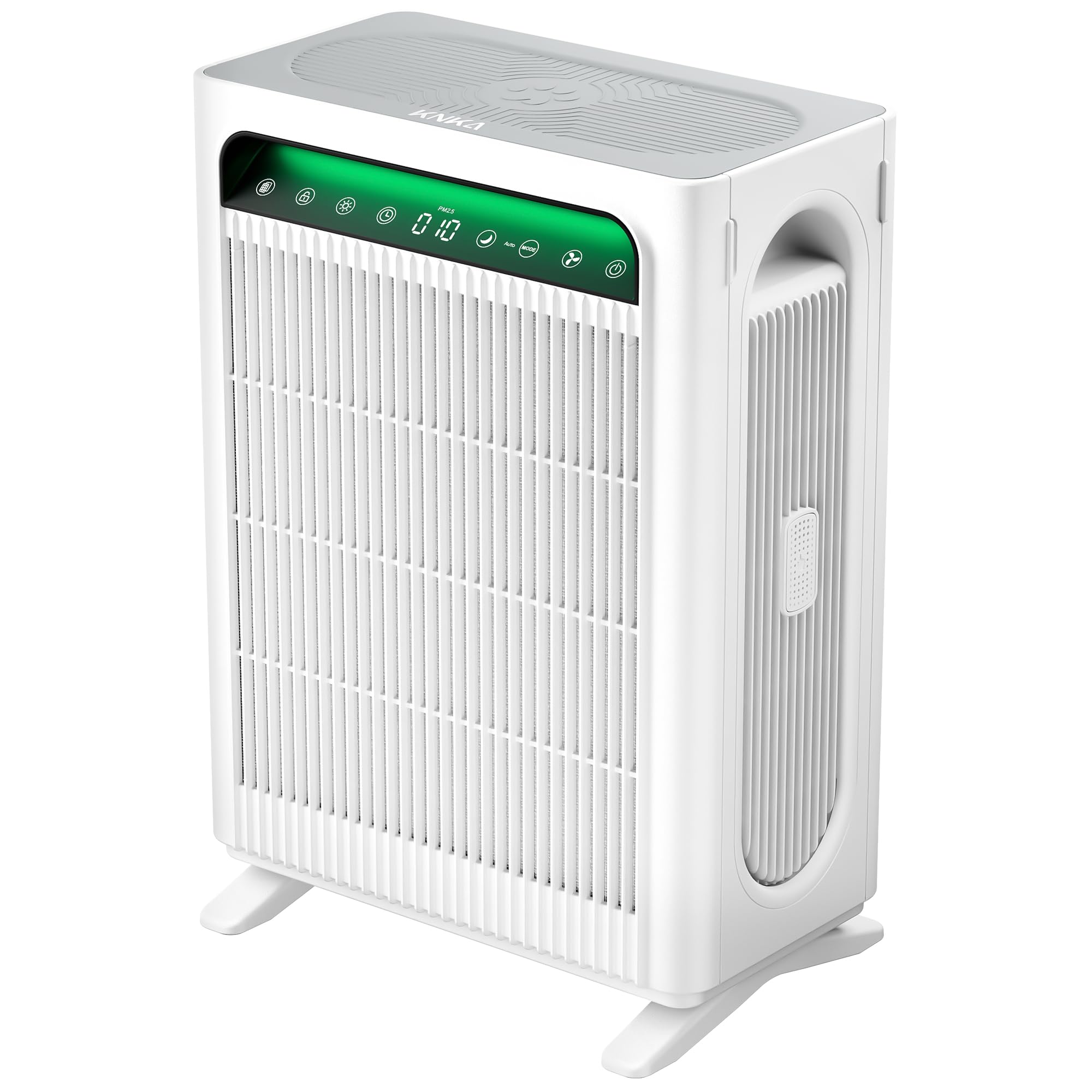
KNKA APH4000

KNKA APH4000

Medium rooms AQI

Our Score 9.6/10
Check Price

Worth Noting

  • Replacement filter packs cost more per year than the unit's mid-range price might suggest
Noise Level
22 dB (sleep)
AHAM Verified
Yes
Smart Features
AQI display, pet mode
Room Size (4.8x/hr)
350 sq ft
Read the full review

The KNKA APH4000 puts air quality information front and center with a bright, real-time AQI display that updates as the unit works. Its dual-intake design pulls air from two sides, feeding dual 3-stage filtration (washable pre-filter, True HEPA, activated carbon) that handles dust, pollen, pet dander, and odors efficiently. Sleep mode drops noise to 22 dB — quieter than a library — making it a natural fit for bedrooms or any quiet space where noise matters.

This model is best suited for pet owners who want visible feedback on air quality improvements, and for users in medium-to-large rooms up to 350 sq ft who value a set-and-forget ECO mode. The pet mode specifically targets dander and odors, and the AHAM verification (CADR pollen 244, smoke/dust 226) confirms real performance. However, genuine replacement filters cost more than average — a tradeoff to factor into the long-term ownership budget, especially if you run the unit continuously.

Build quality feels solid, and both filter installation and replacement are completely tool-free — the pre-filter is washable, extending the life of the main filter. The AQI display doubles as a color-coded indicator, so a quick glance tells you when air quality drops and when the unit has brought it back. For buyers who prefer smart controls, note that this unit lacks WiFi or app connectivity — unlike the top pick (Vital 200S-P), it remains a purely manual, no-frills device.

Tip: Set a calendar reminder to check the pre-filter every 2-3 months — washing it extends main filter life and reduces how often you need the pricier replacements.

Bottom line: A strong mid-range option for data-minded buyers who want visible air quality feedback and whisper-quiet operation, as long as the higher filter replacement cost fits the budget.

3

LEVOIT Vital 200S-P

LEVOIT Vital 200S-P

Large open rooms

Our Score 9.4/10
Check Price

Worth Noting

  • Very small rooms may be better served by a smaller, lower-cost purifier.
  • Quiet spaces will reveal the fan on high and turbo settings.
Noise Level
27 dB (sleep)
AHAM Verified
Yes
Smart Features
App, pet mode, AQI
Room Size (4.8x/hr)
374 sq ft
Read the full review

The Vital 200S-P pairs AHAM-verified CADR—254 for dust, 250 for smoke, and 289 for pollen—with a mid-range price tier, giving it unusually strong cleaning capacity per dollar. The more useful coverage figure is 374 square feet at 4.8 air changes per hour, which is the comparison point I would use for everyday home cleaning rather than the much larger one-air-change marketing number.

Filtration is the main reason this model fits general residential use so well. The washable pre-filter catches larger debris such as pet hair before it loads up the main filter, the HEPA stage targets fine particles down to 0.1 micron, and the activated carbon layer helps with everyday household odors. That mix is better suited to mixed home pollutants than a small bedroom unit with lighter airflow.

The air quality monitor and VeSync app add useful control without making the purifier feel overcomplicated. Scheduling, auto adjustments, light detection, and pet mode give you ways to run it harder during active hours and keep it calmer when the room is occupied. The controls matter here since this is a higher-output machine, not a tiny plug-in purifier you leave untouched in a corner.

Lower settings and sleep mode are quiet enough for bedrooms or evening use, with sleep mode rated at 27 dB. The tradeoff is clear on the upper end: fan noise on turbo is clearly audible, so this is better suited to living rooms, open-plan spaces, and pet-heavy areas than to a quiet bedroom running at maximum speed.

This is the right match for a home buyer who wants one serious purifier for general dust, pollen, pet dander, smoke particles, and lingering odors rather than several small units scattered around a main floor. Very small rooms are better served by a compact model, but for shared spaces the Vital 200S-P hits a useful balance of airflow, filtration, smart control, and ongoing maintenance.

Tip: Use the app schedule to run higher airflow before the room needs to be quiet, then let sleep mode maintain overnight cleaning.

Bottom line: For general home air cleaning where dust, pollen, pet dander, smoke particles, and everyday odors all matter, the Vital 200S-P is the mid-range model I’d put in the main living area first.

4

LEVOIT Core 300-P

LEVOIT Core 300-P

Small rooms

Our Score 9.4/10
Check Price

Worth Noting

  • New units may emit a temporary plastic odor during the first few hours of use.
  • Odor removal is limited to light everyday smells; persistent cooking or smoke odors may not be fully eliminated.
Noise Level
24 dB (sleep)
AHAM Verified
Yes
Smart Features
None
Room Size (4.8x/hr)
222 sq ft
Read the full review

At 24 dB on sleep mode, the Core 300-P is quiet enough to sit on a nightstand without disturbing sleep, and its CADR ratings (153 dust, 143 smoke, 167 pollen) are among the best in its size class. That silence, combined with consistent allergy relief, makes it the go-to for small rooms where noise matters most – a different niche than the larger Vital 200S-P, which prioritizes higher airflow for open living areas.

This unit fits best in bedrooms, home offices, or nurseries up to 222 sq ft. Pet owners and allergy sufferers will notice less dust and dander on surfaces within days. However, the activated carbon layer is thin: everyday cooking smells and mild pet odors are handled well, but persistent smoke or strong garlic-laden meals may linger – a tradeoff worth considering if odor removal is a primary need.

Build quality feels solid for a mid-range purifier, and the 3-in-1 filter is easy to replace. Operating costs stay low thanks to the energy-efficient 56W motor, making it a practical long-term choice for dedicated small-room use.

Tip: Run the purifier on high in an empty room for a few hours to clear the initial plastic scent – it's harmless and temporary.

Bottom line: For bedroom or small-office owners who prioritize quiet operation and proven allergen reduction over heavy-duty odor control, the Core 300-P delivers exactly what it promises at a fair price.

5

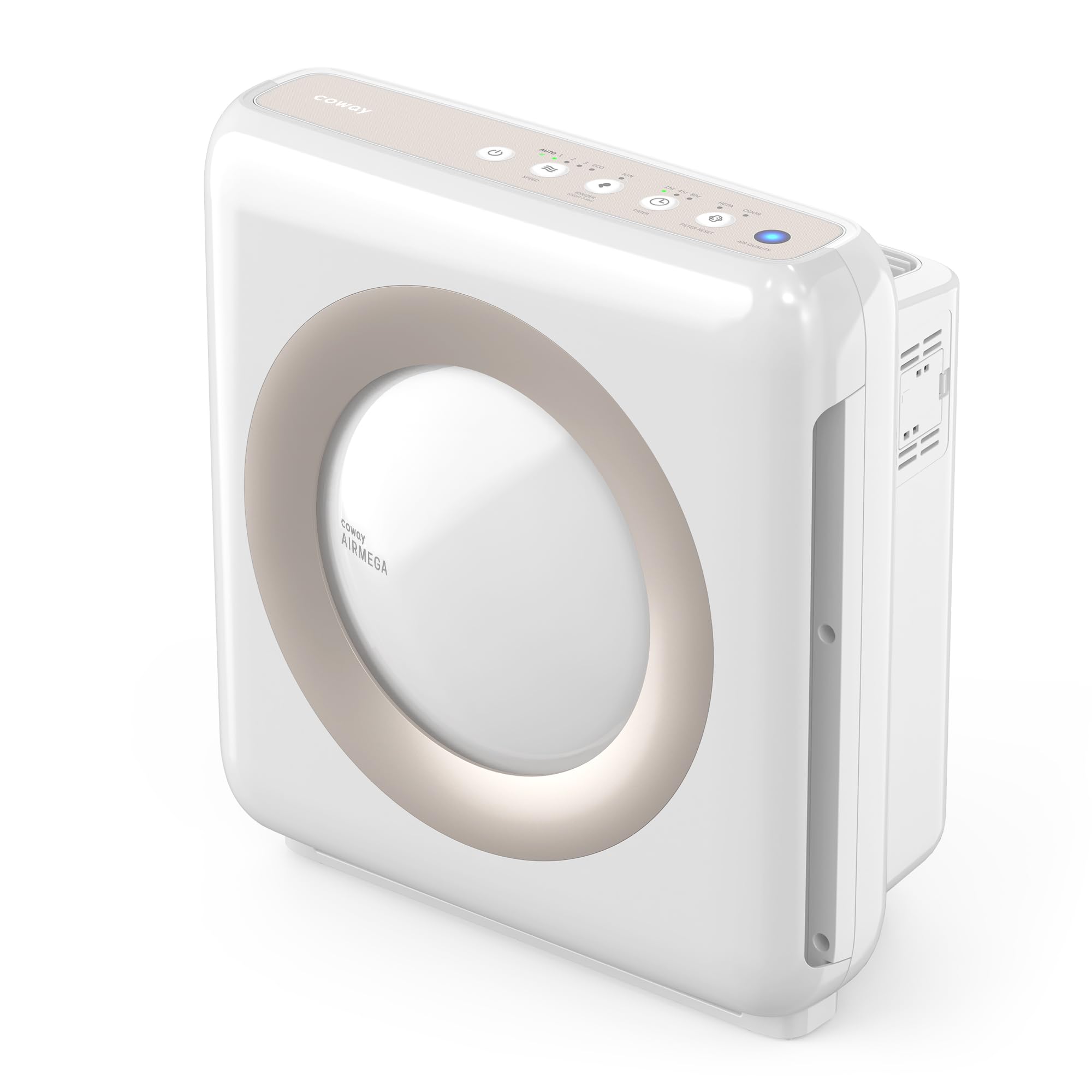
Coway AP-1512HH

Coway AP-1512HH

Medium rooms quiet

Our Score 9.2/10
Check Price

Worth Noting

  • New units or after filter change may release a plastic smell that clears after a few days of turbo operation.
  • Turbo mode is loud enough to be distracting in quiet rooms, and some units develop vibration or rattle over time.
Noise Level
24-54 dB
AHAM Verified
Yes
Smart Features
Auto, eco, filter indicator
Room Size (4.8x/hr)
361 sq ft
Read the full review

The Coway AP-1512HH delivers 4-stage filtration (pre-filter, deodorization, True HEPA, Vital Ion) with dust CADR of 246, smoke CADR of 233, and pollen CADR of 240 — numbers that place it ahead of many similarly sized units. The auto mode adjusts fan speed based on real-time air quality, while eco mode shuts off the fan when the target cleanliness is reached for five minutes, cutting energy use. This is a purifier designed to run efficiently on low or auto in medium rooms up to 361 sq ft, without relying on Wi-Fi or app control.

Where the Coway differs from the top pick (the LEVOIT Vital 200S-P) is its hands-off, non-connected approach and a longer track record of consistent performance. Owners who prioritize independent validation over smart features will appreciate the AHAM certification and the unit’s steady ability to reduce dust and allergens over years of use. However, the tradeoff for that power comes on the highest fan speeds: turbo mode is noticeably loud and can introduce vibration in the unit, and some units may develop a rattle over time. Additionally, a plastic or chemical smell may emanate from a new unit or after a filter change — typically dissipating after a few days of continuous operation on turbo.

Tip: Run the unit on turbo for a few days after unboxing or filter replacement to accelerate dissipation of the initial plastic smell.

Bottom line: A strong performer for medium rooms where quiet operation on low or auto is sufficient, provided you can tolerate the occasional turbo noise and brief off-gassing period.

6

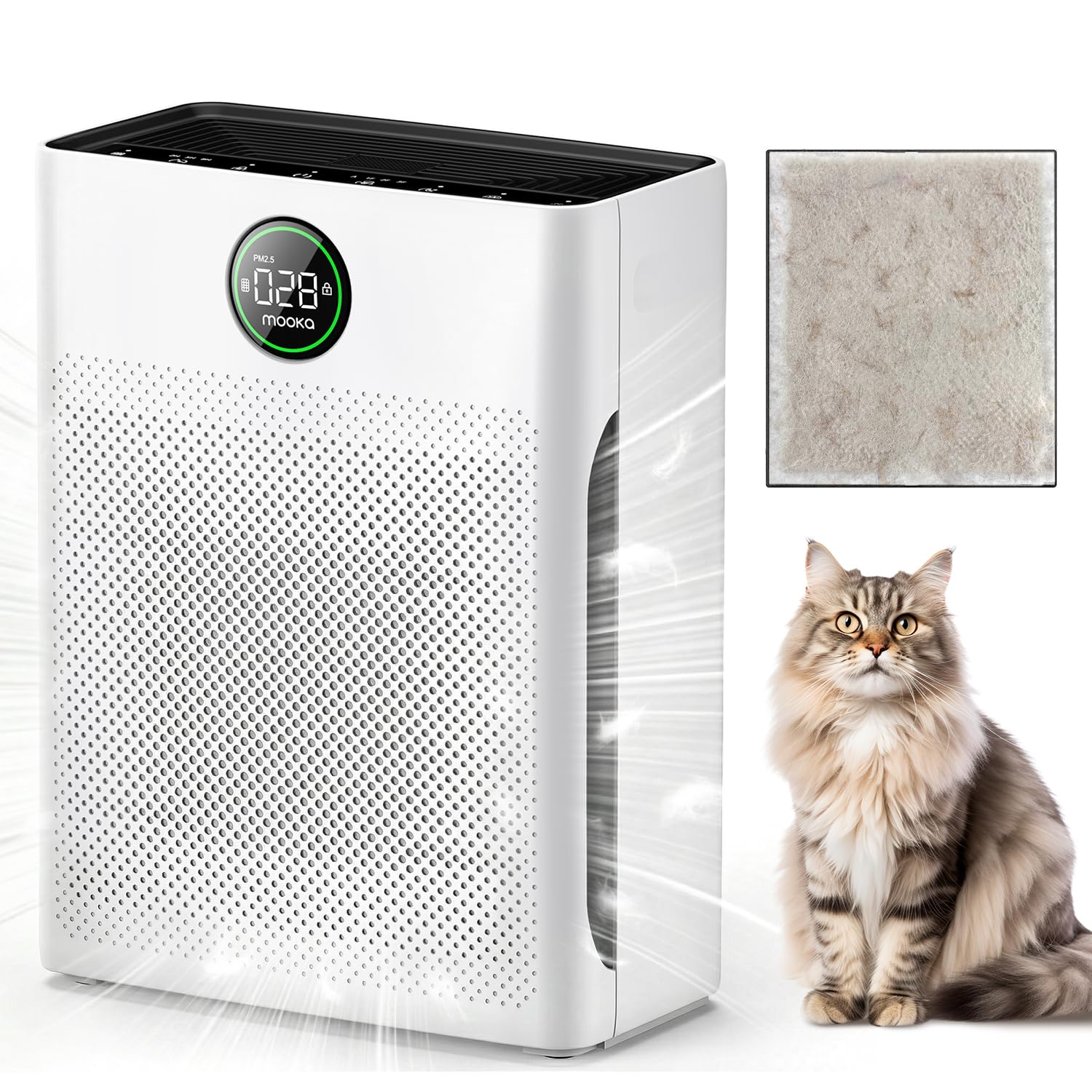
MOOKA PR1

MOOKA PR1

Pet owners budget

Our Score 9.2/10
Check Price

Worth Noting

Noise Level
26 dB (sleep)
AHAM Verified
No
Smart Features
Auto, pet, AQI, aroma
Room Size (4.8x/hr)
Read the full review

At a price where most purifiers rely on a single indicator light, the PR1's PM2.5 digital readout gives immediate air-quality clarity. The dedicated pet mode automatically reacts to dander spikes, and the washable pre-filter extends main filter life — features its bedroom-focused competitor skips in favor of AHAM-certified quietness and a lower upfront cost.

Pet owners with one or two small cats or dogs in a bedroom or dorm will find it handles everyday fur and light odors reliably. The carbon layer reduces mild litter-box or cooking smells, but it won't match the deep odor scrubbing of pricier certified units — best reserved for spaces where scent challenges are moderate, not overpowering.

Fan noise on low is a hushed 26 dB, and the pet mode briefly ramps up during a dander surge before settling back to near silence. The included aroma pad adds a subtle scent option without compromising filtration, and the child lock prevents accidental button presses — all operated with straightforward, touch-sensitive controls.

Bottom line: If a PM2.5 display, a helpful pet mode, and a washable pre-filter in a bedroom-friendly unit sound like the right priorities, the PR1 delivers surprising polish for an entry-level price.

7

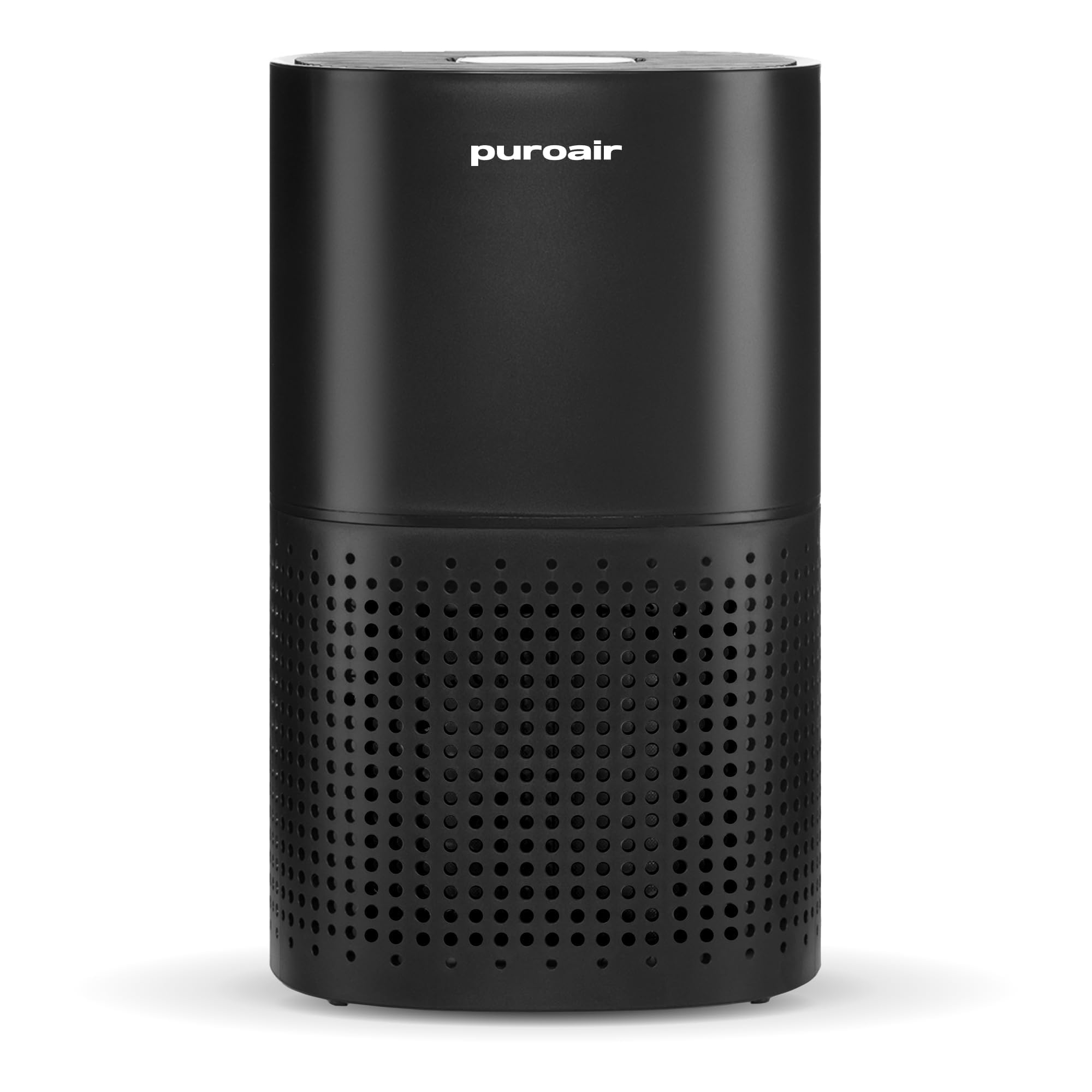
PuroAir 240

PuroAir 240
Our Score 9.2/10
Check Price

Worth Noting

  • Replacement filters are costly and may need frequent changing, reducing long-term value
  • Odor removal is weak; struggles with strong cooking or smoke smells
Read the full review

The PuroAir 240 runs quietly on low and medium settings, and effectively captures routine dust and pet dander in bedrooms and smaller living spaces. Its build quality and simple controls are well received. However, the lack of AHAM certification means there’s no independent verification of its claimed 1,000 sq ft coverage — the true effective area is likely much smaller. Replacement filter costs are higher than average, and the carbon layer struggles with strong cooking or smoke odors. These limitations prevent it from competing with AHAM-certified alternatives in the same mid-range price tier.

Tip: Factor in the higher-than-average replacement filter costs when evaluating total ownership.

Bottom line: Best suited for light-duty bedroom use where quiet operation and basic particle removal matter more than odor control or verified performance.

8

Blueair Blue Pure 511i Max

Blueair Blue Pure 511i Max
Our Score 9.0/10
Check Price

Worth Noting

  • Electronic or app connectivity issues may arise in some units after several months of use
Read the full review

The Blue Pure 511i Max packs the smallest footprint in Blueair's line, with near-silent operation and straightforward app control that make it a natural fit for small bedrooms or dorm rooms. Setup takes minutes, and its HEPASilent filtration effectively captures dust and allergens in rooms up to 193 sq ft. However, some units may develop electronic issues or experience inconsistent app connectivity over time, making long-term durability uncertain. For buyers who prioritize a proven track record in a compact package, the Levoit Core 300-P offers more consistent performance.

Bottom line: Best for a small bedroom where quiet operation is the priority and the buyer is comfortable with potential early electronic hiccups — check the warranty before purchasing.

How to Choose

CADR (Clean Air Delivery Rate)

CADR measures how many cubic feet of air the purifier cleans per minute for smoke, dust, and pollen. Higher numbers mean faster cleaning in a given room. A CADR of 200 for smoke is roughly adequate for a 200 sq ft room when aiming for 4.8 air changes per hour.

Ignore the single-number average some brands quote; look at the three separate ratings. If the smoke CADR is notably lower than dust, the carbon filter may be undersized — a problem for odor-heavy households.

Noise Level on Low and High

Every purifier is quiet on its lowest speed — that's the sleep mode number most brands advertise. The surprise comes when you need more power. On high or turbo, many units jump from 22 dB (a whisper) to over 50 dB (loud conversation), making them unsuitable for continuous use in bedrooms.

Check both ends of the range. If you plan to run the purifier on medium or high during the day, the noise at those levels matters more than the sleep-mode spec.

Real Room Size vs. Maximum Coverage

The huge square footage on the front of the box is typically based on one air change per hour — barely enough to keep particles from settling. For allergy and asthma relief, health experts recommend 4.8 air changes per hour, which means the effective room size is about one-fifth of the listed max.

Always look for the “recommended room size at 4.8x per hour” in the fine print. That number tells you where the purifier actually performs, not just where it can mark time.

AHAM Verification

AHAM (Association of Home Appliance Manufacturers) independently tests and certifies CADR ratings. A purifier with the AHAM seal means the numbers on the spec sheet have been validated by a third party, not just claimed by the brand.

Without AHAM verification, the CADR you see could be optimistic. For buyers who want certainty, AHAM-certified models are the safer bet — especially when comparing similarly priced units.

Washable Pre-filter and Filter Cost

A washable pre-filter captures large particles (pet hair, dust bunnies) before they reach the HEPA layer, extending the life of the more expensive main filter. Models without one require full filter replacements more often, sometimes every 3-6 months.

Check the price of replacement filters before buying. A bargain-priced purifier can cost more in filters over two years than a mid-range unit with a washable pre-filter.

Smart Features

Auto mode, air quality monitors, and app control add convenience but aren't essential for clean air. An auto mode that overreacts to minor dust can become annoying, while a simple manual unit with a timer offers reliable control without potential connectivity headaches.

Smart features are most useful for large homes where you want to schedule operation or check air quality remotely. For a single bedroom, a basic purifier with a sleep mode is often all you need.

Frequently Asked Questions