Appliances

2 Best Compact Refrigerators Under 2026: Real Freezers for Decor

Compact refrigerators with real freezers that freeze ice cream solid and arrive looking pristine — which models work for dorms, offices, and home bars.

If you've ever unboxed a mini fridge only to find a dent the size of a soup can on the door, or discovered that the “freezer” can't keep ice cream solid, you're not alone. The compact fridge category is flooded with flimsy internal chillers and packaging that can't survive the freight journey.

What separates a fridge that earns a permanent spot in your home office from one that gets hidden in the garage? Not brand name — it's whether it has a true separate freezer door and whether you prepare for possible cosmetic flaws. This guide helps you find a compact fridge that actually freezes and fits your decor — so you can make a choice with your eyes open, not after a disappointing unboxing.

In a home decorating context, a fridge becomes a functional accent piece — the cream retro model that anchors your coffee bar, or the sleek stainless steel unit that disappears under a desk. We'll show you which ones blend in without demanding a return slip.

#3

Best Ultra-Compact for Desks

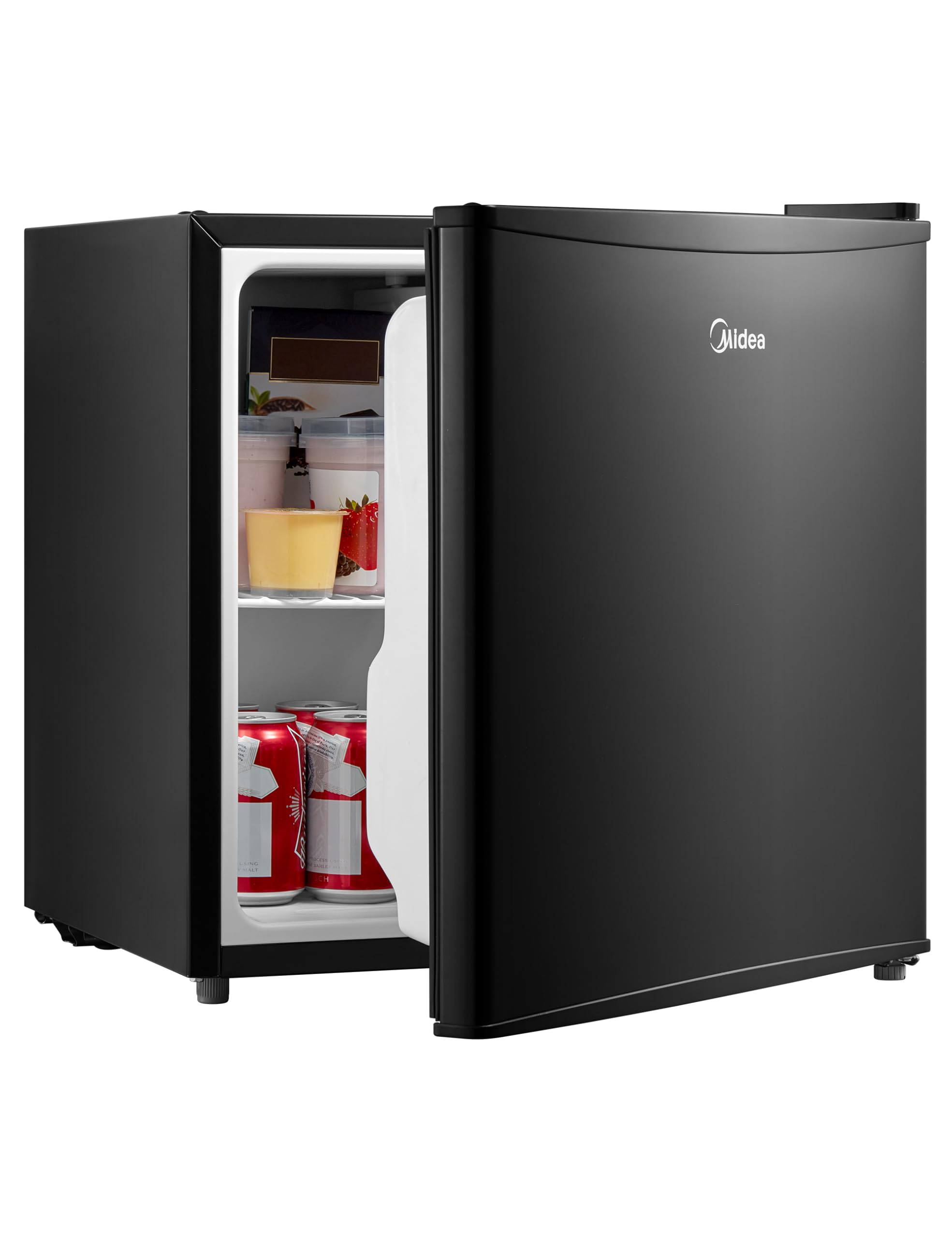
Midea WHS-65LB1 (1.6 cu ft)

Midea WHS-65LB1 (1.6 cu ft)

4.5
  • Noise Level: <42 dB
  • Freezer Type: —
  • Adjustability: Reversible door
  • Energy Star & Usage: Yes, 207 kWh/yr
Check Price

Pros

  • Fits under standard desks with room to spare, yet holds two half-gallons of milk. — 601 mentions, 87% positive
  • Cools reliably over years of daily use without early compressor wear. — 406 mentions, 76% positive
  • Chills beverages quickly and maintains a steady temperature. — 313 mentions, 81% positive
  • Strong build quality and reversible door at a wallet-friendly price. — 162 mentions, 86% positive

Cons

  • In a quiet bedroom, the compressor hum may be more noticeable than expected — less of a concern in a kitchen or office. — 409 mentions, 43% negative — some users find it louder than expected for a bedroom

The Midea WHS-65LB1 crams 1.6 cubic feet of practical cold storage into a footprint that glides under a standard desk — and still swallows two half-gallon milk cartons. While the top pick demands more floor space and a higher cost for its silent operation and separate freezer, this miniature cooler fights back with a shape that fits where other fridges can’t and a price that leaves room in the budget for dorm essentials.

Cooling is quick and steady. A simple thermostat dial lets you dial in a temperature that chills drinks within an hour and keeps produce fresh through the week. The compressor-driven system holds temperature reliably over years of daily use, without the early-life failures that plague some budget rivals. The reversible door and sturdy build make it adaptable to any corner of a small room.

This fridge is built for dorm rooms, tight under-desk office nooks, and nursing mothers needing a private cooler at work. Light sleepers, however, should know that in a completely silent bedroom, the compressor hum is noticeable — it’s less of a presence in busier environments like a kitchen or shared office. For those who prize quiet above all else, the near-silent top pick is worth the extra cash and counter space.

💡 💡 Tip: Position the fridge under your desk rather than next to your bed; the desk surface helps dampen the sound.

Bottom Line: For tiny under-desk spaces where every inch counts, this Midea delivers the best storage-to-footprint ratio in its class — just don’t expect silent nights.
#6

Temporary Dorms

Sweetcrispy 3.2 cu ft Silver

Sweetcrispy 3.2 cu ft Silver

4.3
  • Noise Level: 38 dB
  • Freezer Type: Internal compartment
  • Adjustability: 2 adjustable shelves
  • Energy Star & Usage: No
Check Price

Pros

  • Surprisingly spacious interior for the price — 63 mentions, 81% positive on size
  • The lowest-priced 3.2 cu ft mini fridge, delivering strong value — 47 mentions, 89% positive on value

Cons

  • Compressor may fail after the first year, limiting long-term use — 112 mentions, 43% negative on reliability — pattern of compressor failure after warranty
  • Noise output varies; some units produce loud gurgling sounds — 89 mentions, 49% negative on noise

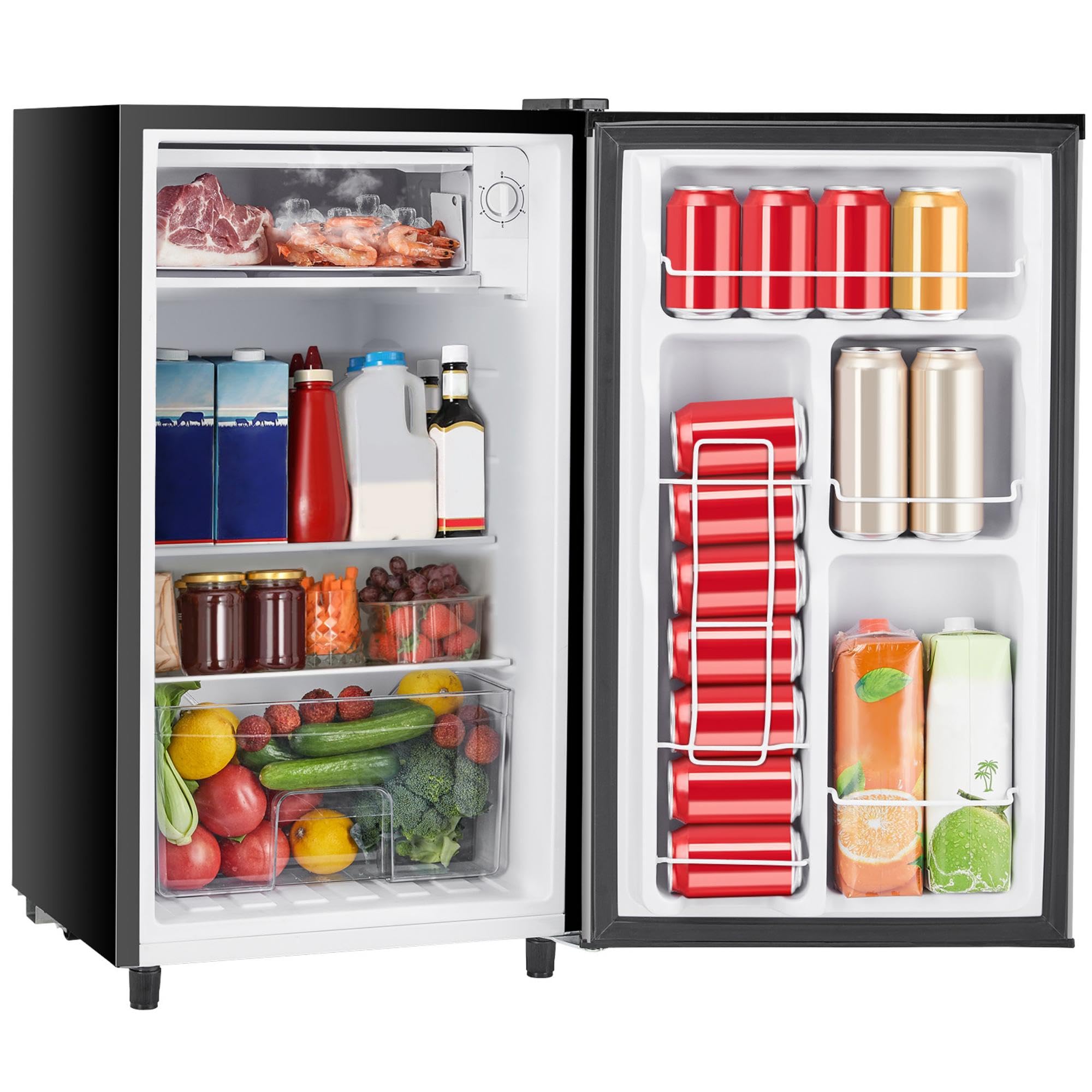
The Sweetcrispy 3.2 cu ft Silver undercuts nearly every fridge in its size class, making it a top consideration for budget-conscious students or office setups. The interior feels larger than expected, easily holding a week’s worth of drinks and leftovers. The trade-off is lifespan: the compressor can give out after the first year, and noise levels are unpredictable — some units hum softly while others emit distracting gurgles. For temporary use in a dorm or breakroom, that’s a fair deal; as a permanent bedroom fixture, the uncertainty may not be worth the savings.

💡 💡 Tip: Place it in a common area rather than a silent bedroom to make occasional gurgling less noticeable.

Bottom Line: A sensible short-term purchase for dorms, offices, or temporary housing where a couple of years of service is enough. Plan on replacing it sooner than pricier alternatives.

How to Choose

Total Capacity and Freezer Split

Mini fridges range from 1.6 to 4.5 cubic feet, but the real question is how that space divides between fresh food and freezer. A 3.2 cu ft fridge with a 0.3 cu ft internal compartment gives you about 2.9 cu ft for drinks, while a 3.1 cu ft 2-door model dedicates nearly a full cubic foot to the freezer, leaving 2.2 cu ft for fresh items.

For a bedroom beverage fridge, more fresh space matters. For storing frozen burritos or ice cream, a separate freezer door is non-negotiable — the internal flaps on cheaper units rarely maintain freezing temperatures.

Freezer Type

The difference between an internal chiller compartment and a dedicated separate door is enormous. Chiller compartments use a cold plate inside the fridge that tries to stay below freezing, but they're influenced by the main section's temperature. A separate door freezer has its own insulation and cooling loop, keeping ice cream consistently firm and frozen meals safe.

If you see a “freezer” label without a second door, treat it as a cold zone for ice trays and short-term frozen snacks — not for long-term storage.

Noise Level

Manufacturers advertise decibels like 38 or <42 dB, but real-world hum depends on compressor type and cabinet insulation. A 38 dB rating in a lab can translate to noticeable gurgling when the unit cycles off, especially in a silent bedroom.

For sleeping areas, the only reliable indicator is user consensus on quiet operation — models described as “whisper-quiet” hundreds of times tend to live up to the claim. In a garage or living room, a low hum is rarely an issue.

Energy Star and Annual Consumption

An Energy Star-certified mini fridge typically uses between 200 and 260 kWh per year, costing about $25–$32 annually. That's modest, but a non-certified unit can creep 30-50% higher, making the Energy Star badge a easy win for long-term value.

Annual consumption also hints at compressor quality: a fridge that sips power often uses a more efficient cooling system that runs quieter and lasts longer.

Reversible Door and Adjustable Shelves

A reversible door lets you open the fridge from the left or right, a detail that turns a corner desk or tight dorm layout from awkward to seamless. Adjustable glass shelves add flexibility for tall bottles or half-gallon milk jugs.

Without these features, you're stuck with the original swing and fixed wire racks that limit what fits. Most compact models with adjustable shelves list them prominently; if they don't, expect a single fixed shelf.

Frequently Asked Questions