Appliances

10 Best Air Conditioners of 2026: For Quiet Rooms and Lower Bills

Which window and portable ACs deliver whisper-quiet cooling and real energy savings — and which ones need constant draining or rattle after months.

An air conditioner's decibel rating on the box rarely matches what you hear at 2 a.m. That gap between advertised silence and real-world hum has frustrated buyers for years — especially with portable units, where the compressor sits inside the room rather than hanging out a window.

Inverter compressors have reshaped what's possible. The same technology that made mini-splits whisper-quiet now appears in window and portable ACs under $600, dropping noise floors to 42–45 dB — roughly the volume of a library. But the market is uneven: established brands with track records sit alongside newcomers with impressive spec sheets and almost no long-term usage data.

The right choice hinges less on brand and more on your window situation, room size, and tolerance for installation effort. A perfectly sized inverter unit that fits your space will outperform a mismatched beast every time — and understanding the trade-offs between permanent window installs and roll-anywhere portables is what turns a frustrating purchase into a set-it-and-forget-it one.

#1

Best Overall

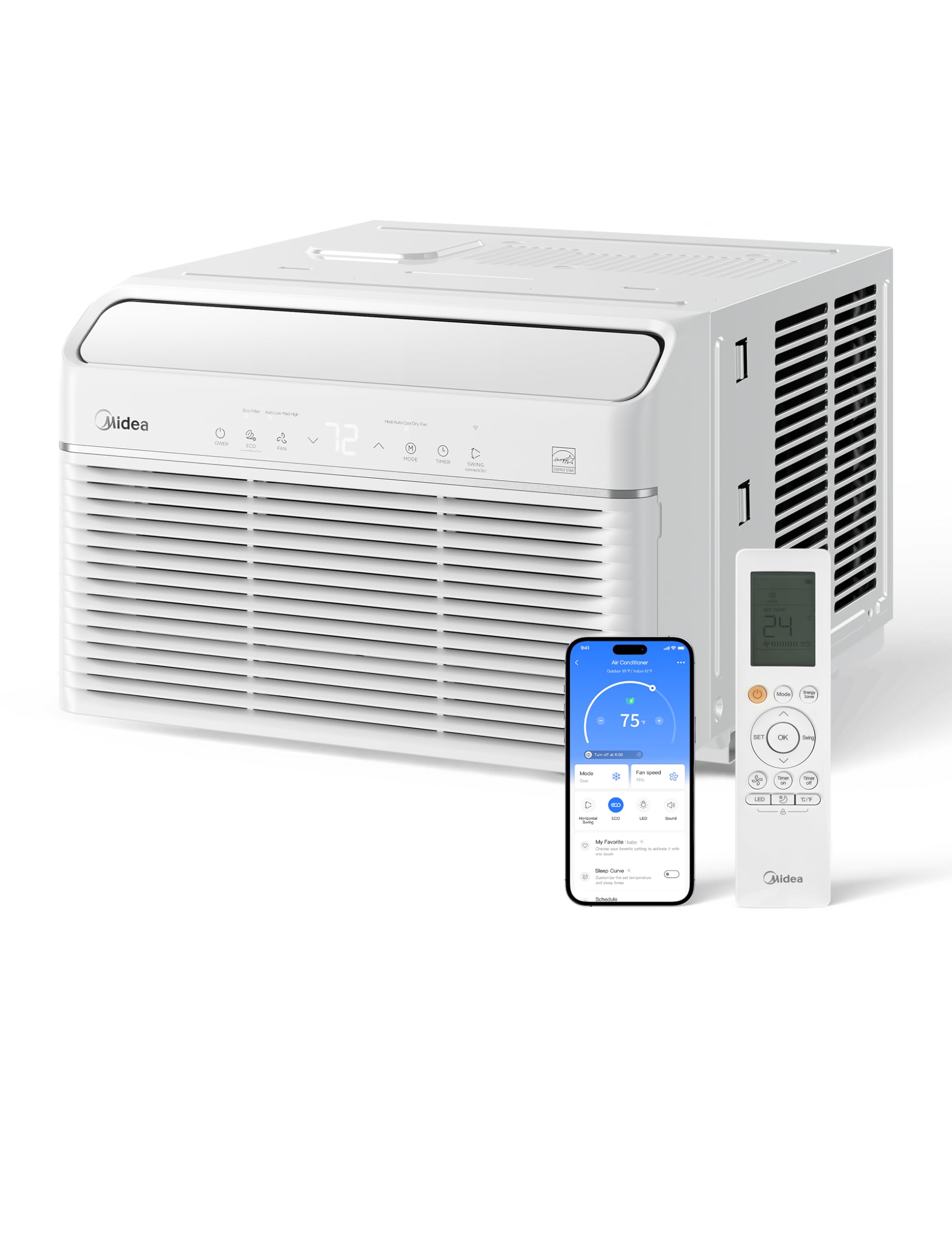
Midea 12k Window Inverter AC

Midea 12k Window Inverter AC

4.4
  • Noise Level: 45 dB
  • Cooling Power: 12,000 BTU, 550 sq ft
  • Installation Type: Window
  • Smart Control & Inverter: App, voice, inverter
Check Price

Pros

  • Consistent cooling and heating for medium-large rooms — 27 mentions, 85% positive
  • Fast cool-down with stable temperature hold — 25 mentions, 84% positive
  • Ultra-quiet operation at 45dB — 25 mentions, 92% positive
  • Strong value for an inverter window AC with heating — 15 mentions, 93% positive
  • Sleek, modern exterior and simple controls — 7 mentions, 100% positive

Cons

  • Heating only works above 41°F outdoors — supplemental, not a primary heat source — Stated in product specs; confirmed by user reviews

45dB quiet operation with inverter energy savings and heating come together in this mid-range window unit from Midea. The 12,000 BTU cooling capacity handles up to 550 square feet, and the inverter compressor ramps down instead of cycling on and off, keeping temperature swings small and power draw low. A CEER of 13.3 puts it near the top of the efficiency range for window-mounted units.

Real-world use confirms the quiet profile holds up — the 45dB rating makes it one of the least intrusive window ACs for bedrooms or living areas. Cooling speed is strong, and the temperature setpoint remains stable even on hot afternoons. The heat pump function, integrated into the same compact chassis, provides warmth during cool but not freezing days, eliminating the need for a separate heater in late fall or early spring.

The unit’s smart integration via Wi-Fi, Alexa, and Google Assistant puts scheduling and remote control onto voice commands or a phone app. The external design is clean and modern, and the control panel uses a simple LED display. All of this comes at a mid-range price that significantly undercuts premium inverter portables while delivering the inherent efficiency advantage of a window-mounted installation.

Homeowners with medium-to-large rooms who want a single appliance for cooling and supplemental heating will find a strong match here. The heating function only engages when outdoor temperatures stay above 41°F, so it serves as a supplementary source in mild weather — not a replacement for a primary furnace in deep cold. Renters who cannot install window units and anyone needing full winter heating should look elsewhere.

💡 💡 Tip: For effective heating below 41°F, pair this unit with a dedicated space heater.

Bottom Line: A permanently installed, ultra-quiet inverter window AC that cools and provides supplemental heat with notable energy savings — ideal for homeowners who can mount it and don’t need deep-freeze heating.
#2

Best Dual-Hose Inverter Portable

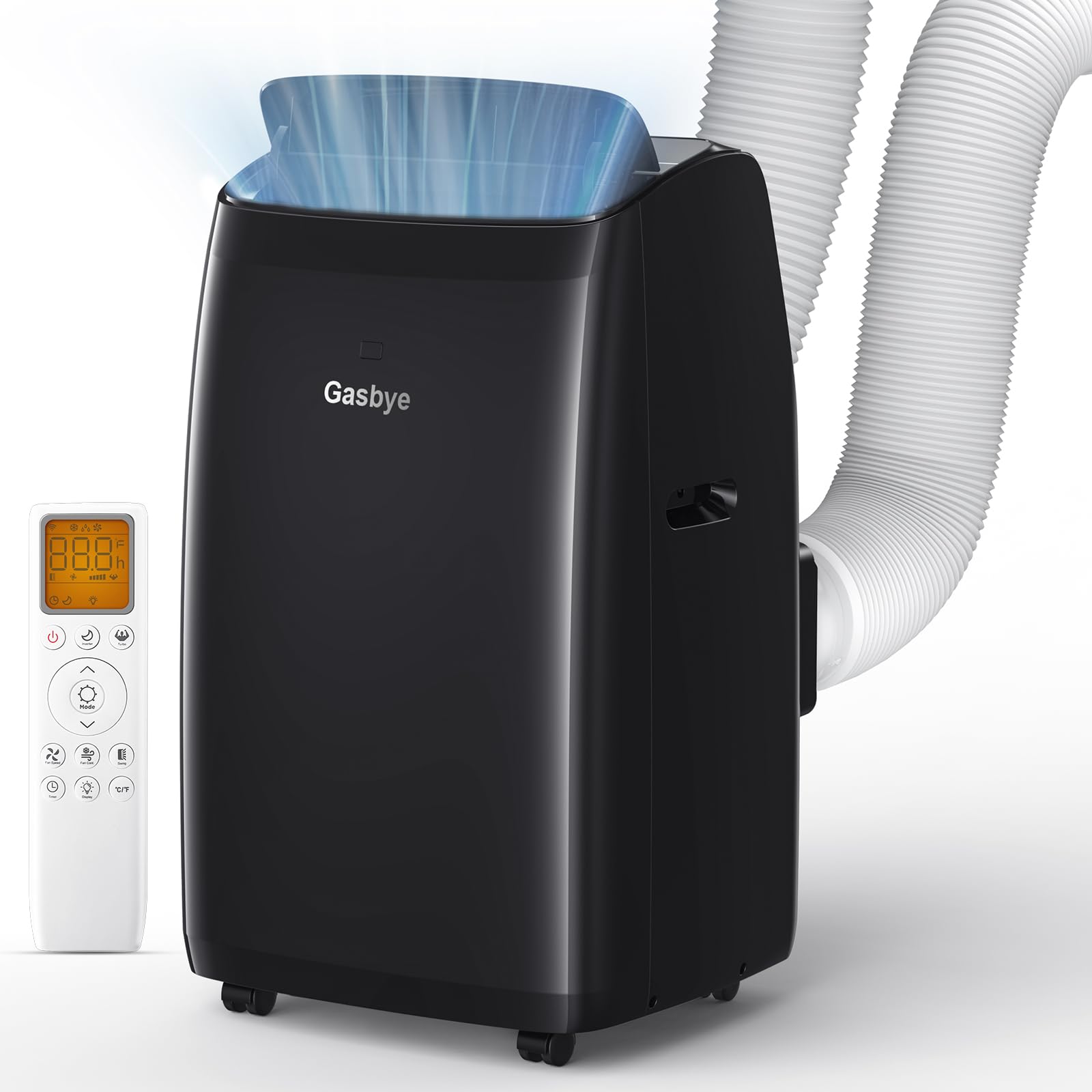
Gasbye 14k Dual Hose Portable

Gasbye 14k Dual Hose Portable

4.8
  • Noise Level: 45 dB
  • Cooling Power: 14,000 BTU, 550 sq ft
  • Installation Type: Portable, dual-hose
  • Smart Control & Inverter: Remote only, inverter
Check Price

Pros

  • Drops room temperature quickly and maintains it consistently — 173 mentions, 90% positive
  • Operates at a library-like 45 dB, especially in inverter mode — 134 mentions, 84% positive
  • DC inverter yields CEER 13.6, lowering electricity bills — 39 mentions, 95% positive
  • Straightforward installation with dual-hose window kit — 64 mentions, 86% positive

Cons

  • Remote control can be confusing and lacks app connectivity — 28 mentions, 29% negative — learning curve reported

The Gasbye 14k Dual Hose Portable brings a DC inverter compressor to a dual-hose design—a combination that delivers 45 dB quiet operation and a CEER of 13.6. It cools 500-square-foot spaces rapidly, maintaining consistent temperatures without the compressor cycling noise common in non-inverter units. The backlit remote offers direct access to modes and fan speeds, and setup requires little more than attaching the dual-hose window kit.

Energy consumption drops noticeably compared to standard portable ACs. The inverter adjusts power continuously rather than kicking on and off, which also reduces temperature swings. Even at higher cooling loads, the compressor remains subdued—audible but unobtrusive, blending into background sound rather than dominating a conversation.

This unit suits renters, homeowners with window-restricted rooms, and anyone who prizes silence and efficiency above smart-home integration. Accepting a backlit remote instead of app control lets you trade connected conveniences for a focused, energy-miser cooling experience. In return, you get an extremely quiet, economical portable AC that holds its own against far pricier inverter portables.

💡 💡 Tip: Spend a few minutes with the backlit remote’s manual—the layout takes some getting used to but covers all essential functions without a phone.

Bottom Line: For renters and energy-conscious households willing to forgo app control, the Gasbye delivers near-silent inverter cooling with exceptional efficiency—a standout value in the dual-hose category.
#3

Best Smart Inverter Portable

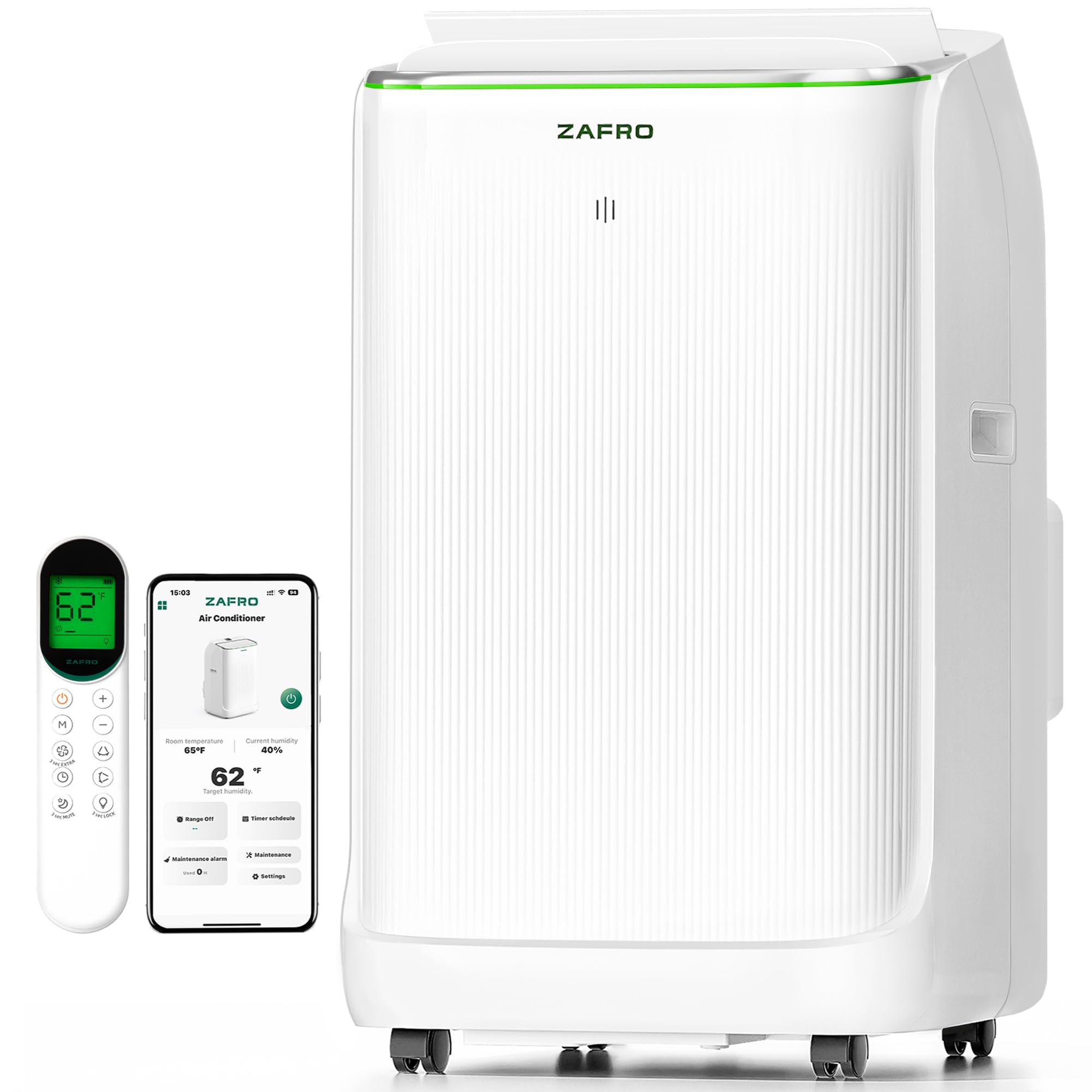
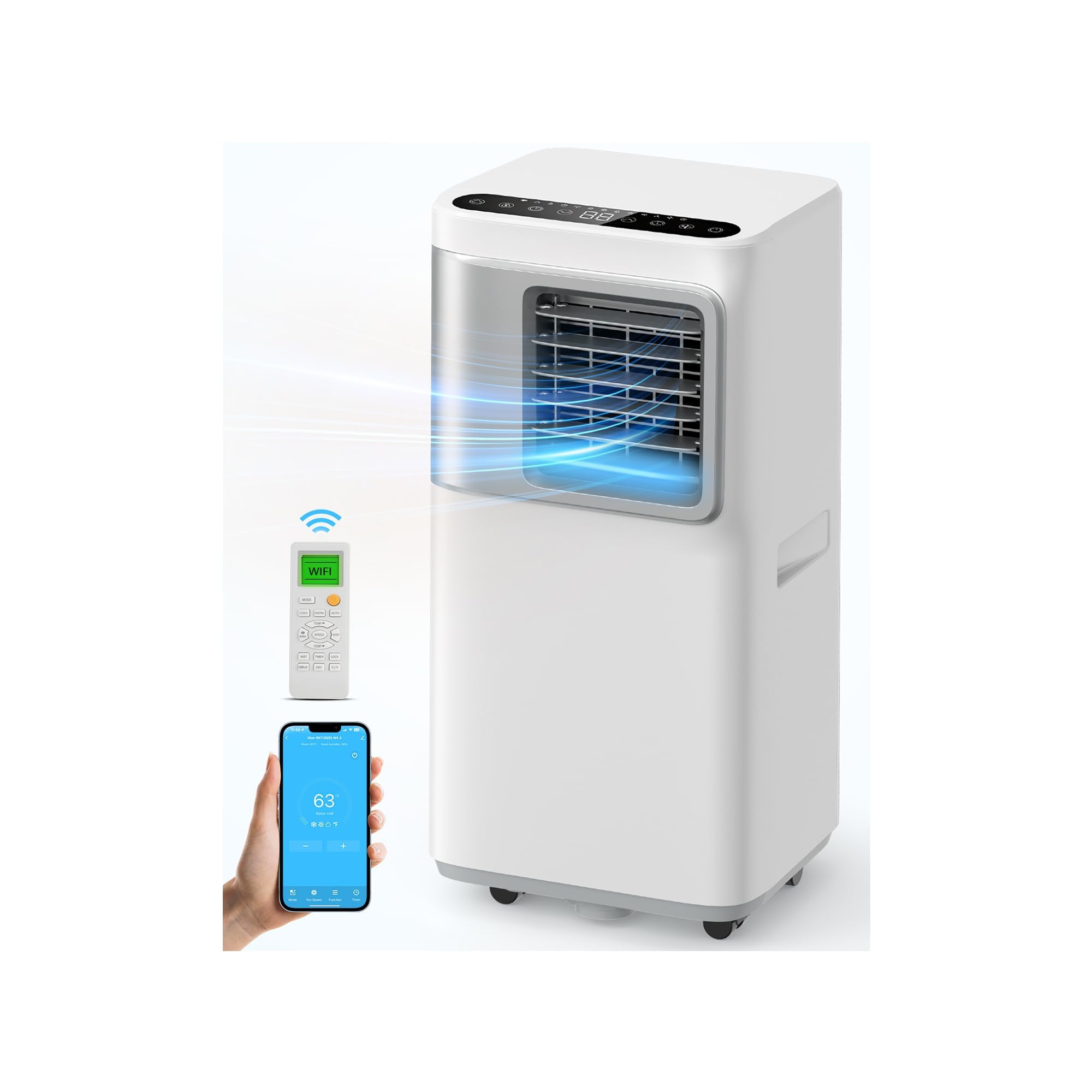
ZAFRO 16k Inverter Portable

ZAFRO 16k Inverter Portable

4.5
  • Noise Level: 42 dB
  • Cooling Power: 16,000 BTU, 800 sq ft
  • Installation Type: Portable, dual-hose
  • Smart Control & Inverter: App, voice, inverter
Check Price

Pros

  • Powerful 16,000 BTU cooling for up to 800 sq. ft., with rapid pull-down even in heat waves — 115 mentions, 90% positive
  • Inverter compressor keeps noise to a library-quiet 42dB, barely noticeable in conversation — 86 mentions, 87% positive
  • Tool-free assembly and quick window kit setup gets you cooling within minutes — 48 mentions, 90% positive
  • Smart app, voice, and scheduling control integrates seamlessly with Alexa/Google smart homes — 23 mentions, 96% positive

Cons

  • Fan speed on low mode may feel weaker than expected for those wanting intense airflow — suits diffused cooling preference — 65 mentions, 15% negative

The dual-hose inverter platform cuts noise to 42dB while avoiding the negative-pressure inefficiency of single-hose portables — delivering genuine 800-square-foot coverage without permanent window installation. Unlike a similarly efficient dual-hose competitor in this set that relies on a basic remote, the ZAFRO adds full app scheduling, voice control via Alexa and Google, and geofencing triggers.

Setting up the dual-hose window kit takes about 30 minutes, and the self-evaporation system handles condensate without daily manual draining in most humidity conditions. The inverter compressor ramps smoothly rather than cycling harshly on/off, keeping temperature swings minimal.

Tech-savvy users who prioritize seamless smart-home integration and whisper-quiet cooling for large open-plan spaces will find the premium price justified. Those expecting aggressive airflow at maximum fan speed may find it underwhelming — this unit delivers a steady, diffused cool rather than a forceful blast of air.

💡 💡 Tip: If you prefer a strong breeze, position the unit within 6 feet and use high fan mode; low mode prioritizes silence over airflow.

Bottom Line: For smart homes where integration and whisper-quiet cooling matter more than a hurricane-force fan, the ZAFRO delivers premium portable performance.
#4

Best Drainage-Free Smart Portable

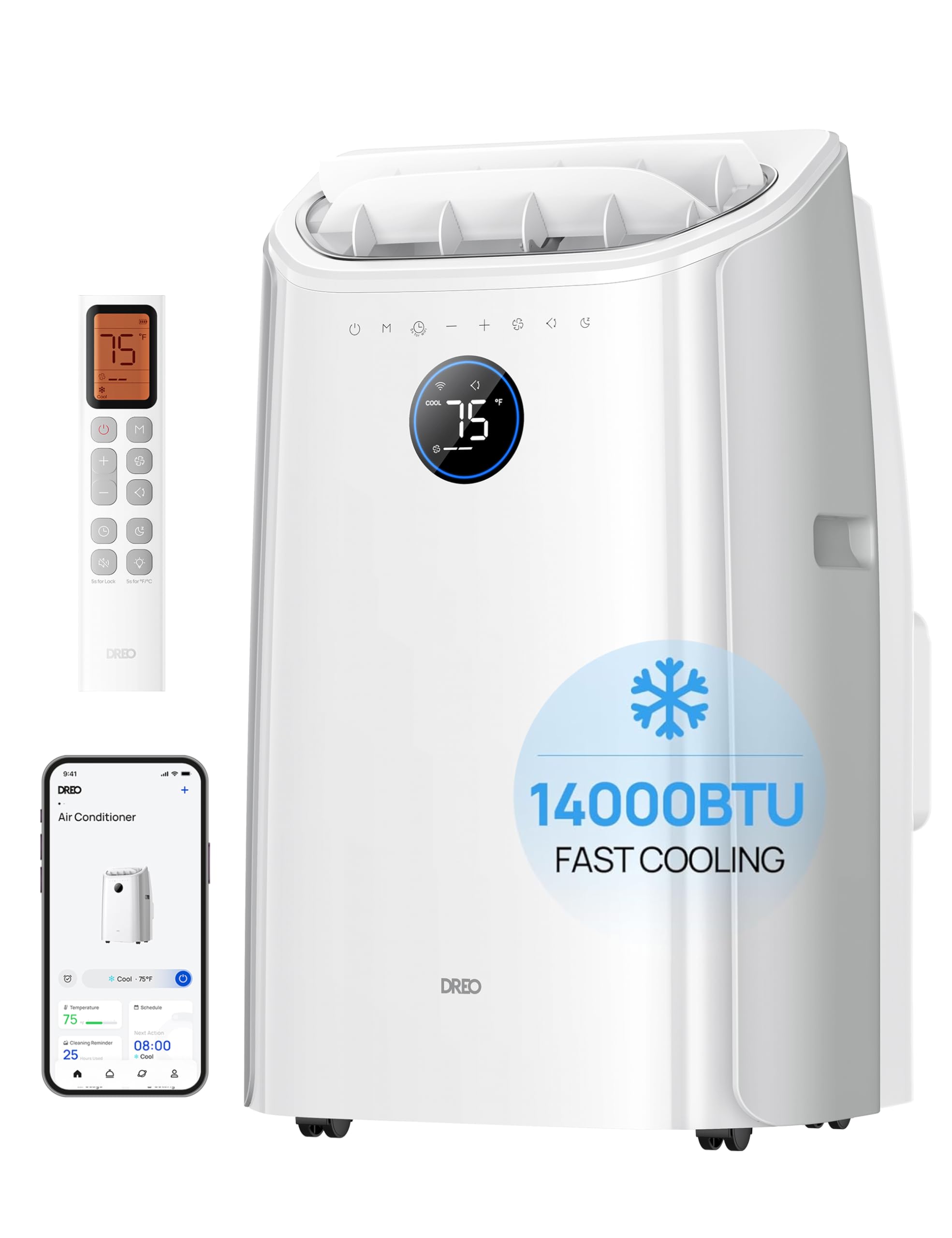
DREO 14k Portable AC

DREO 14k Portable AC

4.5
  • Noise Level: 45 dB
  • Cooling Power: 14,000 BTU, 400 sq ft
  • Installation Type: Portable
  • Smart Control & Inverter: App, voice
Check Price

Pros

  • Fast, cold airflow distributes evenly across the room — 88 mentions, 88% positive
  • Whisper-quiet 45 dB operation won’t disturb sleep or conversation — 61 mentions, 77% positive
  • Solid construction with a sleek, modern look that fits any decor — 51 mentions, 92% positive
  • Self-evaporating design eliminates manual draining in typical indoor humidity — 46 mentions, 89% positive

Cons

  • Window kit assembly can be time-consuming and finicky, especially with irregular window types — 46 mentions, 11% negative — setup may require extra time

The DREO 516S carves out a niche by making drainage-free cooling actually work, using a self-evaporation system that handles moisture without a tray to empty. At 45 dB in sleep mode, it competes with the quietest portables, while its app and voice control integration puts it ahead of simpler inverter units that skip smart features. The 14,000 BTU ASHRAE rating (10,000 BTU SACC) covers a 400-square-foot bedroom effectively, though it won’t stretch to large open-plan spaces.

Tech-forward users who want to fine-tune their cooling from a phone or smart speaker will appreciate the customizable sleep curve — you can program lower temperatures at bedtime and a gentle rise by morning. For renters and anyone moving an AC between rooms, the self-evaporation design eliminates the chore of daily draining, a genuine edge over dual-hose inverters that still collect condensate.

The window installation kit, while functional, can test your patience. The assembly steps may not be intuitive, and achieving a tight seal on narrower or non-standard windows can take extra effort and improvisation. If you are willing to spend the time upfront, the payback is a unit that stays put securely and runs nearly maintenance-free all summer. Those with only horizontal sliding windows or who prioritize energy bills over smart conveniences should look elsewhere.

💡 💡 Tip: Watch the online assembly video before starting; having a second person and extra weatherstripping on hand can save an hour of trial and error.

Bottom Line: For a smart bedroom that stays cool without daily emptying, the DREO 516S is a standout — but set aside an afternoon to conquer the window kit at the start of the season.
#5

Best Large-Room Window AC (No Inverter)

Frigidaire 14k Window AC

Frigidaire 14k Window AC

4.5
  • Noise Level: 57 dB
  • Cooling Power: 14,000 BTU, 700 sq ft
  • Installation Type: Window
  • Smart Control & Inverter: WiFi app
Check Price

Pros

  • 14,000 BTUs cool rooms up to 700 sq. ft. without faltering when outdoor temperatures reach the high 90s. — 17 mentions, 94% positive
  • Stable performance during heatwaves, holding the set temperature without constant cycling. — 13 mentions, 77% positive
  • WiFi app controls scheduling, temperature, and modes remotely.

Cons

  • SEER 10.9 efficiency trails inverter models; electricity costs run higher over a full cooling season.
  • 57 dB compressor and fan noise is clearly audible in quiet settings; may interfere with sleep or conversation. — 5 mentions, 20% negative

Raw cooling power for large open spaces separates this Frigidaire from the inverter window unit at the top of the list. It swaps the near-silent 45 dB operation of that model for 14,000 BTUs and enough throw to cover 700 sq. ft., even when the mercury climbs past 90°F.

On the hottest days, the compressor cycles without struggling, and the WiFi app lets you start cooling before you get home — a practical edge for afternoon sun-baked rooms. A standard thermostat holds the set point, and adjustable louvers direct airflow where it’s needed.

Homeowners with wide-open living areas, sunrooms, or combined kitchen-dining spaces will appreciate the reach and force. The 57 dB output is a fair trade in a bustling living room, but in a quiet bedroom or home office, it will be heard — plan on some background sound to coexist with the cool air.

💡 💡 Tip: Use the app to cool the room before you occupy it, then drop to a lower fan speed to reduce the 57 dB hum.

Bottom Line: Strong cooling for large open spaces with the convenience of WiFi control — accept the audible hum and higher energy draw as the cost of 14,000 BTUs that don’t quit when the temperature spikes.
#6

Best Budget Small Window Unit

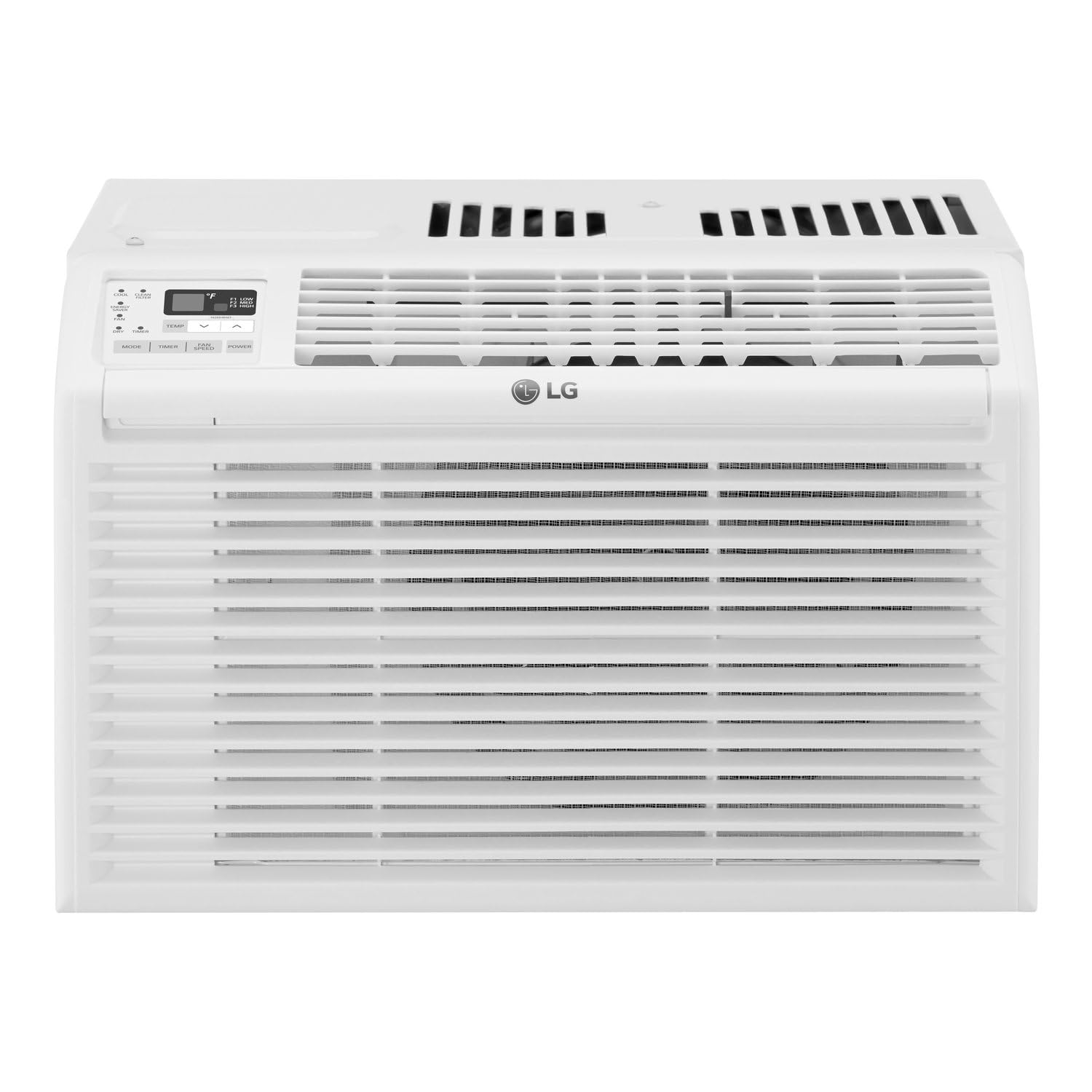
LG 6k Window AC

LG 6k Window AC

4.2
  • Noise Level: 52 dB
  • Cooling Power: 6,000 BTU, 250 sq ft
  • Installation Type: Window
  • Smart Control & Inverter: —
Check Price

Pros

  • Fits small double-hung windows without excessive gaps or extra framing. — 107 mentions, 82% positive
  • Single-person installation manageable with basic tools — no helper needed. — 185 mentions, 81% positive
  • Budget-friendly price for basic small-room cooling without unnecessary features. — 186 mentions, 78% positive

Cons

  • In a quiet bedroom, the compressor hum can be more intrusive than expected — rattling varies by unit. — 553 mentions, 43% negative — noise level varies between units
  • Cooling output may feel insufficient in spaces larger than 200 sq. ft., especially on hot days. — 535 mentions, 34% negative — some find cooling insufficient

Where entry-level mechanical units stop at basic cooling, the LG 6k BTU adds a digital thermostat, remote, and 2-way air deflection for more comfort control without complicating setup. It delivers 6,000 BTUs of cool air for spaces up to 250 sq. ft., bringing a balance of simplicity and modern essentials that the cheapest alternatives lack.

Installation is straightforward and routinely handled by one person. The unit slides into most double-hung windows, and the included side curtains seal gaps effectively. No heavy lifting or extra help is needed — frame dimensions and mounting hardware align cleanly with standard small-window openings.

The LG suits renters or homeowners targeting a small bedroom, den, or home office on a lean budget. Noise level can be inconsistent between units; some produce a rattle or louder hum than expected. This is less of a concern in a kitchen or daytime workspace, but light sleepers in a quiet bedroom may prefer a quieter inverter model.

💡 💡 Tip: A foam gasket between the unit and window frame can dampen rattling if your particular unit hums louder than expected.

Bottom Line: For a small bedroom or home office on a budget, the LG gets the basics right — simple install, easy controls, and adequate cooling within its range. If noise consistency matters more, stepping up to an inverter window unit brings quieter operation at a higher price.
#7

Affordable big rooms

YLEOOB 16k Portable AC

YLEOOB 16k Portable AC

4.8
  • Noise Level: 36 dB (sleep)
  • Cooling Power: 16,000 BTU, 750 sq ft
  • Installation Type: Portable
  • Smart Control & Inverter: WiFi app, voice
Check Price

Pros

  • Cools large rooms up to 750 sq. ft. quickly and evenly — 49 mentions, 94% positive
  • Tool-free setup ready in minutes, no professional help needed — 20 mentions, 100% positive
  • Whisper-quiet 36dB sleep mode keeps nights undisturbed — 17 mentions, 94% positive

Cons

  • Single-hose design is less energy efficient than dual-hose inverter models
  • Brand's long-term durability is unproven, raising a question mark for multi-season reliability

The YLEOOB portable air conditioner moves 16,000 BTUs of cooling into rooms up to 750 square feet, with a 36-decibel sleep mode that keeps background hum low enough to forget. Set-up takes minutes using the included window kit, and the WiFi app plus voice control fit neatly into a smart-home routine. The single-hose and standard compressor design means energy efficiency can't match dual-hose inverter portables—expect higher ongoing electricity use. Long-term reliability also remains an open question for this brand, which lacks the track record of established names. For renters who need immediate, large-space cooling and value quiet nights over multi-year durability guarantees, the trade-off is clear.

Bottom Line: A practical pick for renters who need immediate, large-room cooling and value quiet sleep plus app control—provided you accept the unknown long-term reliability and extra electricity cost versus a dual-hose inverter unit.
#8

Large-room value pick

Augsmile 16k Portable AC

Augsmile 16k Portable AC

4.7
  • Noise Level: 40 dB
  • Cooling Power: 16,000 BTU, 850 sq ft
  • Installation Type: Portable
  • Smart Control & Inverter: WiFi, voice
Check Price

Pros

  • Strong, fast cooling reaches large rooms quickly — 36 mentions, 92% positive
  • Hassle-free setup with no tools required — 32 mentions, 100% positive
  • Runs quietly at 40dB despite high 16,000 BTU output — 22 mentions, 91% positive

Cons

  • Lacks an inverter compressor, so energy bills can be higher over time than inverter-equipped models

The Augsmile 16k delivers quick, room-filling cooling that stays notably quiet at 40dB — a rarity for a portable unit with this much power. Setup is completely tool-free, and the WiFi app control and sleep timer add convenience without headaches. Since it uses a standard compressor instead of an inverter, energy costs will run higher if the unit is on for many hours daily compared to inverter models. For cooling large spaces occasionally or during peak heat, the trade-off is minor, and the result is an unusually composed portable AC at a mid-range price.

Bottom Line: For large rooms where portability and quiet cooling matter more than long-term efficiency, the Augsmile 16k offers a compelling mix of power and low noise at a mid-range price.
#9

Premium portable heat

Midea Duo 14k Portable

Midea Duo 14k Portable

4.3
  • Noise Level: 42 dB
  • Cooling Power: 14,000 BTU, 550 sq ft
  • Installation Type: Portable, dual-hose
  • Smart Control & Inverter: App, voice, inverter
Check Price

Pros

  • Powerful, fast cooling with strong airflow — 63 mentions, 81% positive
  • Exceptionally quiet operation for a portable AC — 51 mentions, 80% positive
  • Solid build quality and straightforward installation — 33 mentions, 91% positive

Cons

  • Heavy at 77 lbs, making room-to-room movement a strain despite wheels
  • Heating function may stop working after a short period of use — 18 mentions, 72% negative — heating reliability flagged

The Midea Duo 14k wraps a dual-hose hose-in-hose system that avoids negative air pressure, an inverter compressor that keeps sound to 42dB, and heating capability for mild days above 41°F into a smart-enabled package. Cooling is swift and strong, and build quality holds up in hands-on use. Shifting attention to the tradeoffs, the unit weighs 77 pounds, making wheeled movement feel more like a chore than a convenience — it truly suits a permanent spot. The heating function introduces ambiguity: it can stop working after short-term use, adding a layer of uncertainty for anyone counting on shoulder-season warmth. For stationary, cooling-centric homes that want near-silent operation and occasional heat, the Duo delivers; if guaranteed heating or frequent portability matters, the design boundaries are clear.

💡 💡 Tip: Plan a permanent spot and ask for help when moving — the 77-pound unit is not a one-person job.

Bottom Line: For buyers who will park this in one room and value near-silent cooling with occasional heating — and can tolerate the risk of heating issues — the Midea Duo 14k delivers a luxurious thermal experience. Those needing frequent portability or guaranteed heating should look elsewhere.
#10

Occasional budget use

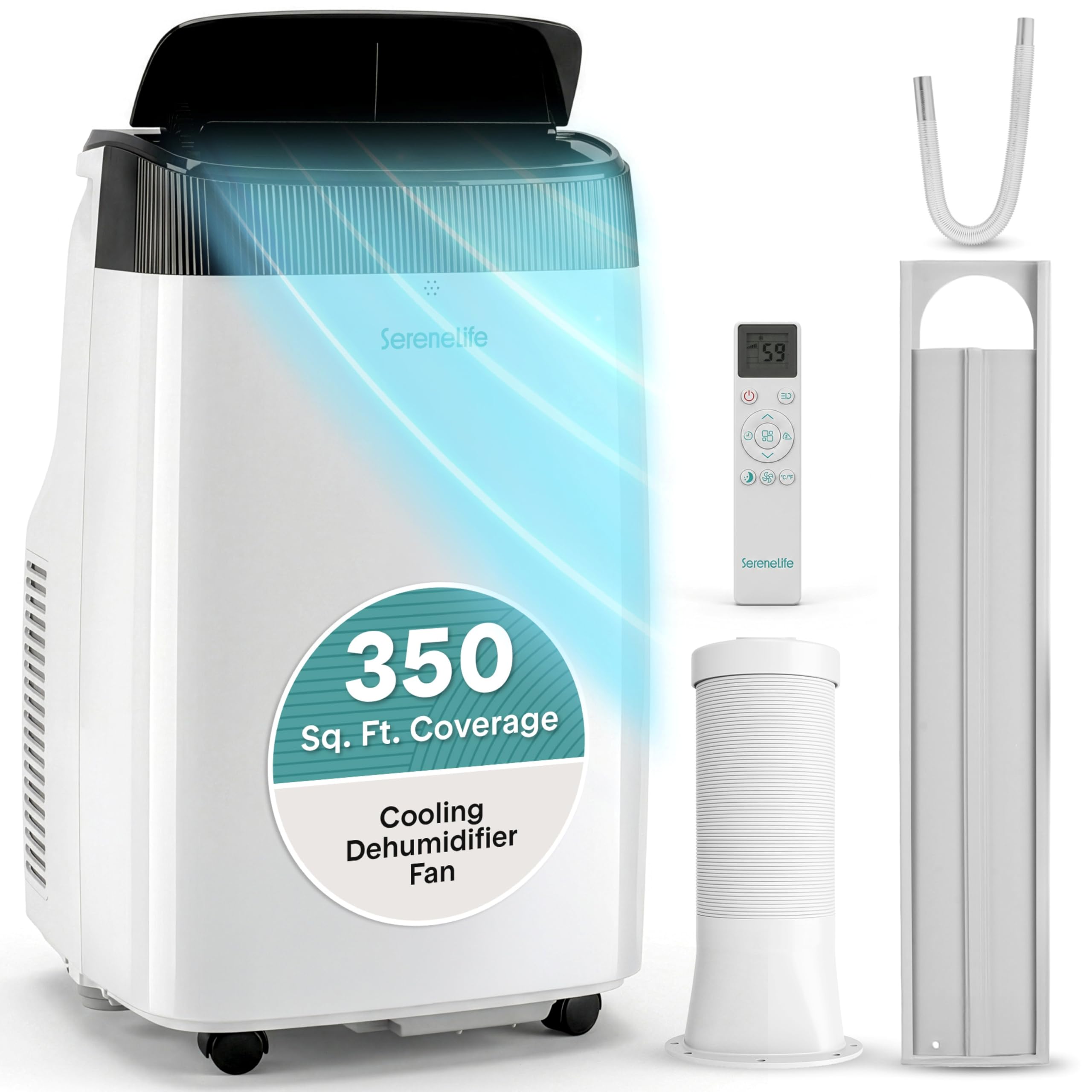
SereneLife 8k Portable AC Review

SereneLife 8k Portable AC Review

4.2
  • Noise Level: 55–57 dB
  • Cooling Power: 8,000 BTU, 350 sq ft
  • Installation Type: Portable
  • Smart Control & Inverter: —
Check Price

Pros

  • Simple, tool-free setup gets cold air flowing in minutes. — 1967 mentions, 96% positive
  • Lowers room temperature noticeably in a 350-square-foot space for the price. — 3258 mentions, 85% positive
  • Outstanding value: capable cooling at a mid-range price point. — 989 mentions, 82% positive

Cons

  • 55–57 dB output may be intrusive in quiet settings like bedrooms or home offices. — 2972 mentions, 57% negative — noise is a frequent complaint
  • The exhaust hose is prone to tearing at the connection point, especially with frequent repositioning. — 540 mentions, 74% negative — hose fragility is a known issue

The SereneLife 8,000 BTU portable wins on convenience: setup is tool-free and takes minutes, and it lowers the temperature in a 350-square-foot room noticeably. That ability at a mid-range price makes it an appealing stop-gap for a hot spell. The fan and compressor produce 55–57 dB, which will be intrusive in a bedroom or quiet office. The exhaust hose material is thin and can crack at the connection point after repeated flexing, so it’s not a daily-driver. For occasional use — like a guest room or workshop — it’s a practical choice.

Bottom Line: Its real strength is in temporary cooling — a heat wave backup in a spare room or workshop where noise is tolerable and the unit won’t be moved often.

How to Choose

Cooling Power (BTU and Room Size)

BTU ratings tell you how much heat a unit can remove per hour, but the real-world consequence of mismatching is humidity. An undersized unit runs continuously and can't keep up on hot days. An oversized unit blasts cold air, hits the thermostat quickly, shuts off, and never runs long enough to dehumidify — leaving the room cold but sticky.

Standard compressors punish oversizing harshly because they're either on or off. Inverter compressors modulate their speed, so a slightly oversized inverter unit can ramp down and maintain steady dehumidification. Match the manufacturer's square footage recommendation closely, and when in doubt, err slightly under for standard units and slightly over for inverter models.

Noise Level (dB)

Decibel ratings are measured at the lowest fan speed from a fixed distance in an acoustically treated lab. In a real room with hard floors and walls, sound reflects and the compressor cycles louder under heat load. The difference between a 45 dB inverter unit and a 55 dB standard portable is dramatic — 45 dB is library-quiet, 55 dB is conversational speech volume sitting inside your bedroom all night.

Portable ACs are inherently louder than window units at the same BTU rating because the compressor sits inside the room. If silence matters and you have a compatible window, a window unit will always win the noise battle at any given price point.

Energy Efficiency (CEER/SEER)

CEER (Combined Energy Efficiency Ratio) measures cooling output per watt of electricity consumed across a range of conditions. A CEER of 13.6 versus 6.2 translates to cutting your cooling electricity costs roughly in half for the same room. Inverter units typically deliver CEER ratings above 12, while standard portables often land between 6 and 9.

In a hot climate where the AC runs daily for months, the efficiency difference pays back the higher upfront cost of an inverter unit within one to two seasons. For occasional use in mild climates, the efficiency gap matters far less.

Installation Type (Window vs. Portable)

Window units are more efficient by design — all the hot-side components sit outside, so heat and compressor noise are ejected immediately. The trade-off is installation: you need a standard double-hung window free of obstructions, and the unit stays put all season. For homeowners or long-term renters, this is the better choice in nearly every cooling scenario.

Portable units trade efficiency for flexibility. Single-hose portables pull room air across the condenser and blow it outside, creating negative pressure that draws hot outdoor air back in through door gaps. Dual-hose portables fix this with a dedicated intake hose, making them the only portable type worth considering in consistently hot climates. If you move frequently or your windows are casement-style, portable is your only option.

Smart Control and Inverter Technology

Inverter compressors continuously adjust motor speed to maintain temperature instead of cycling on and off. This eliminates the loud startup surge and temperature swings of traditional units, and it cuts energy use by 30–50%. Inverter technology was once exclusive to ductless mini-splits costing thousands; it now appears in window and portable units starting around $350.

Smart control — WiFi, app scheduling, voice assistant integration — is increasingly standard but varies in execution. A well-implemented app lets you set cooling schedules, monitor energy use, and trigger the unit based on geofencing. Some models offer smart features without an inverter, and some inverter models skip smart connectivity entirely. Prioritize the inverter first if you have to choose: the physical compressor technology improves daily experience more than an app ever will.

Frequently Asked Questions