Outdoor

5 Best Snow Blowers of 2026: Power That Matches Your Actual Snowfall

Cut through exaggerated throw and runtime claims to find the snow blower that matches your driveway size and snow type—gas or battery.

A snow-covered driveway chips away at your home’s curb appeal and turns a five-minute exit into a freezing chore. But the search for a snow blower is littered with throw-distance promises that dissolve the moment snow turns wet and heavy. That mismatch between marketing and reality is what leaves so many homeowners disappointed.

The right snow blower clears not just snow but the anxiety of wondering whether it will start or last long enough. By focusing on the machine’s actual behavior in the snow you get—not the powder they use in demo videos—you can find a model that matches your driveway and your tolerance for noise, weight, and maintenance.

#1

Best Overall

EGO SNT2400

EGO SNT2400

4.6
  • Drive: Self-propelled
  • Weight: 150 lbs
  • Max Throw: 50 ft
  • Clearing Width: 24 in.
Check Price

Pros

  • Cuts through up to 4 inches of snow, throwing it 40-50 feet to rival gas blowers.
  • Push-button start every time, with no gas mixing or pull-cord frustration.
  • Variable-speed self-propelled drive with forward and reverse that handles slopes well.
  • Quieter operation and zero exhaust fumes make early-morning clearing neighbor-friendly.

Cons

  • Wheels can spin in heavy wet snow, occasionally requiring manual assistance to maintain forward progress.
  • Runtime on a pair of 7.5Ah batteries can be as short as 20 minutes of continuous use

With self-propelled traction, a 24-inch clearing width, and a throw that reaches 50 feet, the EGO SNT2400 clears snow as aggressively as a gas two-stage blower — but without the noise, exhaust, or pull-start struggles. The push-button start fires up instantly, and the variable-speed drive moves forward and backward with authority, making light work of sloped driveways and packed snow.

In moderate snow up to 8 inches, the steel auger chews through without clogging, and the chute control stays easy to adjust even with gloves on. The headlights illuminate the path during pre-dawn sessions, and the noise level stays low enough that nearby neighbors won't stir.

Unlike lightweight single-stage battery blowers, the SNT2400's steel auger and self-propelled drive give it enough bite to handle the heavy end of driveway clearing without sacrificing cordless convenience. It stands apart from smaller cordless units that bog down in anything beyond a few inches of powder.

Buyers who already own EGO 56V tools will find the SNT2400 a natural addition — the body-only purchase plugs into an existing battery fleet, keeping the effective cost lower. For newcomers, the total price climbs past $1,600 once you buy two high-capacity batteries and a charger. The quiet, fume-free operation suits early-morning clearings, and no gas maintenance means avoiding carburetor cleaning or fuel stabilizer. You'll want spare batteries on hand for properties that demand more than a single pair can handle, which is the tradeoff for cordless convenience.

💡 Tip: Pre-charge a second set of batteries before heavy snowfalls so you can swap and keep going without a pause.

Bottom Line: The EGO SNT2400 matches gas clearing power and throw without the noise or maintenance, as long as you bring enough charged batteries to handle your property's total clearing time.
#2

Best Heavy-Duty Gas

Ariens ST28DLE SHO

Ariens ST28DLE SHO

4.4
  • Drive: Self-propelled, 6 speeds
  • Weight: 267 lbs
  • Max Throw: 55 ft
  • Clearing Width: 28 in.
Check Price

Pros

  • Clears heavy, wet snow without bogging down, throwing it up to 55 feet to keep the driveway open even in storms.
  • Starts on first pull, making pre-dawn snow clearing less aggravating.
  • Predominantly metal construction and robust components endure season after season of heavy use.

Cons

  • Engine may occasionally stop or fail to start; service often resolves these instances.

Where the top pick relies on batteries that need swapping for long clearings, the Ariens ST28DLE SHO runs uninterrupted on gasoline — clearing a 28-inch swath through deep drifts without pause. The 306cc engine hurls snow up to 55 feet, handling the wet, heavy stuff that bogs down cordless competitors.

The machine’s mostly metal auger housing and reinforced steel frame absorb the abuse of heavy seasonal use better than plastic-intensive designs. Self-propelled drive with six speeds gives you steady traction on icy slopes, though the 267-pound heft means you’ll plan storage carefully.

This is the blower for large-property owners who measure snowfall in feet, not inches, and prioritize unstoppable clearing over quiet, maintenance-free operation. It suits those who accept the ritual of gas refills, oil changes, and occasional pull-start antics as a fair exchange for relentless power, but the premium price and upkeep keep it from being a casual purchase.

💡 Tip: Add fuel stabilizer before storage and change the oil annually to minimize starting hiccups.

Bottom Line: For homeowners who face relentless lake-effect snow or long rural driveways, this Ariens delivers the tireless, heavy-duty clearing that battery models can't match — just be ready for the weight and seasonal gas engine upkeep.
#3

Best Value Gas

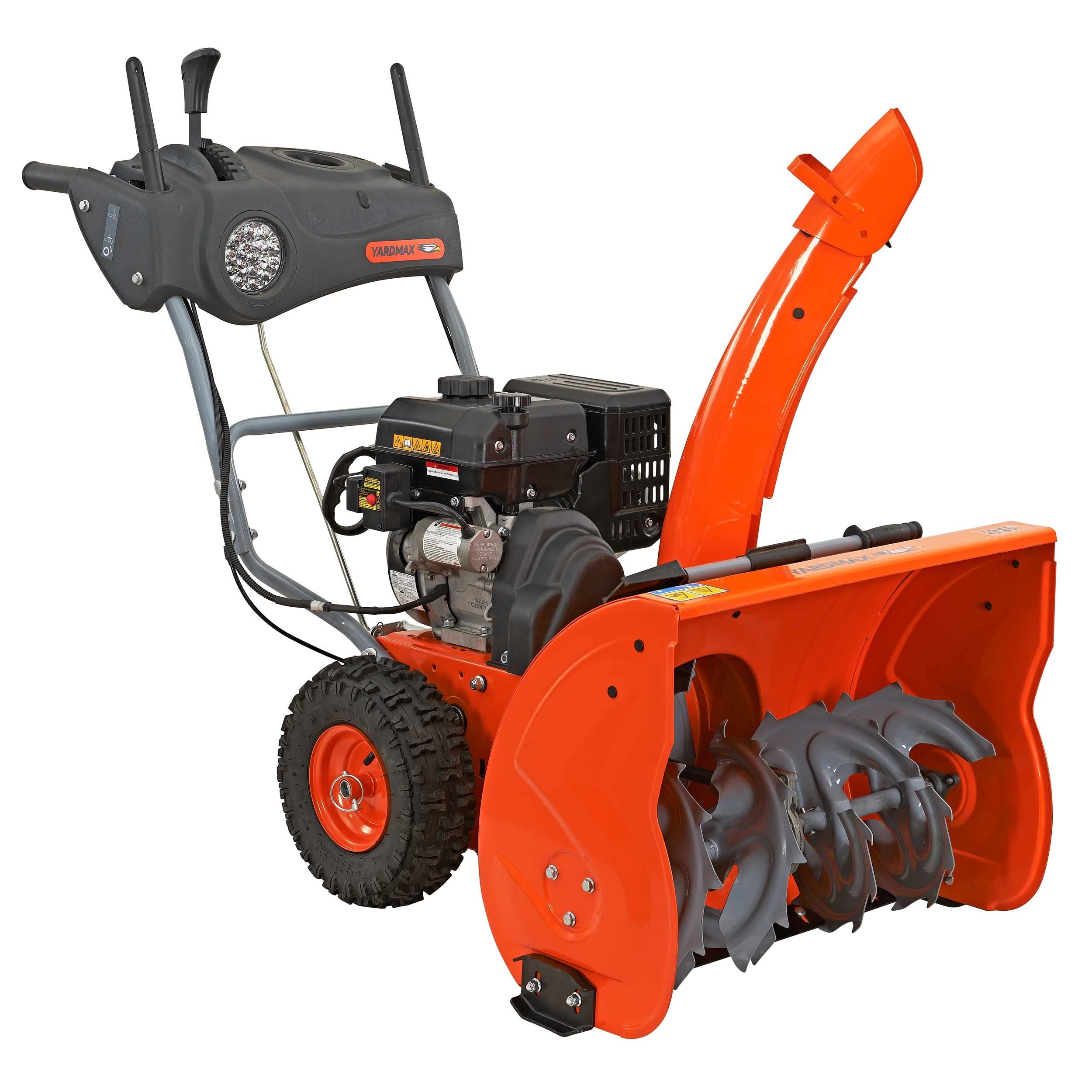
YARDMAX YB6770

YARDMAX YB6770

4.3
  • Drive: Self-propelled, 6F/2R
  • Weight: 165 lbs
  • Max Throw: 30 ft
  • Clearing Width: 26 in.
Check Price

Pros

  • Push-button electric start and recoil start both work immediately, even in cold weather.
  • Unboxing to full assembly takes about half an hour with common tools.
  • Gas two-stage clearing power and self-propelled drive for a price that undercuts premium rivals.
  • Chute throws heavy, wet snow 20–30 feet without clogging, matching many pricier units.

Cons

  • Shear pins and auger cables can require replacement sooner than expected; heavier-duty components are found in costlier models.

The YARDMAX YB6770 wraps push-button electric start, heated grips, and a self-propelled drive around a 212cc gas engine at a price that undercuts heavy-duty metal-built gas blowers. Where premium gas models prioritize cast-iron gear cases and 50-foot throw, this machine adds comfort features and 26-inch clearing capacity for less money.

First-pull starting is typical in cold weather, and the electric backup draws from an extension cord for effortless ignition. Assembly out of the box takes about 30 minutes with basic tools. The 26-inch intake and 212cc engine clear up to 30 feet, chewing through end-of-driveway plow pack without bogging, though throw is not the 50-foot range of high-torque commercial gas machines.

This blower suits homeowners who face moderate seasonal snowfall and want gas runtime and self-propulsion without a four-figure price. The trade-off is component longevity: shear pins and auger cables can require replacement earlier than on premium metal-centric models. Keeping a few spare shear pins on hand and checking cable tension mid-season keeps the machine moving, but anyone who prioritizes set-and-forget durability across many seasons will want a beefier alternative.

Bottom Line: For the buyer who wants heated grips, electric start, and self-propelled drive in a gas blower without the premium price, the YARDMAX YB6770 delivers strong two-stage clearing — just plan on occasional small repairs.
#4

Best Lightweight & Quiet

EGO SNT2112

EGO SNT2112

4.4
  • Drive: Manual push
  • Weight: 50.6 lbs
  • Max Throw: 40 ft
  • Clearing Width: 21 in.
Check Price

Pros

  • Clears 2-6 inches of light, dry snow without stalling or straining.
  • Push-button start eliminates pull cords and the frustrations of cold-weather gas starting.
  • Surprising clearing speed for its compact size; dispatches a typical driveway quickly.
  • Weighs only 50 lbs with batteries, making it easy to carry into storage and maneuver during use.

Cons

  • Manual push can be fatiguing in deep or heavy snow; no self-propel to ease the effort.
  • Throw distance drops sharply in wet snow, and the chute can clog repeatedly in slushy conditions.
  • Battery runtime may fall as low as 15 minutes per charge, limiting clearing time for larger areas.

At just over 50 pounds with both batteries installed, the EGO SNT2112 is the lightest full-size battery blower in this set. Its single-stage steel auger spins up instantly with a button, making it dramatically quieter and simpler to live with than gas rivals, and it sidesteps the battery-separate purchase and heavier self-propelled chassis of EGO's 2-stage model. For a homeowner facing a few inches of powder on a flat driveway, this machine is ready in seconds with zero fumes or yank cords.

In light, dry snow up to about 6 inches, the SNT2112 discharges reliably to the 40-foot spec and clears a 2-car driveway before the batteries tap out. The 21-inch path and manual push mean you'll walk a bit more, but the low weight keeps maneuvering effortless on paved surfaces. Push-button start and simple assembly are universally praised, making it approachable even if you've never used a snow blower before.

This blower is best matched to small or medium flat driveways in regions where snow usually falls light and dry. It's a natural fit if you already own EGO 56V batteries, since you'll have spare packs to swap and you already know the quiet, maintenance-free experience. However, when the snow turns wet and heavy, throw distance collapses and the chute can clog repeatedly — a limitation that makes it less suited for coastal storms or spring slush. If your winters regularly deliver dense, moisture-laden snow, consider the self-propelled battery 2-stage instead.

💡 Tip: In wet snow, applying silicone spray to the chute and auger can reduce clogging, and keeping a second pair of batteries charged extends runtime if you're already in the EGO ecosystem.

Bottom Line: For small-driveway owners in mild snow climates who already own EGO batteries, this blower offers grab-and-go simplicity that's hard to beat — just know its limits before the next wet nor'easter.
#5

Tiny Driveways

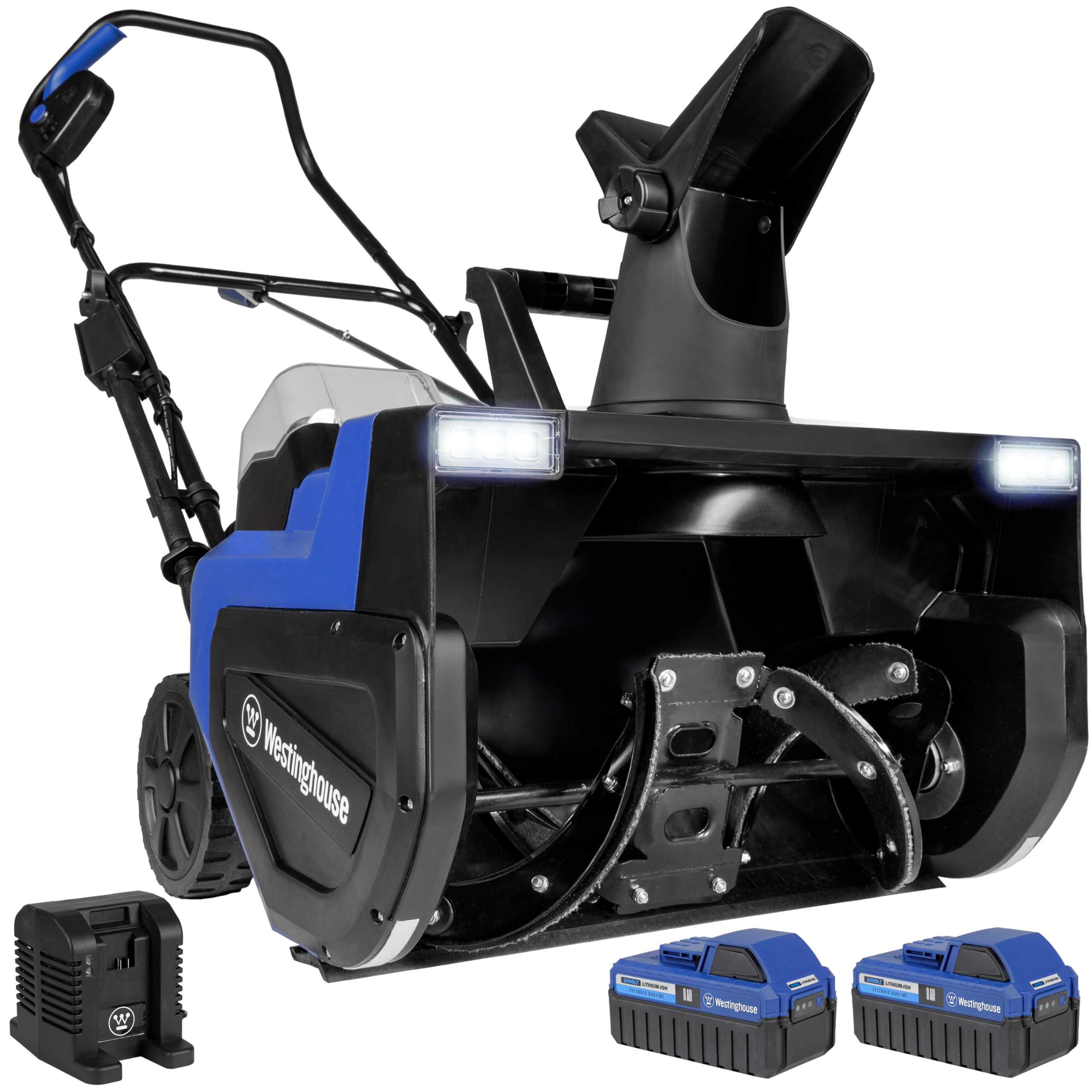
Westinghouse WSnow22

Westinghouse WSnow22

4.0
  • Drive: Manual push
  • Weight: 45.2 lbs
  • Max Throw: 25 ft
  • Clearing Width: 22 in.
Check Price

Pros

  • Assembly is straightforward and operation is intuitive, especially helpful for older users.
  • Lightweight build makes it effortless to maneuver and carry.
  • Clears light snow up to 4 inches effectively on small walkways.

Cons

  • Some units may experience durability issues, such as wheels detaching or auger malfunctioning, after limited use.
  • Battery runtime is limited to 15–20 minutes per pair, making it unsuitable for anything larger than a very small driveway.

The Westinghouse WSnow22 is a budget-friendly 22-inch cordless snow blower that costs a fraction of full-size machines, weighing just 45 lbs. It is easy to operate and clear light snow up to 4 inches on short, flat walkways. However, its runtime per pair of batteries is limited to about 15–20 minutes, so anything beyond a small driveway will run out of power mid-job. Additionally, some units have shown durability issues like wheels detaching or auger malfunctions after limited use. This makes it a niche tool strictly for the smallest properties with light, dry snowfall and owners willing to accept its longevity trade-offs.

💡 Tip: Use only on dry, fluffy snow under 4 inches and clear in short bursts to stretch the limited battery runtime.

Bottom Line: If you have a compact, flat walkway and only need to clear occasional light powder, and you’re prepared for the possibility of early wear, this low-cost cordless blower can handle the job — but larger properties and heavy snow call for a more robust machine.

How to Choose

Clearing Width and Intake Height

A wider clearing width means fewer passes, but a 28-inch path demands more engine torque to avoid bogging down in heavy snow. Intake height matters just as much: if it’s lower than your average snowfall depth, you’ll end up pushing a wall of snow ahead of the machine. For suburban driveways, 24 to 28 inches strikes a balance between speed and maneuverability, while intake heights below 20 inches leave you shoveling after a deep storm.

Power Source and Runtime

Gas engines deliver unlimited run time and consistent power in wet snow, but require seasonal maintenance and produce noise and fumes. Battery blowers offer push-button starts and quiet operation, yet runtime plummets under heavy loads—expect 15 to 20 minutes per pair of batteries in wet snow, far less than the advertised ‘up to’ figures.

If your driveway takes longer to clear, factor in the cost of spare batteries or accept that a gas model still rules for extended sessions. High-voltage battery 2-stage units can rival gas in moderate snow if you already own compatible batteries, but the total investment often surprises first-time buyers.

Self-Propelled vs. Manual Push

Self-propulsion transforms a 200-pound machine from a wrestling match into a steering exercise, essential for any slope or long driveway. Manual push blowers save weight and cost, but pushing through heavy snow while simultaneously fighting the auger’s forward pull can exhaust even fit users.

Maximum Throw Distance

Throw distance determines where you can place snow so you don’t re-clear it later. In heavy, wet snow, most blowers lose 30 to 50 percent of their maximum throw, so a machine rated at 50 feet might realistically only reach 30 feet when you need it most. Aim for a rated throw at least 20 percent beyond the distance you actually need.

Weight and Maneuverability

Lighter blowers are easier to handle and store, but they lack the mass to bite into packed drifts without bouncing. Heavier gas models stay planted and power through, but require more strength to maneuver when not under power. This is why a self-propelled heavy blower can actually be easier to operate than a light unit you have to muscle through drifts.

Frequently Asked Questions