Furniture

10 Best Bunk Beds of 2026: The Ones That Stay Stiff and Silent

Which bunk beds actually stay quiet, sturdy, and fit your kids for years — from low-profile pine to convertible metal frames.

Shopping for a bunk bed often feels like choosing between a piece of real furniture and a piece of playground equipment. You want an attractive anchor for the room, but you also need something that won't squeak, wobble, or be outgrown before the paint dries. The gap between online listing photos and what arrives in eight flat boxes can be stark.

The best bunk beds for your home are the ones that handle daily jumping, grow with your children, and still look right in a thoughtfully decorated space. This guide focuses on the beds that actually deliver that balance — whether your priority is a convertible design that splits into two twins when siblings want separate rooms, or a low-profile solid-wood frame that serves a toddler today and a teenager tomorrow.

1

Rolanstar Full Over Full Bunk

Top Pick
Rolanstar Full Over Full Bunk

Teen tech amenities

Our Score 9.4/10
Check Price

Worth Noting

  • Narrow ladder rungs can be uncomfortable under bare feet
Material
Powder-coated metal frame
Weight Capacity
270 lbs per bunk
Special Features
USB-A/C, RGB LEDs, 2 drawers
Assembly Instructions
Clear, under 2 hours
Read the full review

Where the top-pick wood low bunk prioritizes child-safe height and 400-lb capacity, this full-over-full metal bunk adds convenience features: built-in USB charging, app-controlled RGB lighting, and two under-bed drawers. The frame stays wobble-free under active use, full-length guardrails provide top-bunk reassurance, and assembly often runs under two hours. Teens and sibling pairs who value gadget integration over solid wood will find it a strong fit. Ladder rungs are narrow, which can be uncomfortable barefoot, and periodic bolt tightening keeps any metal squeaks at bay.

Tip: Retighten bolts every few weeks to maintain a silent frame.

Bottom line: For families needing full-over-full space with tech perks and integrated storage, this metal bunk delivers — the slim ladder rungs and occasional bolt re-checks are minor concessions to a convenient design.

2

Storkcraft Long Horn Bunk

Storkcraft Long Horn Bunk

Convertibility & safety

Our Score 9.2/10
Check Price

Worth Noting

  • Picture-only assembly instructions may slow the process, especially for first-time builders.
  • Solid wood slats and rails can develop hairline cracks with heavy use, though not a safety concern.
Material
Rubberwood, engineered wood
Weight Capacity
225 lbs per bunk
Special Features
GREENGUARD Gold, converts to two twins
Assembly Instructions
Picture-only, can confuse
Read the full review

The Storkcraft Long Horn sets itself apart with GREENGUARD Gold certification and the ability to convert into two standalone twin beds, a feature metal bunks can't offer. Solid rubberwood and a furniture-grade finish deliver a substantial, sturdy feel that holds up to daily kid energy better than many hollow-metal alternatives. At 225 pounds per bunk, it safely accommodates growing children through their early teens.

This bunk is designed for parents who prioritize low-VOC indoor air and the flexibility to separate beds when bunking days end. The assembly manual uses pictures only, which can slow down builders used to written steps, and solid wood grain can show hairline splits with heavy use — realities to weigh against the certified safety and convertible design. If those tradeoffs are manageable, the Long Horn delivers a healthier, adaptable sleep setup.

Tip: Lay out all parts and match them to the pictorial steps before assembling; a dry-fit pass helps spot mislabeled pieces and reduces backtracking.

Bottom line: The Storkcraft Long Horn is the bunk to choose when convertible flexibility and low chemical emissions matter more than fast assembly or perfect grain — a healthier, adaptable bed for a growing family.

3

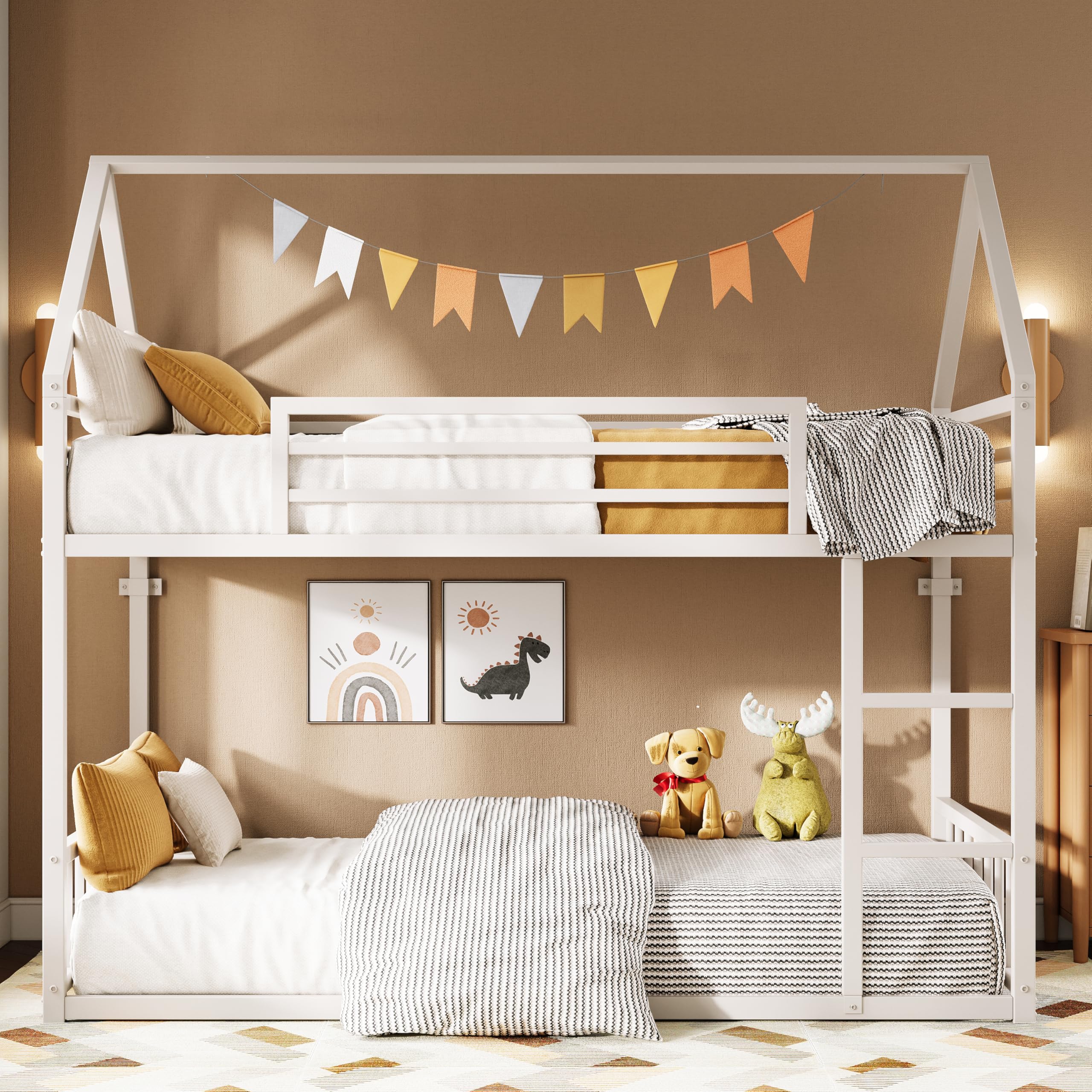
LIKIMIO House Bunk Bed

LIKIMIO House Bunk Bed

Whimsical toddler bed

Our Score 9.2/10
Check Price

Worth Noting

  • Bottom mattress rests on the floor, limiting under-bed storage and risking moisture buildup in humid areas.
Material
Metal
Weight Capacity
Special Features
House-shaped silhouette, no box spring needed
Assembly Instructions
Easy picture instructions, ~1 hour
Read the full review

The house-shaped design delights kids and assembles in under an hour. The bottom bunk sits directly on the floor — a playful, space-saving look that lacks ventilation and under-bed storage. It’s a charming budget pick for toddlers and young children, but the low mattress and modest weight ceiling won’t suit growing teens.

Bottom line: It’s a smart pick for a young child’s room where floor-level sleeping and a playful silhouette matter more than long-term versatility or storage.

4

Zevemomo Low Bunk

Zevemomo Low Bunk

Low ceilings, fast build

Our Score 9.2/10
Check Price

Worth Noting

  • Bottom bunk nearly flush to floor, trapping dust and ruling out under‑bed storage
Material
Metal
Weight Capacity
350 lbs upper/400 lbs lower
Special Features
Low-profile design, slat lock, foot pads
Assembly Instructions
Clear, under 1 hour
Read the full review

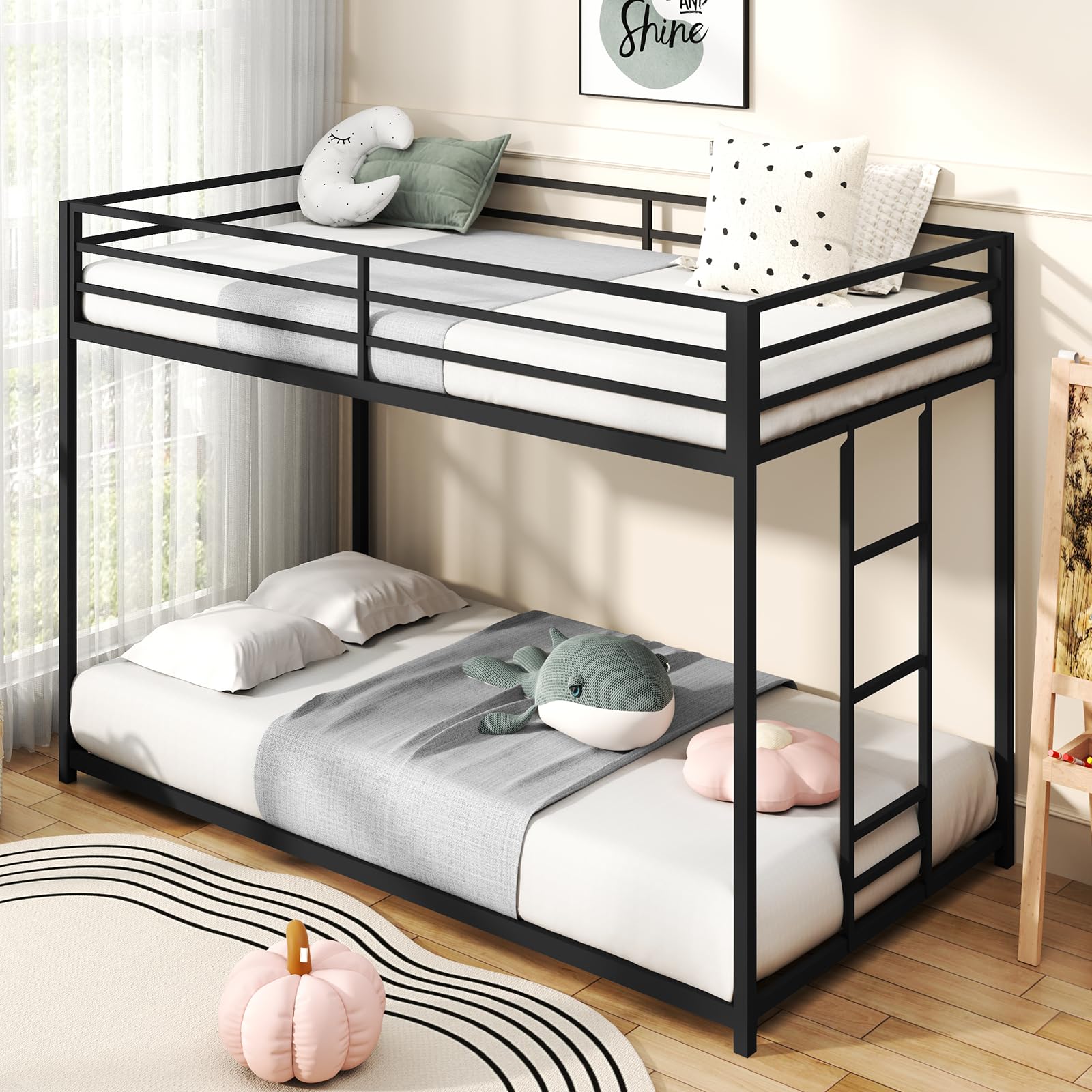
The Zevemomo low bunk bolts together quickly and barely brushes the ceiling in tight rooms. The bottom mattress sits nearly flush to the floor, so under‑bed storage disappears and dust collects in that narrow gap — a limitation that matters less in a holiday cabin or short‑term kids' room than in a permanent bedroom.

Bottom line: A smart buy for an attic bedroom, low‑ceiling guest room, or temporary bunk setup where floor‑level bottom bunk matters less than fast assembly and space fit.

5

Max & Lily Fundamental Bunk

Max & Lily Fundamental Bunk

Long-term versatility

Our Score 9.0/10
Check Price

Worth Noting

  • Assembly relies on picture-only instructions that can feel unclear, especially around hardware labeling.
  • Supporting boards and slats can split if screws are overtightened during assembly.
Material
Solid pine, low-VOC finish
Weight Capacity
400 lbs per bunk
Special Features
Low-profile, metal support bar
Assembly Instructions
Picture-only, ~2 hours
Read the full review

Solid New Zealand pine and a 400-pound capacity per bunk make the Max & Lily Fundamental feel like adult-grade furniture that happens to stack. At just over four feet tall, the bed fits under standard 8-foot ceilings with enough headroom to sit up comfortably in the top bunk, while the 14-inch guardrails and low step-up reduce the worry of falls. The pecan finish resists scuffs well, and the overall build avoids that hollow, lightweight feel common on many kids' bunks.

This bunk serves families who want a bed that can go from a toddler's first big-kid bed to a teen hangout without being replaced. The low profile keeps the lower bunk close to the floor, so under-bed storage is essentially nonexistent — plan on adding drawers or bins elsewhere in the room. And if you prefer a towering bunk that dominates the room, the modest height may disappoint. The real test is assembly: the picture-only instructions can be confusing, especially for hardware labeling, and the most important step isn't written anywhere — stop tightening the moment you meet resistance, because overtightened screws can split the wood slats and support beams. Once built with that caution, the bed earns its reputation for rock-solid stability.

Tip: Stop tightening hardware the moment you feel resistance — over-tightening is the primary cause of wood cracking, and the included wrench makes it easy to go too far.

Bottom line: For households that value safety, longevity, and real wood at a mid-range price, this low-profile bunk extends its usefulness far longer than most — and the lack of built-in storage is a fair price for that staying power.

6

ADORNEVE Low Bunk Stairs

ADORNEVE Low Bunk Stairs

Storage & safety

Our Score 9.0/10
Check Price

Worth Noting

  • Fabric staircase drawers are less durable than wood and may not survive rough treatment.
  • Assembly instructions can be confusing, with occasional misaligned holes.
Material
Steel, MDF stairs, fabric drawers
Weight Capacity
600 lbs total system
Special Features
Staircase drawers, shelves, USB, LED
Assembly Instructions
Confusing, hole alignment issues
Read the full review

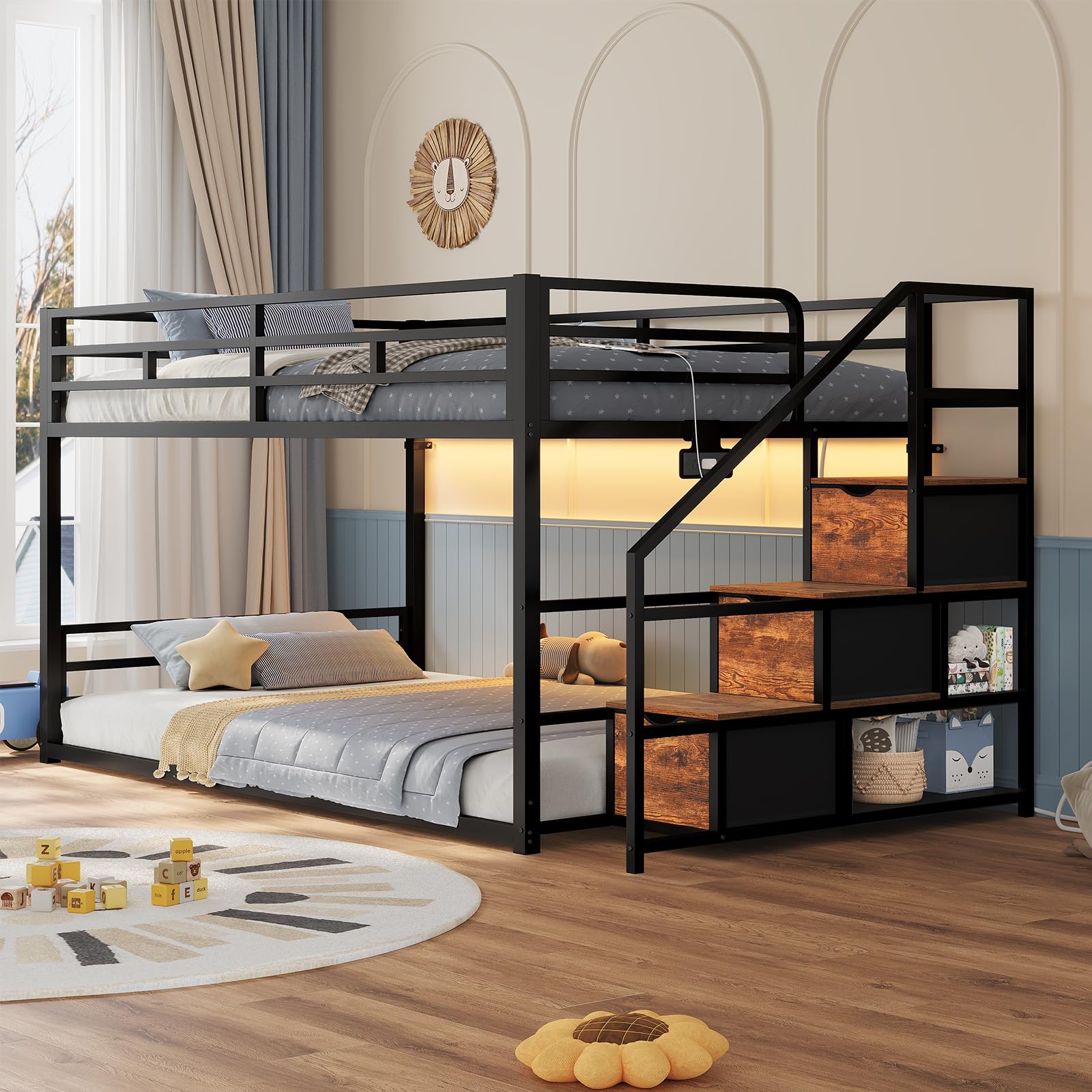
This steel bunk trades a ladder for a staircase holding three fabric drawers and open shelves, keeping toys and clothes contained without claiming extra floor space. The 54-inch height and wrap-around guardrails make the top bunk less intimidating for young kids, and the included anti-toppling hardware adds security. While the storage approach lacks the full built-in surround of larger all-in-one units, it keeps the sleeping area simple.

It's a strong match for parents of toddlers and early elementary-aged children in a small room where separate dressers might crowd the space. The fabric bin drawers are fine for clothes but won't take the same abuse as solid wood; the fence-style glides can feel less smooth over time. Assembly can be finicky—instructions have occasional gaps and some holes may not align perfectly—so expect a half-day build with a helper.

Tip: Budget a half-day for assembly with a second person, and sort hardware in advance — a cordless drill helps with occasional tough holes.

Bottom line: If staircase storage and a low top bunk are priorities over a quick build, this bunk corrals clutter in a way ladder models can't.

7

Itaar Bunk Drawers

Itaar Bunk Drawers

Maximizing small rooms

Our Score 9.0/10
Check Price

Worth Noting

  • Assembly can take 3–4 hours with instructions that may occasionally confuse; two people recommended.
Material
Steel, FSC-certified wood
Weight Capacity
Special Features
Coat rack, 4 drawers, LEDs, outlets
Assembly Instructions
Confusing, 3-4 hours
Read the full review

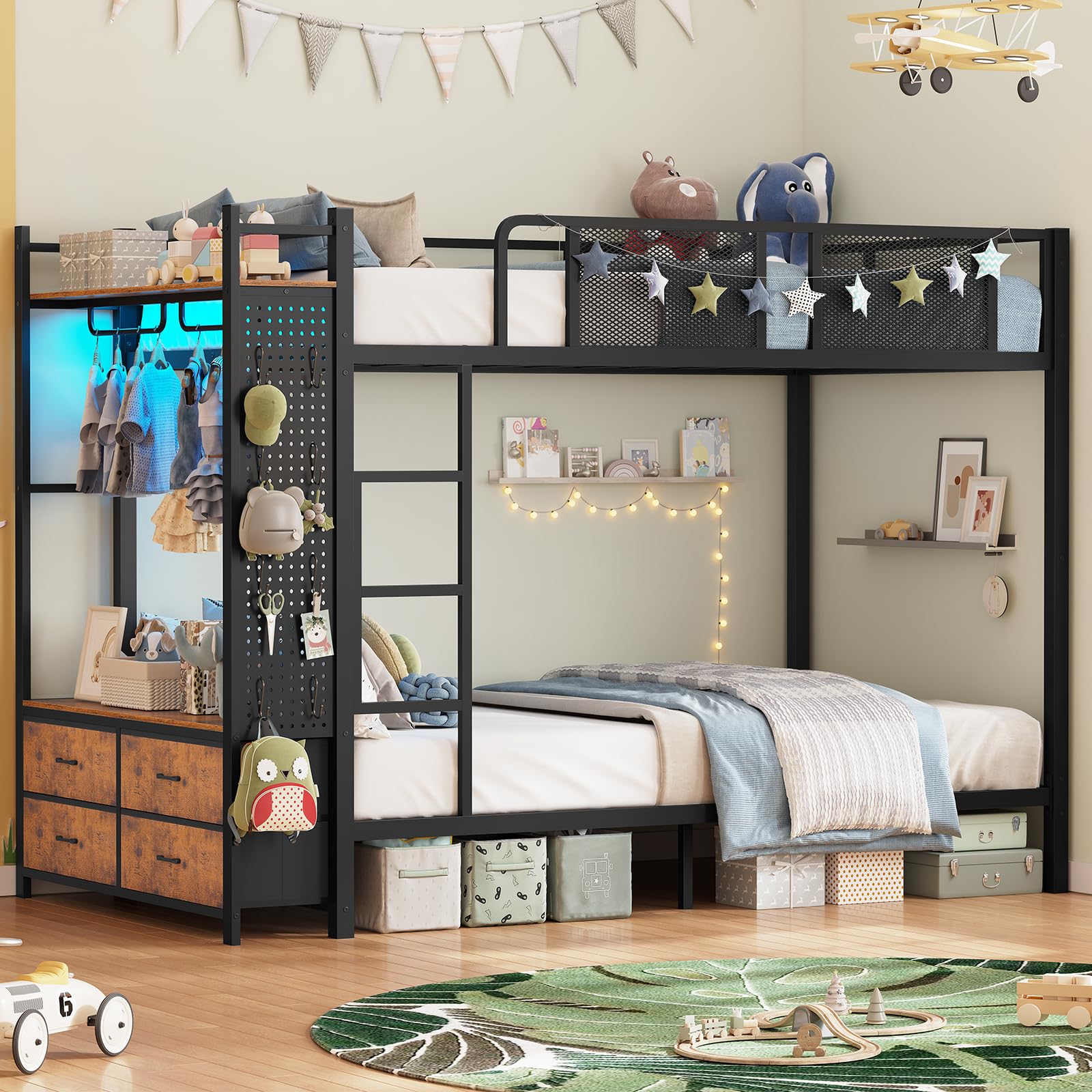
It bundles a coat rack, four fabric drawers, USB-C/A ports, and RGB LED lights into one bed frame. Assembly is a 3–4-hour project with instructions that may occasionally confuse, and the fabric drawers aren’t as durable as wood alternatives.

Bottom line: A fit for compact kids' rooms where floor space is at a premium and you're prepared for a lengthy build.

8

Max & Lily Twin/Full Bunk

Max & Lily Twin/Full Bunk

Older child's bed

Our Score 8.8/10
Check Price

Worth Noting

  • Cosmetic scuffs or cracked wood can appear during shipping
  • Wobbling can happen if the bed isn’t squared exactly; the metal stabilizer bar requires careful alignment.
Material
Solid pine, low-VOC finish
Weight Capacity
400 lbs per bunk
Special Features
Twin over full, metal-on-metal connections
Assembly Instructions
Picture-only, careful setup needed
Read the full review

While the top pick earns its spot with a toddler-safe low profile, this twin-over-full configuration gives growing children a full-size bottom mattress without sacrificing the 400-pound weight capacity that defines the Max & Lily line. Solid New Zealand pine and a clean white finish deliver adult-worthy durability, and adults regularly sleep on the top bunk.

Wobbling can occur if the frame isn’t squared exactly during assembly, and cosmetic scuffs or cracked wood can appear on delivery — plan for careful setup and a post-delivery inspection. It suits families who need a larger lower bed for a teen or guest rather than the maximum headroom of the low-profile alternative.

Tip: Assemble on a perfectly flat surface and tighten the metal stabilizer bar only after the frame is squared — a second set of hands makes this easier.

Bottom line: For families prioritizing a full bottom bunk over a low headroom-friendly design, the Max & Lily Twin Over Full delivers the same solid pine build and weight capacity in a more versatile layout — just block out an afternoon for assembly and inspect the wood on arrival.

9

Jocoevol Metal Bunk

Jocoevol Metal Bunk

Budget heavy-duty use

Our Score 8.8/10
Check Price

Worth Noting

  • Some boxes ship with missing or damaged hardware, so inspecting all parts before starting is wise.
Material
Iron frame, polished finish
Weight Capacity
440 lbs lower/330 lbs upper
Special Features
Converts to two singles, reversible ladder
Assembly Instructions
Clear, labeled parts
Read the full review

Where wood convertible bunks cap top-bunk capacity at around 225 lbs, this iron frame opens up bunking to teens and adults with a 330-lb upper and 440-lb lower limit. Assembly is smooth with labeled parts, most finishing under two hours. Families needing a heavy-duty space-saver that can later split into two stand-alone twins get a lot of frame for the money. The build needs careful bolt tightening to eliminate any potential bar flex, but once torqued the bed stays solid and quiet.

Tip: Use thread-locker on bolts during assembly to prevent any flex that may develop if they loosen over time under heavy use.

Bottom line: An affordable metal bunk that delivers adult-safe weight limits and convertible flexibility — just verify the hardware pack and torque every bolt.

10

JOYMOR Low Wood Bunk

JOYMOR Low Wood Bunk

Real wood on a budget

Our Score 8.8/10
Check Price

Worth Noting

  • Assembly instructions are picture-only with occasional misaligned holes, making the build a test of patience.
Material
Solid pine wood
Weight Capacity
264 lbs per bunk
Special Features
Low profile, black finish, flat ladder
Assembly Instructions
Picture-only, some misaligned holes
Read the full review

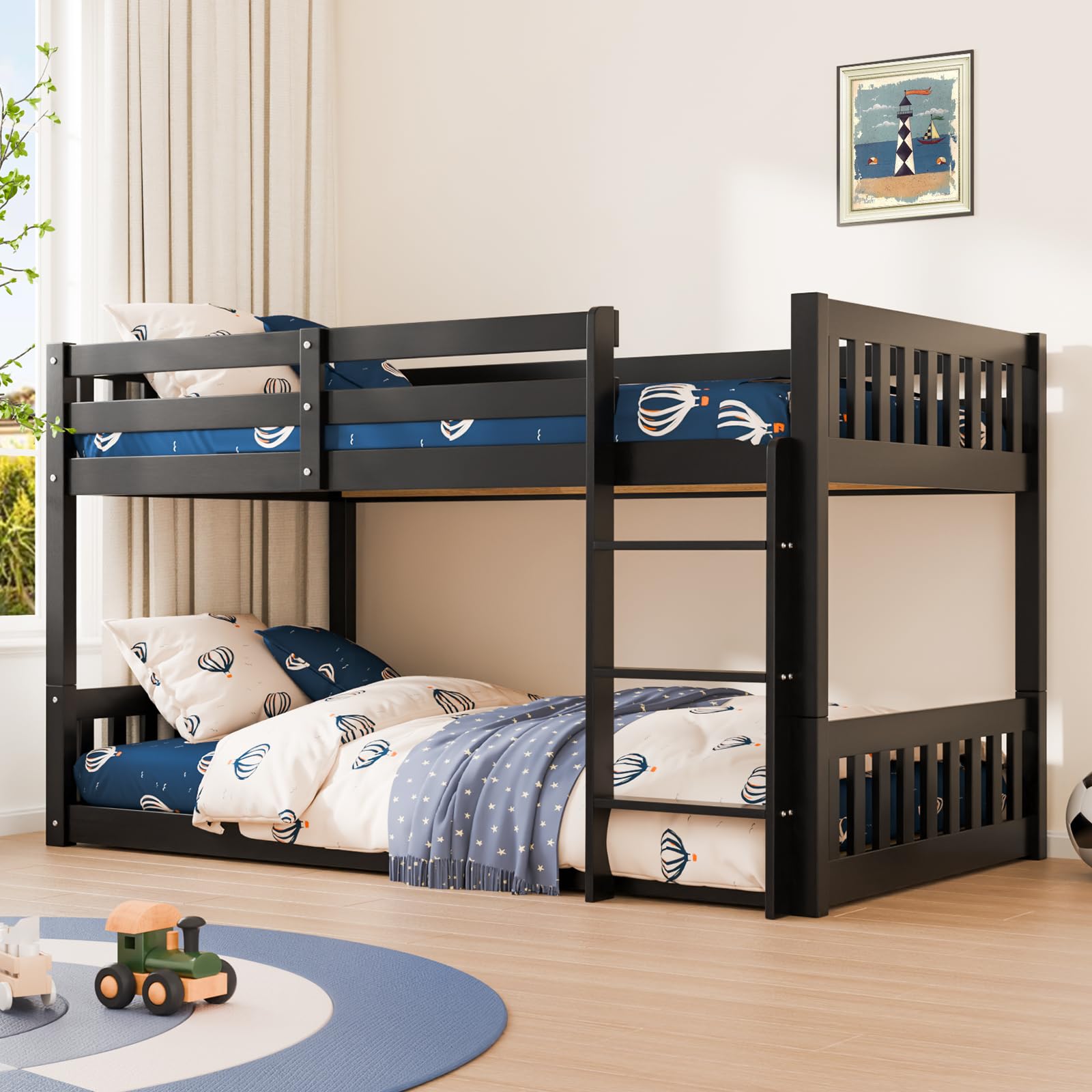
This low-profile pine bunk delivers real wood for a mid-range price, and its 47.6-inch height fits under low ceilings comfortably. The modern black finish can look upscale, though some pieces may show scratches or cracks out of the box. Assembly relies on picture-only instructions with occasional misaligned holes, so factor in extra time and patience. It's a solid choice for families prioritizing wood and a compact footprint over flawless out-of-box cosmetics.

Bottom line: If you want a real-wood low bunk for a small room and are comfortable with potential touch-ups and a patience-demanding assembly, this is a strong value.

How to Choose

Weight Capacity Per Bunk

A '400-pound capacity' on a top bunk typically refers to static weight, not the dynamic force generated by a jumping child. When two kids wrestle or a teenager flops down, the peak load briefly multiplies. A bed that meets its rated limit under calm conditions can still feel springy or develop loose joints if the steel gauge is thin or wood joints aren't reinforced.

For children under 10, 150–225 pounds is usually sufficient, but once a parent climbs up for bedtime stories or a teenager inherits the bunk, capacities of 250–400 pounds become a practical necessity. Choose a capacity that matches the largest person who will ever use that bunk, not the smallest.

Material: Solid Wood vs. Metal

Solid pine beds absorb vibration and stay quiet, but wood fibers can split if screws are over‑tightened during assembly or if the grain contained hidden weaknesses from the mill. Metal frames are structurally consistent out of the box, yet metal‑on‑metal joints can develop squeaks as the powder coating wears down and bolts loosen.

For homes where silence matters and the bed is a permanent furniture investment, solid wood with a low‑VOC finish offers warmth and quiet. Metal wins when budget, weight capacity per dollar, or easy disassembly for moves are priorities — just keep a wrench handy for the first few months.

Guardrail Height and Mattress Thickness

A guardrail is only effective if the top of the mattress sits well below its upper edge. A 6‑inch mattress on a bunk with 14‑inch guardrails leaves an 8‑inch barrier — generally safe. Swap in a 10‑inch pillow‑top and that barrier shrinks to 4 inches, offering little roll‑out protection for a sleeping child. Always subtract your planned mattress height from the guardrail height to find the real containment depth.

No standard requires manufacturers to print a max mattress thickness on the product page, but a quick calculation before you buy avoids discovering the mismatch after the bed is built.

Assembly Instructions and Complexity

Picture‑only instructions are the norm, not the exception. What separates an acceptable build from a frustrating one is how clearly parts are labeled and whether pre‑drilled holes align. Beds that claim 'under an hour' assembly often rely on intuitive metal frames; two‑person, multi‑hour builds are more common with wood bunks that have many similarly‑shaped boards.

Budget two to three hours for most wood beds, and expect to spend extra time decoding diagrams. If you're not handy, a metal bed with clear, text‑supported instructions will save your afternoon and your patience.

Special Features: Storage, Power, and Convertibility

Features like drawers, USB ports, and trundle‑like convertibility add real utility to small rooms. However, a bed that turns into two twins later often uses slightly lighter hardware connections to allow the split, which can influence lateral stability when bunked. Staircase drawers that replace a dresser are brilliant for floor space, but fabric bins may not survive as many years as the metal frame they sit in.

If maximizing storage is the goal, prioritize designs where the drawer system is built into the bed's primary structure, not added as a lightweight accessory. If long‑term flexibility matters more, a convertible design that maintains solid connections when stacked is worth the price.

Frequently Asked Questions